



Netanyahu’s High-Stakes Mission: Shaping U.S.-Iran Nuclear Negotiations
Israeli Prime Minister Seeks to Expand Scope of Tehran Talks
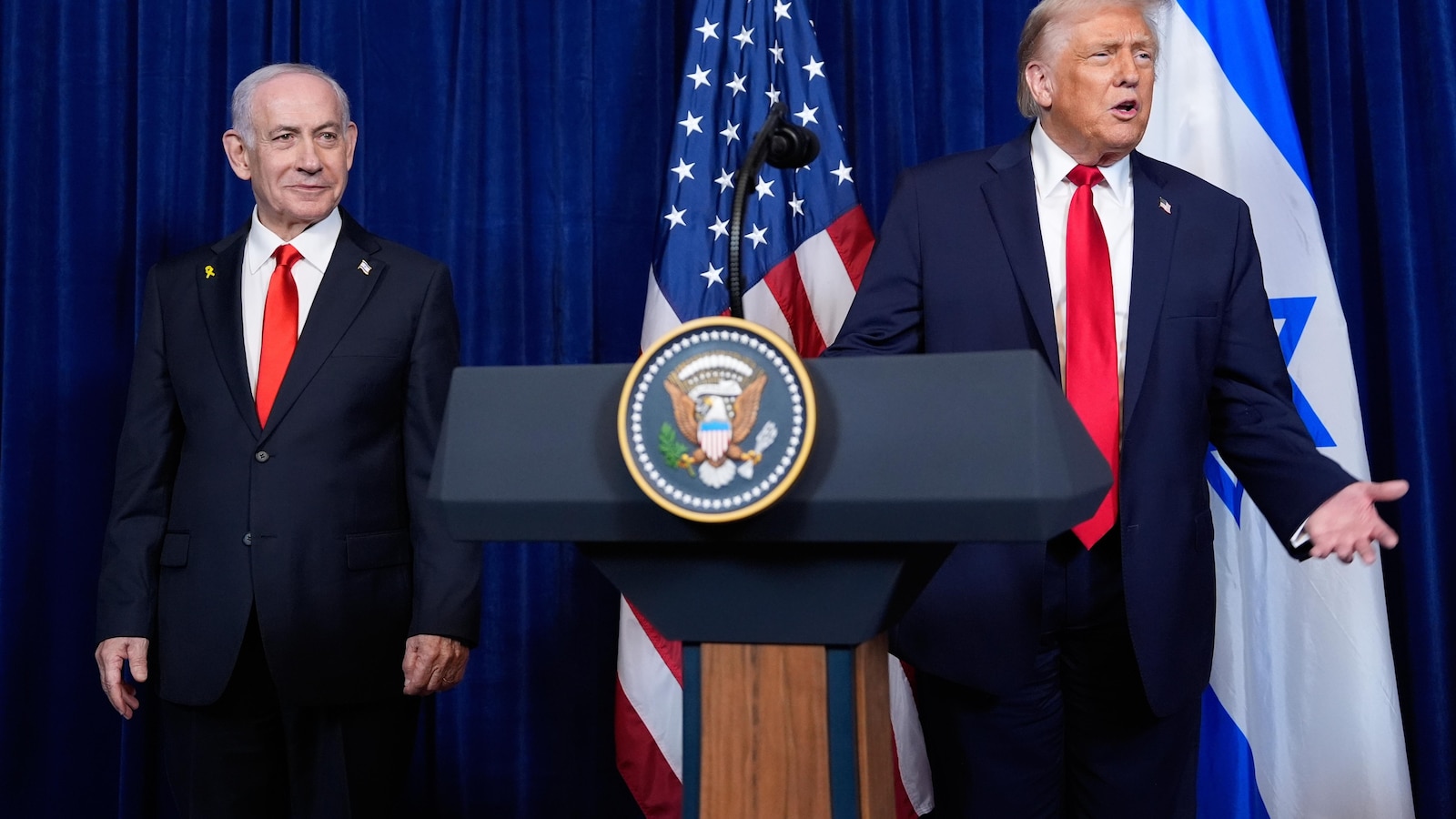
Israeli Prime Minister Benjamin Netanyahu embarked on a crucial diplomatic mission to Washington this week, arriving Tuesday with a clear objective: to persuade President Donald Trump to broaden the parameters of ongoing nuclear negotiations with Iran. The talks, which resumed recently amid a significant American military presence in the region, represent a pivotal moment in Middle Eastern geopolitics. Netanyahu’s visit comes at a critical juncture when decisions regarding Iran’s nuclear ambitions and regional influence are being formulated at the highest levels of American power. For the Israeli leader, who has built much of his political legacy on confronting the Iranian threat, these meetings represent an opportunity to ensure that Israel’s security concerns remain central to any agreement that emerges from the diplomatic process. The timing is particularly sensitive, occurring against the backdrop of recent military actions, ongoing regional tensions, and the complex interplay between diplomatic engagement and the threat of force.
Israel’s Comprehensive Demands Versus Iran’s Limited Concessions
The gap between what Israel seeks from Iran and what Tehran appears willing to offer remains substantial and potentially unbridgeable. Israel has consistently maintained that any acceptable agreement must include a complete cessation of uranium enrichment, a significant rollback of Iran’s ballistic missile capabilities, and a severing of ties between Tehran and militant organizations throughout the Middle East, including Hamas in Gaza and Hezbollah in Lebanon. These demands represent a comprehensive approach that would fundamentally alter Iran’s regional posture and military capabilities. Iran, however, has repeatedly rejected such expansive conditions, indicating willingness only to accept certain limitations on its nuclear program in exchange for relief from crippling economic sanctions. This fundamental disconnect has plagued negotiations for years, and recent events—including the violent suppression of mass protests in Iran and the deployment of major U.S. military assets to the region—have done little to clarify whether either side has become more flexible in its position or whether common ground can be found.
The Shadow of Military Action and Recent Conflicts
The possibility of renewed military action looms large over this week’s discussions in Washington. Netanyahu’s political career has been defined by his efforts to convince the United States to take stronger action against Iran, and those efforts achieved significant success last year when the U.S. joined Israel in conducting twelve days of strikes targeting Iran’s military installations and nuclear facilities. Those attacks killed nearly 1,000 people in Iran, while Iranian missile retaliation resulted in almost 40 deaths in Israel, demonstrating the deadly seriousness of the confrontation between these adversaries. The long-term impact of last year’s strikes on Iran’s nuclear infrastructure remains unclear, as inspectors from the International Atomic Energy Agency have been denied access to the bombed sites, though satellite imagery indicates some level of activity continues at two locations. Iranian Foreign Minister Abbas Araghchi claimed in November that Iran had ceased uranium enrichment due to damage sustained during the attacks, but verification of such claims remains impossible without international inspections, leaving considerable uncertainty about the current state of Iran’s nuclear capabilities.
Israeli Concerns About a Limited Agreement
Israeli security experts and officials have expressed deep reservations about the possibility that the United States might pursue what they view as an insufficiently comprehensive agreement with Iran. Sima Shine, a former member of Israel’s Mossad intelligence agency who now analyzes Iranian affairs at the Institute for National Security Studies, articulated a key Israeli fear: that Washington might settle for a narrow deal in which Iran temporarily suspends uranium enrichment without addressing the broader issues that Israel considers existential threats. Such an agreement would allow President Trump to claim a diplomatic victory and potentially ease immediate tensions, but from Israel’s perspective, any deal that fails to permanently end Iran’s nuclear program and significantly reduce its ballistic missile arsenal would simply delay an inevitable confrontation. This concern is serious enough that some members of Netanyahu’s cabinet have publicly signaled that Israel reserves the right to take unilateral military action even if the United States reaches an agreement with Iran that Trump celebrates as successful. Energy Minister Eli Cohen stated explicitly on Army Radio that Israel views Iran’s ballistic missiles as a grave threat and “reserves the option to act” if any agreement fails to adequately address Israel’s security requirements.
Domestic Political Calculations and Netanyahu’s Leadership
Netanyahu’s Washington visit serves important domestic political purposes beyond the immediate diplomatic objectives. As Israel’s longest-serving prime minister, with over eighteen years in office across multiple terms, Netanyahu has cultivated an image as the Israeli leader with unparalleled connections to world leaders, particularly emphasizing his close relationship with President Trump, whom he has described as the best friend Israel has ever had in the White House. With Israeli elections scheduled for later this year, Netanyahu’s ability to present himself as an indispensable player in negotiations affecting Israel’s most serious security challenges becomes a central campaign asset. Yohanan Plesner, who heads the Israel Democracy Institute, a Jerusalem-based think tank, noted that “these are the days when decisions are being made” and that if Netanyahu wants to influence the process, physical presence in Washington is essential—”only so much can be done via Zoom.” Netanyahu leads the most nationalist and religious government in Israeli history, and his coalition is expected to remain intact until the October elections or close to that date. By demonstrating his unique access to American decision-makers at this critical moment, Netanyahu reinforces his campaign message that only he possesses the relationships and experience necessary to protect Israeli interests in these high-stakes negotiations.
Navigating Complex Regional Initiatives and Relationships
The timing of Netanyahu’s visit also reflects careful navigation of other regional initiatives that present diplomatic complications for the Israeli leader. Originally, Netanyahu was scheduled to travel to Washington the following week for the February 19th launch of Trump’s Board of Peace, an initiative initially conceived as a mechanism for rebuilding Gaza following the devastating Israel-Hamas war but which has since expanded its mandate to address broader global crises. While Netanyahu agreed to participate in this initiative, he harbors serious reservations about it because the participating countries include Turkey and Qatar, nations with which he prefers not to share influence over postwar Gaza due to their relationships with Hamas. By moving his visit forward to this week, Netanyahu may have found what one analyst called an “elegant solution” that allows him to avoid attending the Board of Peace launch without directly offending President Trump. This delicate balancing act illustrates the multiple dimensions of Netanyahu’s diplomatic challenge: advancing Israel’s position on Iran, maintaining the crucial relationship with Trump, managing domestic political imperatives, and avoiding entanglement in regional initiatives that might compromise Israel’s strategic objectives in Gaza. The coming days in Washington will test Netanyahu’s ability to juggle these competing priorities while shaping negotiations that could determine the security landscape of the Middle East for years to come.