


Escalating Conflict: Israel and Iran Exchange Devastating Strikes Across the Middle East
Haifa Oil Refinery Suffers Major Damage in Iranian Attack
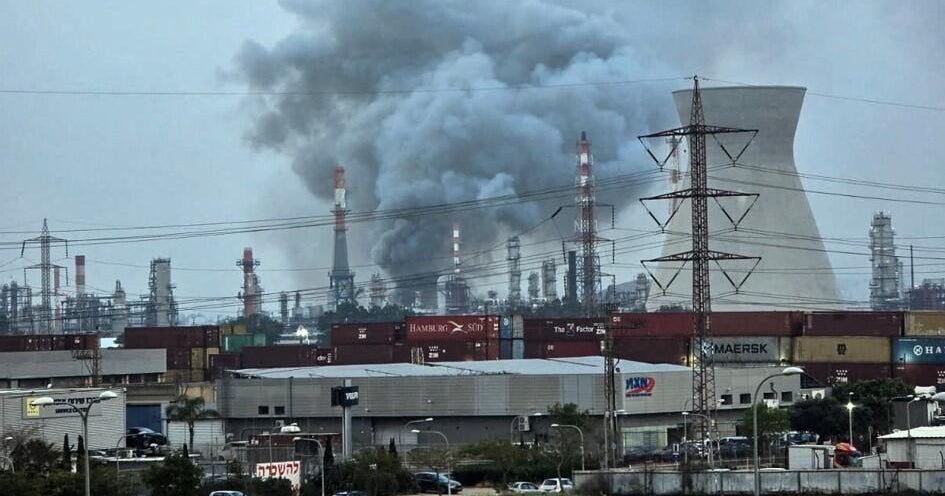
The ongoing military conflict between Israel and Iran has taken a severe toll on critical energy infrastructure, with a major oil refinery in Haifa bearing the brunt of Iranian retaliation. The facility, located in Israel’s northern port city, was struck during Thursday’s Iranian attack, sending plumes of thick black smoke billowing into the sky—a stark visual reminder of the conflict’s intensification. According to Reuters, company officials who own and operate the refinery provided updates on Friday revealing the extent of the damage. While the direct impact on the refinery’s internal structures was limited, the strike severely damaged external infrastructure belonging to a third-party provider. This external infrastructure, however, plays an essential role in the refinery’s day-to-day operations, creating a significant operational challenge. The officials indicated that repairing this damage and restoring full functionality would take considerable time, with operations expected to remain suspended for several days at minimum. This disruption comes at a particularly sensitive time, as energy security concerns mount across the region and global oil markets watch nervously for any signs of supply chain interruptions that could affect international petroleum prices and availability.
American F-35 Fighter Jet Makes Emergency Landing After Combat Mission
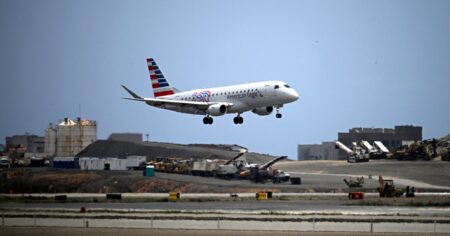
In a dramatic development that underscores the dangers facing military personnel in this expanding conflict, one of America’s most sophisticated and advanced fighter aircraft was forced to make an emergency landing following a combat mission over Iranian territory. The F-35 Lightning II, representing the cutting edge of American military aviation technology, encountered serious difficulties that required the pilot to divert to an undisclosed U.S. air base somewhere in the Middle East. U.S. Central Command confirmed the incident on Thursday, and military officials provided additional details to CBS News on Friday, reassuring the public that the pilot successfully executed the emergency landing and was reported to be in stable condition, receiving appropriate medical attention. The circumstances surrounding the emergency landing have raised significant questions about the nature of the threat facing American aircraft operating in the region. CNN was first to report that the fighter jet was believed to have been struck by Iranian anti-aircraft fire, which, if confirmed, would represent a major tactical success for Iranian defense forces and mark the first time since the war began that Iran has successfully engaged an American aircraft. This incident stands in stark contrast to President Trump’s confident assessment delivered just hours earlier from the Oval Office, where he declared that Iran’s military capabilities had been effectively neutralized. “Their air force is gone, their anti-aircraft equipment is gone. We’re flying wherever we want,” the President stated emphatically, adding, “We have nobody even shooting at us.” The emergency landing has prompted questions about the accuracy of these assessments and the real dangers still facing American pilots conducting operations in hostile airspace over Iran.
Regional Allies Face Iranian Drone and Missile Attacks
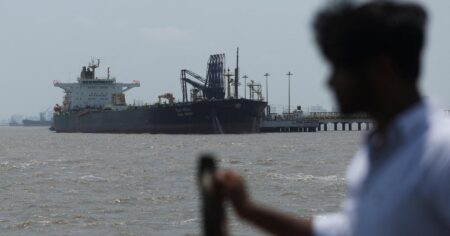
The conflict has rapidly expanded beyond the borders of Israel and Iran, drawing neighboring countries into the crossfire and threatening the stability of the entire Gulf region. Kuwait has found itself particularly vulnerable to Iranian aggression, with the Kuwaiti Armed Forces announcing early Friday that Iran had launched coordinated missile and drone strikes against Kuwaiti territory. Military officials took to social media to inform citizens that any explosions they might hear were the result of air defense systems actively intercepting hostile attacks—a message intended to prevent panic among the civilian population while acknowledging the very real threat overhead. The situation in Kuwait had already been tense following an earlier drone strike on the state-owned Mina Al-Ahmadi refinery, which sparked a fire at the facility. Fortunately, the blaze was contained without causing injuries to personnel, though the incident highlighted the vulnerability of critical energy infrastructure throughout the region. According to reports from the state-run KUNA news agency and statements from the Kuwaiti military, Iran had targeted Kuwait with eighteen drones over a twenty-four-hour period from Wednesday into Thursday. Of these, thirteen were successfully intercepted and destroyed by Kuwait’s air defense systems, demonstrating both the scale of the Iranian assault and the effectiveness of defensive countermeasures. However, two drones managed to evade these defenses and struck the refinery, causing the fire and raising concerns about the potential for more successful attacks in future waves.
Gulf Cities Experience Explosions as Defense Systems Engage Iranian Weapons
The scope of Iranian retaliatory strikes has extended to some of the most populous and economically significant cities in the Gulf region, bringing the conflict directly into urban centers where millions of civilians live and work. Dubai, the gleaming commercial hub of the United Arab Emirates, experienced heavy explosions early Friday morning as air defense systems scrambled to intercept incoming projectiles. The timing of these attacks was particularly significant, occurring as residents observed Eid al-Fitr, the joyous celebration marking the end of Ramadan, the holy month of fasting in Islam. As mosques issued the day’s first call to prayers, the sounds of explosions echoed through the city, creating a jarring contrast between religious observance and military conflict. Bahrain also found itself under attack, with the Interior Ministry reporting that shrapnel from an intercepted projectile had fallen on a warehouse, sparking a fire that required emergency response. Meanwhile, Saudi Arabia’s military confirmed that it had successfully shot down multiple drones specifically targeting the kingdom’s Eastern Province, the heart of Saudi Arabia’s vast oil production capabilities and home to some of the world’s most productive petroleum fields. These renewed attacks followed an already intense period that saw Iran striking energy infrastructure throughout the region and launching more than a dozen separate missile salvos at Israeli targets. The Iranian aggression came in direct response to Israel’s devastating attack on the South Pars gas field, located offshore in the Persian Gulf. South Pars represents a critical strategic asset—it’s the Iranian portion of the world’s largest natural gas field, shared jointly with Qatar. With approximately eighty percent of Iran’s electricity generation dependent on natural gas, the Israeli strike posed an existential threat to the country’s power grid and basic infrastructure, explaining the scope and intensity of Iran’s multi-front retaliation.
Israel Strikes Tehran as Leadership Questions Emerge
Israel demonstrated its reach and resolve by launching what the Israel Defense Forces described as a “wave of strikes” targeting infrastructure in the heart of Tehran on Friday morning local time. The timing carried symbolic weight, as Iranians were marking Nowruz, the Persian New Year—one of the most important cultural celebrations in Iranian tradition. Activists and residents in Iran’s capital reported hearing and seeing the strikes, which targeted what Israeli officials characterized as “infrastructure of the Iranian terror regime.” These attacks came just one day after Israel pledged to show restraint regarding further strikes on Iran’s crucial gas field, suggesting a calibrated approach that seeks to maintain military pressure while avoiding the complete collapse of Iran’s civilian infrastructure. However, Israel continued to face sustained Iranian retaliation, with millions of Israelis forced into shelters as air raid sirens wailed across the northern regions of the country, from the port city of Haifa through the Galilee region to the Lebanese border. During a news conference Thursday night, Israeli Prime Minister Benjamin Netanyahu revealed that his country had acted alone in the South Pars attack and acknowledged that President Trump had requested Israel hold off on additional strikes against the gas field—a request Netanyahu said Israel was honoring. Perhaps more intriguingly, Netanyahu addressed the murky situation regarding Iran’s current leadership structure following a series of targeted killings that have decimated the regime’s upper echelons. Ali Larijani, a top Iranian security official, and several other senior leaders were killed in strikes earlier in the week, creating what Netanyahu described as uncertainty about who actually controls the country. The current supreme leader, Ayatollah Mojtaba Khamenei, assumed power after his father was killed at the beginning of the war and is believed to have been injured in the same strike. “Mojtaba, the replacement ayatollah, has not shown his face,” Netanyahu told reporters. “Have you seen him? We haven’t, and we can’t vouch exactly what is happening there. There is a cloud here that’s not clear.” Netanyahu speculated that even if Mojtaba Khamenei is alive and functioning, he would not command the same authority his father wielded for decades, potentially creating a power vacuum at the worst possible moment for the Iranian regime.
The Uncertain Road Ahead
The conflict between Israel and Iran has evolved into a complex, multi-front war that threatens not only the immediate combatants but the entire Middle Eastern region and global energy markets. The attacks on oil refineries, gas fields, and other energy infrastructure carry implications far beyond the battlefield, potentially disrupting the flow of petroleum products that fuel the world economy. The involvement of American forces, demonstrated by the F-35 incident, shows how quickly regional conflicts can draw in global powers with unpredictable consequences. The targeting of neighboring countries like Kuwait, the UAE, and Saudi Arabia suggests that Iran views the entire Gulf region as a legitimate theater of operations in its confrontation with Israel and its allies. Meanwhile, the uncertainty surrounding Iran’s leadership—with questions about the health and authority of the new supreme leader and the elimination of numerous senior officials—creates an unpredictable dynamic where decision-making processes may be unclear or compromised. As both sides continue to strike and counterstrike, the international community watches with growing concern, hoping for diplomatic interventions that might prevent further escalation while recognizing that each attack seems to generate momentum for the next round of retaliation, creating a dangerous cycle that becomes increasingly difficult to break.