


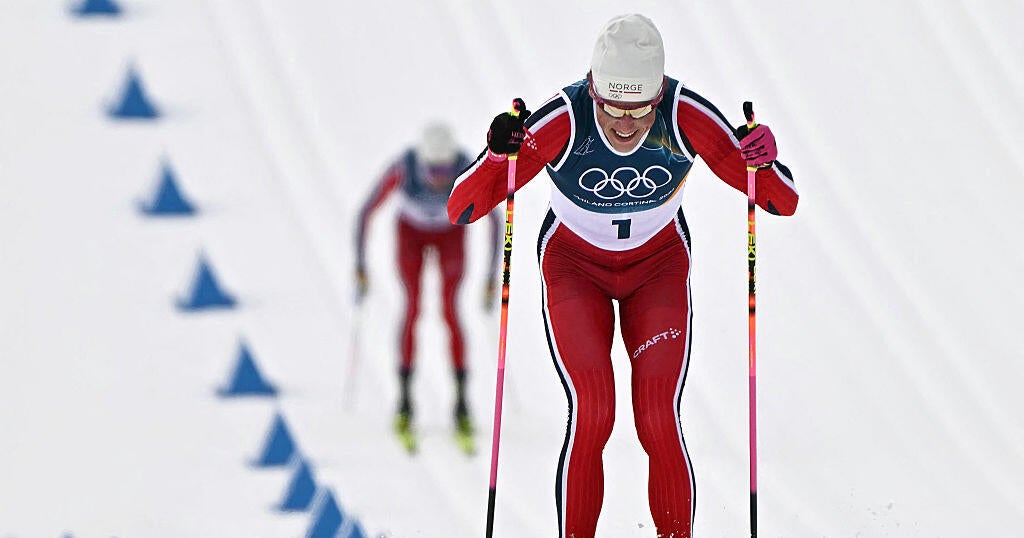

Johannes Høsflot Klaebo Makes Olympic History with Record-Breaking Performance
A Historic Moment in Winter Olympics Glory
In what can only be described as a legendary performance at the Milan Cortina 2026 Winter Olympics, Norway’s Johannes Høsflot Klaebo has etched his name into the history books by achieving what no winter athlete has ever accomplished before. The 29-year-old cross-country skiing superstar captured his sixth gold medal of these Games in the grueling 50-kilometer mass start race, breaking a record that had stood for nearly half a century. This remarkable achievement surpassed the previous single-Games record of five gold medals set by American speed skating legend Eric Heiden at the 1980 Lake Placid Olympics. While it’s worth noting that two of Klaebo’s six golds came in team events compared to Heiden’s five individual victories, the Norwegian’s overall achievement represents an extraordinary display of athletic excellence and endurance that will be remembered for generations to come.
A Perfect Norwegian Sweep on the Slopes
The 50-kilometer mass start race wasn’t just about Klaebo’s individual brilliance—it was a testament to Norwegian dominance in cross-country skiing. The podium was painted entirely in Norwegian red as Klaebo’s teammates Martin Loewstroem Nyenget claimed silver and Emil Iversen secured bronze in a complete sweep of the medals. From the very beginning of the race, the three Norwegian athletes established their superiority, breaking away from the pack early and systematically increasing their lead over the competition. Their strategy was executed with precision and confidence, as they worked together to maintain their advantage throughout the demanding 50-kilometer course. This coordinated effort showcased not only individual talent but also the strength of Norway’s cross-country skiing program, which has produced generation after generation of world-class athletes who understand both the technical and tactical aspects of their sport.
The Dramatic Final Push to Victory
The race’s conclusion provided viewers with an unforgettable display of athletic drama and determination. During the final lap, Nyenget and Klaebo made their decisive move, pushing hard uphill and leaving Iversen behind to secure the bronze medal. In a display of tactical awareness and patience that comes from years of elite competition, Klaebo positioned himself in second place behind his teammate, conserving energy and waiting for the perfect moment to unleash his trademark finishing kick. As the two Norwegians approached the final hill—the last obstacle between them and Olympic glory—Klaebo made his move. In a moment that will be replayed countless times, he literally ran up the slope, his powerful strides carrying him away from Nyenget with such speed and authority that the outcome was never in doubt. As he glided toward the finish line, overcome with emotion and the realization of what he had just accomplished, Klaebo pointed both fingers skyward in triumph. After taking one final stride across the line, the exhausted champion toppled over onto his right hip and rolled onto his back, a human embodiment of someone who had left absolutely everything on the course in pursuit of greatness.
Building a Legacy Beyond Compare
Klaebo’s six gold medals at Milan Cortina are even more impressive when viewed in the context of his overall Olympic career. The Norwegian skiing sensation arrived at these Games already carrying five Olympic gold medals from previous competitions, establishing him as one of the sport’s all-time greats even before the opening ceremony. With his performance in Italy, he hasn’t just broken records—he’s shattered them and set new standards that may stand for decades. His total of eleven career Winter Olympic gold medals demolishes the previous record of eight, extending it by a remarkable three medals. This achievement places him in truly rarefied air in the entire Olympic movement. In fact, when considering all Olympic athletes in both summer and winter competitions throughout history, Klaebo now stands as the second-most decorated gold medalist ever, trailing only swimming legend Michael Phelps, who amassed an almost unfathomable 23 gold medals across multiple Summer Olympics. For a winter sport athlete to be mentioned in the same breath as Phelps speaks volumes about Klaebo’s sustained excellence and his ability to perform at the highest level when the world is watching.
Norway’s Unprecedented Winter Olympics Dominance
Klaebo’s achievements are part of a larger story of Norwegian dominance at the Milan Cortina Games that has been nothing short of extraordinary. His sixth gold medal contributed to Norway’s record-breaking 18th gold medal of these Olympics, further cementing their position as the most successful nation at these Games. Beyond just gold medals, Team Norway has amassed an impressive total of 40 medals across all categories, giving them a commanding lead in the overall medal count. This level of success reflects the deep investment Norway has made in winter sports, from grassroots development programs to world-class training facilities and coaching. The country’s success isn’t limited to cross-country skiing, though that sport remains their crown jewel. The record was actually broken on Friday when Johannes Dale-Skjevdal won the 15-kilometer mass start biathlon race, giving Norway its 17th gold before Klaebo added the 18th. This achievement broke Norway’s own previous record for most gold medals at a single Winter Olympics, showing that the nation continues to raise the bar for what’s possible in winter sports competition.
The Legacy and Future of Winter Sports Excellence
As the Milan Cortina Games draw to a close, Johannes Høsflot Klaebo’s historic performance will undoubtedly be remembered as one of the defining moments of these Olympics. His combination of individual brilliance, tactical intelligence, and the ability to perform under immense pressure has set a new standard for winter athletes around the world. At just 29 years old, Klaebo may not be finished adding to his medal collection, as future Olympics could provide additional opportunities for him to extend records that already seem almost unreachable. His success, along with Norway’s overall dominance, raises interesting questions about the future of winter sports competition. Will other nations find ways to close the gap with Norway, particularly in cross-country skiing and biathlon? Or will Norwegian excellence continue to define these sports for years to come? What’s certain is that Klaebo has inspired a new generation of young skiers who will grow up watching replays of his triumphant finish, dreaming of one day pointing their own fingers to the sky as they cross an Olympic finish line. His legacy extends beyond the record books—he’s shown that with dedication, preparation, and an unwavering commitment to excellence, athletic achievements that once seemed impossible can become reality. As winter sports continue to evolve and new challenges emerge, the standard set by Johannes Høsflot Klaebo at Milan Cortina 2026 will serve as both an inspiration and a benchmark for greatness in the decades to come.