



The Henrietta Lacks Settlement: A Long-Overdue Reckoning with Medical Ethics and Racial Justice
A Historic Settlement Marks Progress in a Decades-Long Injustice
The pharmaceutical giant Novartis has reached a settlement with the estate of Henrietta Lacks, bringing a measure of closure to a case that highlights one of the most troubling chapters in American medical history. The lawsuit centered on a fundamental violation of human rights and medical ethics: in 1951, cells were taken from Lacks’ cervical tumor without her knowledge or consent while she was being treated at Johns Hopkins Hospital. These cells, which came to be known as HeLa cells, went on to revolutionize medicine and generate enormous profits for countless companies over more than seven decades. The settlement, finalized in federal court in Maryland, represents the second major agreement between the Lacks family and corporations that have profited from these remarkable cells. While the specific terms of the settlement remain confidential, both parties have expressed satisfaction with resolving the matter outside of court. This resolution is particularly significant because it represents a rare acknowledgment by the pharmaceutical industry of the ethical debt owed to Lacks and her descendants, even as the legal battle continues against other companies.
The Extraordinary Story of Henrietta Lacks and Her Immortal Cells
Henrietta Lacks was an ordinary woman living an extraordinary life of quiet dignity when medical history was made from her suffering. A poor tobacco farmer originally from southern Virginia, she had moved with her husband to Turner Station, a historically Black community just outside Baltimore, where they were raising five children and building a life together. When doctors at Johns Hopkins Hospital discovered a malignant tumor in her cervix in 1951, they collected a sample during her biopsy—a standard practice at the time, but one conducted without her knowledge or permission. Lacks was just 31 years old when cervical cancer claimed her life, and she was laid to rest in an unmarked grave, a tragic end that seemed to consign her to obscurity. But the cells taken from her body had other plans.
Unlike typical cell samples, which died shortly after being removed from the human body, Lacks’ cells possessed a remarkable and unprecedented characteristic: they could survive and thrive indefinitely in laboratory conditions. They became the first “immortalized” human cell line, capable of reproducing continuously in lab dishes, which meant that scientists anywhere in the world could conduct experiments using genetically identical cells. This breakthrough was nothing short of revolutionary for medical research. The HeLa cell line, named using the first two letters of Henrietta’s first and last names, became an indispensable tool in laboratories worldwide, contributing to countless medical advances that have saved millions of lives. These cells played crucial roles in developing the polio vaccine, advancing cancer research, enabling gene mapping, contributing to in vitro fertilization techniques, and even helping to create COVID-19 vaccines. The scientific value of HeLa cells is literally incalculable, yet for decades, the woman whose body produced this gift to humanity remained unknown, and her family received nothing.
The Exploitation at the Heart of Medical Progress
The lawsuit against Novartis exposed the uncomfortable truth that immense profits were built on what the legal complaint termed “stolen cells,” taken from a Black woman during an era when the medical establishment routinely disregarded the rights and dignity of African American patients. The case against Novartis, one of the world’s largest pharmaceutical companies, sought “the full amount of its net profits obtained by commercializing the HeLa cell line.” This legal action represents more than just a financial claim; it’s a moral reckoning with a racist medical system that treated Black patients as sources of research material rather than as human beings deserving of respect, consent, and compensation. The taking of Lacks’ cells without consent wasn’t an isolated incident but rather emblematic of widespread practices that exploited vulnerable populations, particularly African Americans, in the name of scientific progress.
While Johns Hopkins Hospital has stated that it never sold or profited directly from the HeLa cell lines, this defense misses the larger point: numerous companies have patented methods and products using these cells, generating substantial revenues in the process. The hospital’s position that it didn’t profit from the cells themselves doesn’t address the fundamental violation of taking biological material without consent, nor does it acknowledge the vast commercial ecosystem that grew from that initial appropriation. The pharmaceutical and biotechnology industries built entire research programs and product lines around HeLa cells, creating innovations that generated billions of dollars in value, yet the family that unknowingly provided this foundational resource struggled with poverty and lacked health insurance even as some family members dealt with chronic illnesses. This stark contrast between corporate wealth generated from Lacks’ cells and the Lacks family’s financial struggles underscores the injustice at the heart of this story.
A Family’s Fight for Recognition and Justice
The settlement with Novartis represents an important victory, but it’s just one battle in an ongoing legal campaign by the Lacks estate to secure recognition and compensation from companies that have profited from Henrietta’s cells. In 2023, the estate reached an undisclosed settlement with Thermo Fisher Scientific Inc., a major biotechnology company. The lawyers representing the Lacks family argued persuasively that Thermo Fisher continued to commercialize products derived from HeLa cells long after the origins and ethical problems surrounding these cells became widely known, thereby unjustly enriching itself at the family’s expense. That settlement was significant because it established a precedent that companies could be held accountable for profiting from cells taken without consent, even decades after the fact.
The legal fight, however, is far from over. Just over a week after settling with Thermo Fisher, attorneys for the Lacks estate filed another lawsuit, this time against Ultragenyx Pharmaceutical, in the same Baltimore federal court. Additionally, litigation remains active against Viatris, another pharmaceutical company. The family’s legal team has indicated that additional complaints may be filed against other corporations that have commercialized products or research based on HeLa cells. This ongoing legal strategy reflects a determination not just to secure financial compensation, but to force the biomedical industry to acknowledge its historical wrongdoing and to establish principles that might prevent similar exploitation in the future. Each lawsuit serves as a reminder that scientific progress built on unethical foundations cannot simply be forgotten or forgiven without some form of accountability.
From Obscurity to Recognition: The Cultural Impact of Henrietta’s Story
For decades, Henrietta Lacks remained virtually unknown outside of scientific circles, where her cells were famous but she herself was nearly forgotten. This began to change dramatically with the 2010 publication of Rebecca Skloot’s bestselling book, “The Immortal Life of Henrietta Lacks.” Skloot’s meticulously researched and compassionately written account brought Henrietta’s story to millions of readers, humanizing the woman behind the cells and documenting the profound impact on her descendants, who grappled with the knowledge that their ancestor’s cells were being used worldwide while they struggled financially and lacked adequate healthcare. The book’s success sparked important conversations about medical ethics, informed consent, and racial justice in healthcare and research.
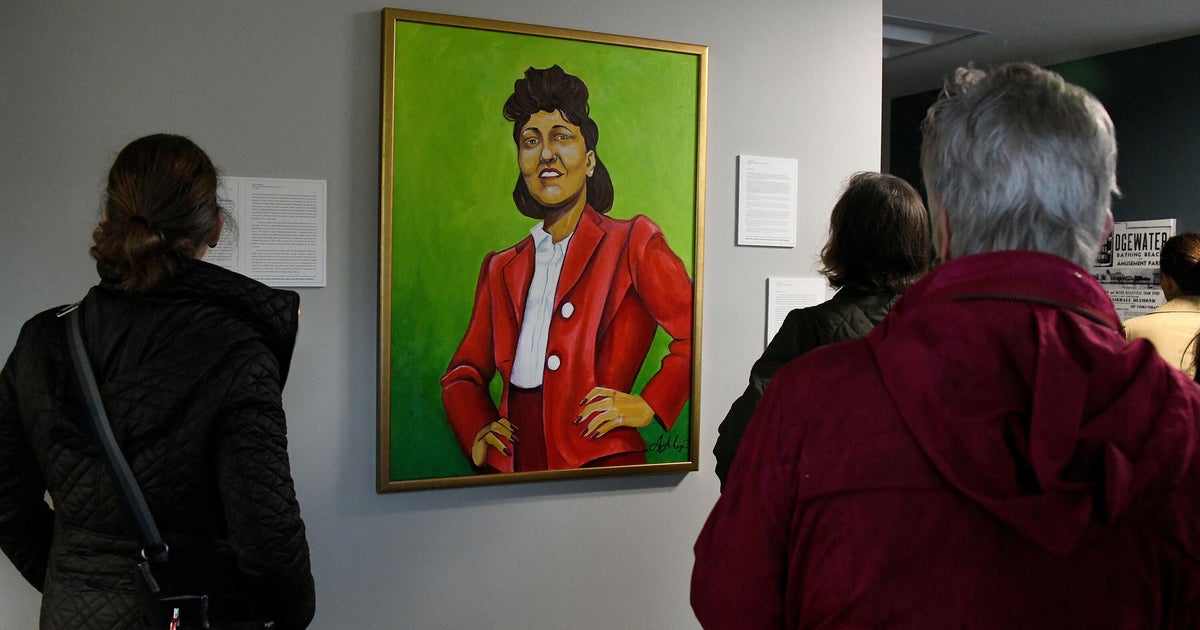
The cultural impact expanded further when HBO adapted Skloot’s book into a film, with Oprah Winfrey portraying Henrietta’s daughter, Deborah Lacks. This high-profile production brought the story to an even wider audience and helped cement Henrietta Lacks’ place not just in medical history but in the broader American consciousness. Today, a painting of Henrietta Lacks hangs prominently in the Henrietta Lacks Community Center at Lyon Homes in Turner Station, Maryland, near where she lived with her family. This memorial serves as a physical reminder of a woman who, despite being buried in an unmarked grave, has achieved a form of immortality both through her cells and through the growing recognition of her contribution to medical science. The transformation of Henrietta Lacks from an anonymous patient to a celebrated figure represents a form of justice, though one that’s incomplete without addressing the financial exploitation of her biological legacy.
The Broader Implications: Ethics, Consent, and the Future of Medical Research
The settlements and ongoing litigation involving Henrietta Lacks’ estate raise profound questions that extend far beyond one family’s quest for justice. At the heart of these cases lies a fundamental question: who owns biological materials taken from a person’s body, and who has the right to profit from research conducted on those materials? Modern medical ethics and laws around informed consent have evolved significantly since 1951, largely in response to cases like Henrietta Lacks’ and other historical abuses. Today, patients must give explicit informed consent before their tissues can be used in research, and there are extensive regulations governing how biological samples can be collected, stored, and used. However, these protections are relatively recent, and they don’t automatically address injustices that occurred in earlier eras.
The Lacks family’s legal campaign is helping to establish that companies cannot indefinitely profit from historical injustices without accountability, even when those injustices were technically legal at the time they occurred. This principle has implications that reach beyond the biomedical industry, touching on broader questions of reparative justice and corporate responsibility for historical wrongs. While the financial settlements with Novartis and Thermo Fisher are confidential, their very existence represents an acknowledgment that profiting from unethically obtained materials creates a moral—and potentially legal—obligation, regardless of how much time has passed. As biotechnology and medical research continue to advance, with new frontiers in genetics, personalized medicine, and biological data collection, the lessons from Henrietta Lacks’ story remain urgently relevant, reminding us that scientific progress must be built on a foundation of respect for human dignity, proper consent, and equitable sharing of benefits.