
A Surprising Alliance: NYC Mayor Mamdani and President Trump Find Common Ground
An Unlikely Partnership Takes Shape
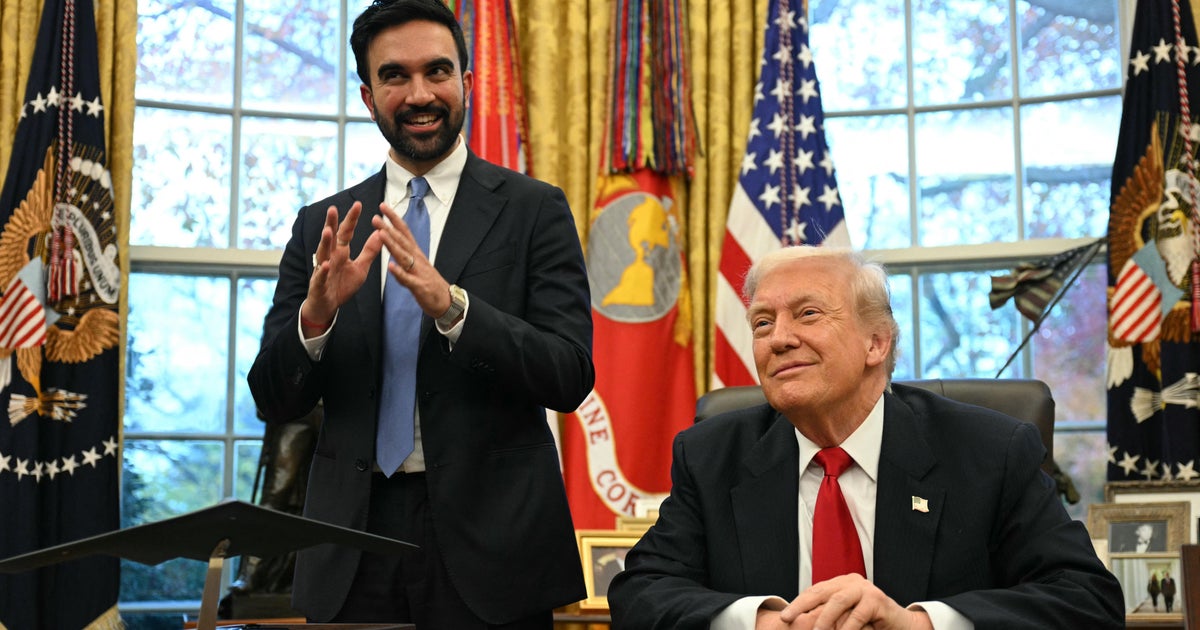
In what has become one of the most unexpected political partnerships in recent memory, New York City Mayor Zohran Mamdani revealed this week that he maintains regular communication with President Donald Trump, despite their well-documented political differences. Speaking candidly during a Thursday morning interview on “CBS Mornings,” Mayor Mamdani acknowledged the unusual nature of their relationship, emphasizing that while they disagree on many fundamental issues, they share one crucial bond: their deep love for New York City. This connection has proven strong enough to bridge what would otherwise seem like an unbridgeable political divide. The relationship between these two men, who come from vastly different political backgrounds and ideologies, represents what Mamdani describes as “a New York story” – one where individuals with opposing viewpoints can set aside their differences to work collaboratively toward shared goals. Their partnership began with a remarkable White House meeting last November, where both leaders pledged to put aside their political animosity to focus on improving conditions in America’s largest city. Since then, they’ve met multiple times, including a February discussion specifically focused on housing development, one of New York’s most pressing challenges.
The Foundation of Their Collaboration
At the core of every conversation between Mayor Mamdani and President Trump lies a single, powerful question: “How can we make the city better?” This shared commitment to New York’s prosperity has become the foundation upon which their unlikely partnership rests. Both men have publicly acknowledged that when the city thrives, they both feel a sense of accomplishment and satisfaction. This mutual investment in New York’s success has allowed them to find common ground despite their numerous disagreements on other matters. During their initial meeting in November, President Trump surprised many observers by noting that “some of his ideas are really the same ideas that I have,” referring to Mamdani’s policy proposals. The president went further, stating, “we agree on a lot more than I would have thought. I want him to do a great job, and we’ll help him do a great job.” These words marked a dramatic shift in tone from the campaign period and suggested that both leaders were willing to prioritize practical governance over political point-scoring. For Mamdani’s part, he has characterized their working relationship as refreshingly honest and direct, with both parties willing to acknowledge their disagreements openly while focusing their energy on areas where collaboration is possible.
A History of Hostility Overcome
The cordial working relationship that exists today stands in stark contrast to the intense hostility that characterized the recent past. During Mamdani’s mayoral campaign, President Trump was one of his most vocal opponents, going so far as to threaten the then-candidate with arrest and deportation. Mamdani, for his part, didn’t hold back either, at one point accusing Trump of behaving like a “despot.” The campaign period was marked by harsh rhetoric on both sides, with many observers believing that such animosity would make any future cooperation impossible. Yet somehow, these two strong-willed New Yorkers found a way to move past their bitter campaign battle and forge a working relationship. This transformation speaks volumes about both men’s pragmatism and their genuine commitment to serving New York City’s interests. It also reflects a uniquely New York approach to politics – one where fierce competitors can become collaborators when circumstances require it. The ability to compartmentalize personal and political disagreements while working together on practical matters is a skill that both Trump and Mamdani appear to possess, and it’s one that has allowed them to achieve what many thought impossible: a functioning partnership between two people from opposite ends of the political spectrum.
Deep Disagreements Remain, Particularly on Foreign Policy
Despite their successful collaboration on city matters, Mayor Mamdani has been clear that significant areas of disagreement remain between himself and the president, particularly regarding foreign policy. The mayor has spoken forcefully against the ongoing conflict with Iran, describing his opposition in the strongest possible terms. “I’m deeply opposed to the war,” Mamdani stated during his CBS interview, characterizing it as something “that should be opposed not just on a political level or an economic level, but frankly, a moral level.” His criticism goes beyond mere policy disagreement; it touches on fundamental questions of national priorities and values. Mamdani has been particularly vocal about what he sees as a misallocation of resources, pointing out the stark contrast between military spending overseas and domestic investment at home. “We’re talking about spending close to $30 billion to kill thousands of people an ocean away, while we’re told that we don’t have even an ounce of that money to help working class Americans across this country,” he explained, highlighting what he views as a moral and economic failure. When pressed by CBS co-host Gayle King about whether he has raised these concerns directly with President Trump, Mamdani confirmed that the two have discussed foreign policy disagreements, though he declined to provide specific details about the frequency or exact nature of these conversations, citing a commitment to keeping certain aspects of their dialogue private.
Maintaining Candor While Respecting Privacy
Mayor Mamdani has walked a careful line in discussing his relationship with President Trump, being open about the existence and general nature of their conversations while respecting what he describes as the private foundation upon which those discussions rest. When asked directly whether he has spoken to the president about the Iran conflict, Mamdani acknowledged that “it’s no secret of how I feel about the Iran war” and emphasized that “the president and I are very honest about those disagreements.” Under continued questioning, he confirmed that he and Trump have had “a conversation about a number of issues, and that includes our disagreements on foreign policy.” However, he firmly declined to provide more specific details, explaining that he would keep the “frequency and the nature of those conversations private, because that’s the premise of them.” This approach reflects a mature understanding of how productive dialogue between political adversaries can function – by creating a space where honest, candid conversation can occur without the pressure of public scrutiny on every word exchanged. Mamdani stressed that what makes these conversations valuable is that they are “driven by actually being candid,” suggesting that the privacy he maintains around certain details is essential to preserving the openness and honesty that characterizes his discussions with the president.
A Model for Political Cooperation in Polarized Times
The working relationship between Mayor Mamdani and President Trump offers an interesting case study in political cooperation during an era of intense polarization. In describing their partnership, Mamdani painted it as quintessentially New York in character – a place where people with “vehemently differing views” who “have said many things about each other” can nevertheless “work together on the points of agreement.” This pragmatic approach to governance stands in contrast to the rigid partisan divisions that often prevent collaboration in American politics. Both leaders have demonstrated a willingness to look beyond their personal histories and political differences to focus on practical matters that affect New Yorkers’ daily lives, such as housing development and urban improvement. Their example suggests that even in today’s highly polarized political environment, it is possible for leaders from opposite ends of the spectrum to find common ground and work productively together when they share a genuine commitment to serving their constituents. Whether this model of cooperation can be sustained over time, or whether it might inspire similar partnerships elsewhere, remains to be seen. For now, it stands as a reminder that politics doesn’t always have to be a zero-sum game, and that leaders who prioritize results over rhetoric can sometimes achieve unexpected breakthroughs in collaboration.