
Obama Backs Virginia Redistricting Amendment as Political Map Wars Escalate
A Former President Enters the Fray
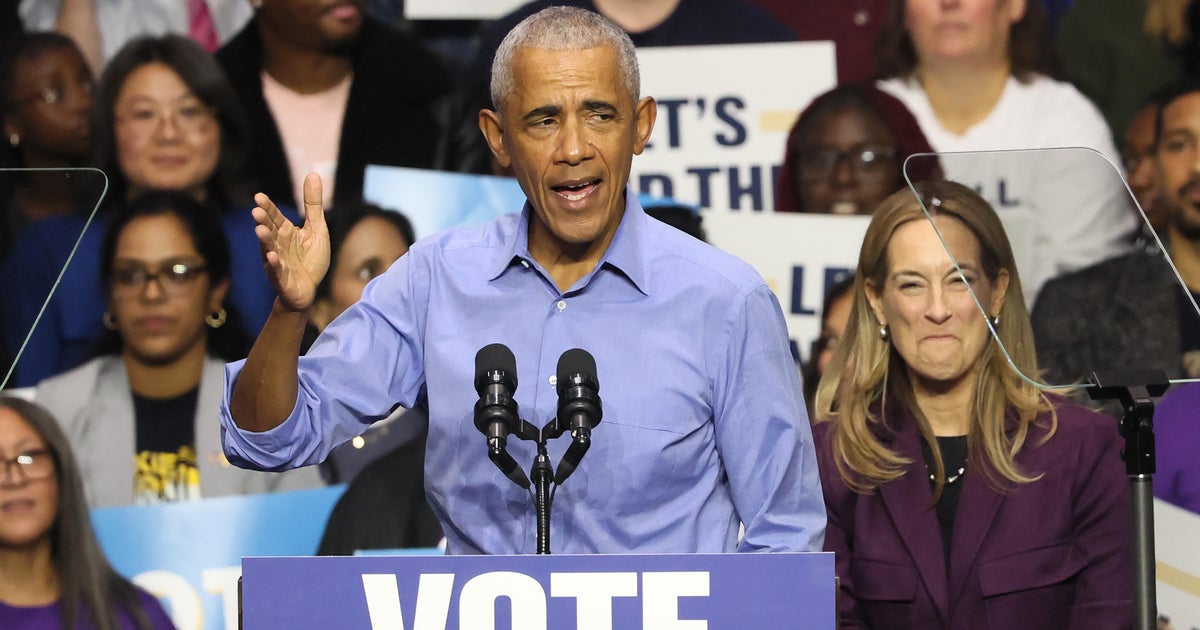
Former President Barack Obama has stepped into Virginia’s heated redistricting battle, urging voters to support a constitutional amendment that could dramatically reshape the state’s congressional representation. In a video message shared on social media Thursday, Obama framed the April ballot measure as a necessary response to Republican gerrymandering efforts across the country. His appeal highlights how the fight over congressional district lines has become a critical battleground in the struggle for control of the U.S. House of Representatives. Obama’s involvement brings national attention to what might otherwise be a sleepy special election, underscoring just how high the stakes have become in the ongoing redistricting wars that are reshaping American democracy.
The Nationwide Redistricting Arms Race
The Virginia controversy didn’t happen in isolation—it’s part of a broader nationwide trend of mid-decade redistricting that has upended traditional political norms. The domino effect began last year when Texas Republicans redrew their maps to target five Democratic-held seats, making them more favorable to GOP candidates. Democrats in California quickly responded in kind, redrawing boundaries around five Republican-held seats in an attempt to neutralize Texas’s advantage. Republicans in North Carolina and Missouri joined the fray, each altering at least one Democratic-held district in their states. This tit-for-tat approach represents a significant departure from the traditional practice of redrawing maps only after the decennial census. What we’re witnessing is essentially a political arms race, with both parties abandoning previous restraint and engaging in aggressive map manipulation whenever they have the power to do so. Obama’s message to Virginia voters explicitly acknowledges this reality, arguing that Democrats must respond to Republican actions or risk seeing their voting power diminished.
What’s Actually at Stake in Virginia
The practical implications of Virginia’s redistricting fight are substantial. Currently, the commonwealth’s congressional map allocates six House seats to Democrats and five to Republicans—a relatively balanced split that reflects Virginia’s status as a competitive purple state. However, the redistricting plans being pushed by Democratic leaders would dramatically alter this balance, potentially sending ten Democrats and just one Republican to the House of Representatives. This would represent a massive swing in representation, effectively transforming Virginia from a competitive battleground into a Democratic stronghold at the congressional level. The April 21 special election will ask Virginia voters to amend their state constitution to give the General Assembly the power to redraw these maps just months before the general election. Early voting begins Friday, and the outcome remains uncertain. For Republicans, who currently hold a narrow majority in the U.S. House, losing ground in Virginia could prove catastrophic to their hopes of maintaining control of the chamber when all seats are up for grabs in the fall midterms.
Republican Pushback and Accusations of Hypocrisy
Virginia Republicans have responded to the redistricting effort with fierce opposition, characterizing it as an anti-democratic power grab. “Democrats’ illegal gerrymandering power grab is an affront to democracy and rigs our maps to turn Virginia into a one-party state,” the Republican Party of Virginia declared on social media last month. They argue that the effort represents “an intentional effort to silence and disenfranchise half our Commonwealth.” Beyond the immediate political battle, Republicans and some independent observers have pointed to what they see as Democratic hypocrisy on the issue. After all, Democrats have spent years positioning themselves as the party opposed to gerrymandering, advocating for independent redistricting commissions and criticizing Republicans for drawing unfair maps. Obama himself tweeted in 2020 that “For too long, gerrymandering has contributed to stalled progress and warped our representative government.” Now, Democrats are actively pursuing their own aggressive gerrymander in Virginia, forcing them to backtrack on or complicate their previous messaging. This puts Democrats in an awkward position of essentially arguing that gerrymandering is acceptable when it’s done to counter gerrymandering by the other side—a nuanced argument that can be difficult to sell to voters who prefer clearer principles.
The Legal and Procedural Complications
Virginia’s redistricting effort has been anything but straightforward. The process has proven lengthy and complex, with legal concerns surrounding much of the work and creating uncertainty about the ultimate outcome. The fact that Democrats are seeking to change the state constitution just months before a general election adds another layer of controversy and potential legal vulnerability. Constitutional amendments typically require careful consideration and broad public support, but the compressed timeline here suggests a more politically motivated rush to implement changes before the fall midterms. There are also questions about whether such last-minute changes to electoral maps violate principles of fair notice and stable election rules. Courts have sometimes struck down redistricting efforts that come too close to elections, arguing that voters and candidates need adequate time to adjust to new boundaries. Whether Virginia’s effort will survive potential legal challenges remains to be seen, but the rushed nature of the process certainly invites scrutiny. Additionally, the special election format itself—held in April rather than during a typical November election—may result in lower turnout and an electorate that doesn’t fully represent the broader Virginia population, raising further questions about the democratic legitimacy of the process.
The Bigger Picture and Democracy’s Future
Stepping back from the immediate Virginia fight, the nationwide redistricting wars reveal troubling trends about the state of American democracy. When both major parties engage in aggressive gerrymandering whenever they have the opportunity, it suggests that partisan advantage has trumped principled commitment to fair representation. The mid-decade redistricting phenomenon is particularly concerning because it abandons even the minimal constraint of waiting for census data and instead treats map-drawing as an ongoing tactical weapon to be deployed whenever politically convenient. This creates instability and uncertainty for voters, who may find their districts redrawn multiple times within a single decade. It also reduces electoral competition, as gerrymandered districts tend to be safely partisan, giving incumbents less incentive to respond to voter concerns and fostering the kind of polarization that has made American politics increasingly dysfunctional. The fact that a former president feels compelled to personally intervene in a state-level redistricting vote underscores how central these map-drawing battles have become to the broader struggle for political power. Whether the solution lies in independent redistricting commissions, algorithmic map-drawing, or some other reform remains a subject of debate, but the current system clearly isn’t working for ordinary voters of either party who simply want fair representation and competitive elections that give them meaningful choices.