
Barack Obama’s Alien Comments Spark Social Media Frenzy and Quick Clarification
The Podcast Moment That Launched a Thousand Memes
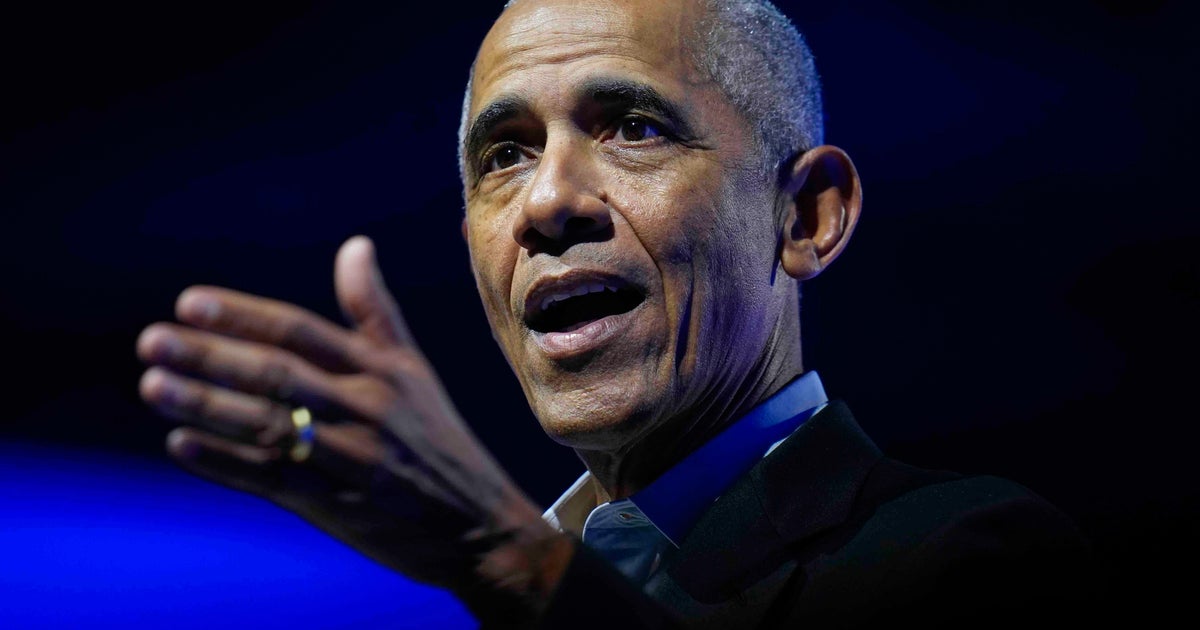
Former President Barack Obama recently found himself at the center of an unexpected social media storm after making casual comments about extraterrestrial life during a podcast appearance. While participating in a lighthearted lightning round of questions with podcast host Brian Tyler Cohen over the weekend, Obama was asked the straightforward question: “Are aliens real?” His simple two-word response—”They’re real”—immediately set the internet ablaze with speculation and excitement. However, the former president quickly added context to his answer, explaining that while he believed in the statistical likelihood of alien life existing somewhere in the universe, he personally hadn’t seen any evidence of it during his eight years in the Oval Office. He also took the opportunity to debunk one of America’s most enduring conspiracy theories, stating categorically that extraterrestrial beings weren’t being kept at Area 51, and there was no underground facility hiding alien secrets—unless, he joked, there was such an enormous conspiracy that even the President of the United States had been kept in the dark about it.
A Presidential Curiosity About the Unknown
The conversation took an even more entertaining turn when Cohen asked Obama what the first question was that he wanted answered when he became president. With a grin, Obama admitted: “Where are the aliens?” The two men shared a laugh at this revelation, which humanized the former president and showed his natural curiosity about one of humanity’s most persistent questions. It’s a relatable moment that many Americans can appreciate—after all, who among us wouldn’t want to know the truth about extraterrestrial life if given access to the nation’s most closely guarded secrets? This candid admission revealed that even those who reach the highest office in the land share the same sense of wonder and curiosity about the universe that captivates ordinary citizens. The exchange demonstrated Obama’s characteristic wit and his ability to connect with audiences through humor and honesty, traits that made him popular during his presidency and continue to endear him to many Americans today.
The Clarification That Followed the Viral Moment
As clips from the podcast began circulating widely across social media platforms, with headlines proclaiming that Obama had confirmed the existence of aliens, the former president recognized the need to provide additional context. On Sunday night, Obama took to Instagram to release a statement that walked back some of the excitement his initial comments had generated. In his clarification, he explained that he had been “trying to stick with the spirit of the speed round” during the podcast, but since his comments had garnered so much attention, he felt compelled to elaborate on what he actually meant. Obama laid out a thoughtful, science-based perspective: statistically speaking, the universe is so incomprehensibly vast that the odds are good that life exists somewhere out there beyond Earth. However, he emphasized that the enormous distances between solar systems make it highly unlikely that aliens have actually visited our planet. Most importantly for those hoping for confirmation of contact with extraterrestrial beings, Obama stated clearly: “I saw no evidence during my presidency that extraterrestrials have made contact with us. Really!” The exclamation point at the end seemed to underscore his desire to put any wild speculation to rest once and for all.
Area 51: America’s Most Mysterious Military Installation
Obama’s comments inevitably brought renewed attention to Area 51, the legendarily secretive military facility in the Nevada desert that has been the focal point of UFO conspiracy theories for generations. The mere mention of this classified installation conjures images of alien autopsies, recovered spacecraft, and government cover-ups in the popular imagination. For decades, the secrecy surrounding Area 51 fueled elaborate theories among UFO enthusiasts who believed the government was hiding evidence of extraterrestrial contact from the American public. The site’s real history, however, is rooted in Cold War-era military necessity rather than science fiction. It wasn’t until 2013 that the CIA officially acknowledged the existence of Area 51, though they certainly didn’t confirm any of the more outlandish theories about UFO crashes, black-eyed aliens, or faked moon landings. Declassified documents finally referred to the 8,000-square-mile installation by name after decades of U.S. government officials steadfastly refusing to acknowledge its existence at all, which only added fuel to the conspiracy fire throughout the years.
The Real Secrets of the Desert Test Site
While Area 51 may not house alien technology or extraterrestrial biological specimens, its actual purpose has been genuinely fascinating and historically significant. The base has served as a crucial testing ground for some of America’s most advanced and top-secret aircraft programs throughout the Cold War and beyond. In the 1950s, the remote Nevada location provided the perfect environment for testing the U-2 spy plane, an aircraft that could fly at unprecedented altitudes to conduct reconnaissance missions over the Soviet Union. Later, the facility would be used to develop and test the B-2 stealth bomber, a revolutionary aircraft that could evade enemy radar systems. These cutting-edge military aircraft programs required absolute secrecy to maintain America’s strategic advantages during tense geopolitical periods. The strange aircraft sightings reported by locals and travelers near the area weren’t alien spacecraft at all, but rather experimental military technology that looked unlike anything the average person had ever seen before. In many ways, the truth about Area 51—that it was the birthplace of aircraft that pushed the boundaries of what seemed technologically possible—is nearly as impressive as the alien theories, just considerably less exotic.
The Intersection of Science, Speculation, and Presidential Transparency
Obama’s handling of this minor controversy reflects a broader conversation about how we think about the possibility of extraterrestrial life and what we expect from our leaders regarding transparency on unusual topics. His initial playful response followed by a thoughtful clarification demonstrates a balance between engaging with public curiosity and providing accurate information grounded in science and personal experience. The former president’s acknowledgment that life probably exists somewhere in the universe aligns with the views of many scientists who point to the sheer number of planets and star systems as making it statistically unlikely that Earth is the only place where life has emerged. At the same time, his emphasis on the vast distances involved and the lack of evidence for actual contact keeps the discussion grounded in reality rather than speculation. This episode also highlights our collective fascination with the unknown and our desire to believe that we’re not alone in the universe. Whether motivated by loneliness, curiosity, or the simple human need for mystery and wonder, the question of alien life continues to captivate us across all demographics and political affiliations. Obama’s willingness to engage with the topic, even in jest, reminds us that our leaders are human too, sharing many of the same questions and curiosities that occupy our own imaginations as we look up at the stars and wonder what else might be out there.