


Russia’s Economic Squeeze: How Oil Sanctions Are Finally Hitting Home
The Financial Tide Turns Against Moscow
For years, Russia’s vast oil and gas reserves have been the financial engine keeping Vladimir Putin’s war machine running. Despite international condemnation and various attempts at economic pressure, the Kremlin managed to keep the petrodollars flowing, funding its ongoing invasion of Ukraine. However, as the conflict enters its fourth year, something significant has changed. Russia’s energy revenues have plummeted to levels not witnessed since the dark days of the COVID-19 pandemic, and the impact is becoming impossible to ignore.
The numbers tell a stark story. In January alone, Russian state revenues from oil and gas taxation collapsed to just 393 billion rubles (approximately $5.1 billion). This represents a dramatic fall from the 587 billion rubles ($7.6 billion) collected in December, and an even more shocking decline from the 1.12 trillion rubles ($14.5 billion) brought in during January of the previous year. Janis Kluge, a respected expert on the Russian economy at Germany’s Institute for International and Security Affairs, confirmed these figures represent the lowest point since the pandemic effectively shut down global trade. This sudden revenue crash isn’t the result of a single action, but rather a perfect storm of coordinated international pressure, shifting diplomatic relationships, and increasingly effective enforcement of existing sanctions that have finally begun to bite where it hurts most—Putin’s wallet.
A Multi-Pronged Attack on Russian Oil Revenue
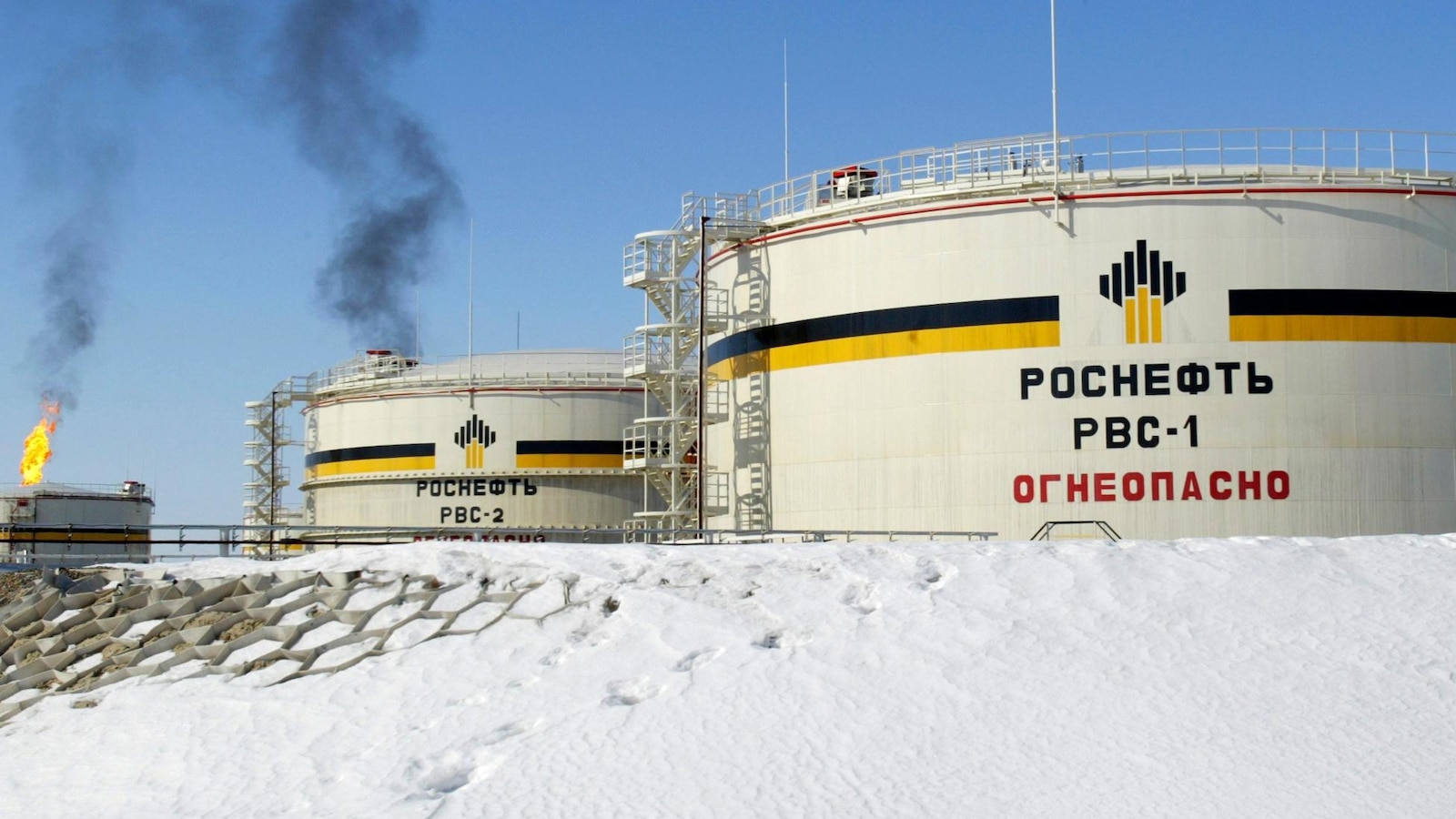
The dramatic decline in Russian energy revenues stems from several converging factors that have collectively created what analysts are calling a “cascading” or “domino effect.” The Trump administration took a significant step by imposing sanctions on Russia’s two largest oil companies, Rosneft and Lukoil, on November 21st. Unlike previous measures that attempted to limit profits while maintaining supply, these sanctions carry serious teeth—any entity purchasing or shipping oil from these giants faces the very real threat of being completely cut off from the U.S. banking system. For multinational businesses that depend on access to American financial networks, this represents an existential risk that simply isn’t worth taking, regardless of how attractive Russian oil prices might be.
Adding to Moscow’s headaches, the European Union implemented a ban on fuel made from Russian crude starting January 21st. This closed a significant loophole that had allowed Russian oil to enter European markets through the back door—by being refined in third countries and then sold to Europe as gasoline or diesel rather than crude oil. EU Commission President Ursula von der Leyen doubled down on this approach, proposing a complete ban on shipping services for Russian oil and making the strategic calculation crystal clear: “Russia will only come to the table with genuine intent if it is pressured to do so.” These latest measures represent a significant evolution from earlier approaches, particularly the $60 per barrel price cap implemented by the Group of Seven democracies under the Biden administration, which aimed to reduce Russian profits without cutting off supply entirely, partly out of concern about global energy price spikes.
India’s Pivotal Role and Trump’s Tariff Tactics
India has emerged as a crucial player in this evolving sanctions landscape, having become one of Russia’s largest customers for discounted crude oil following the invasion of Ukraine. President Trump applied direct pressure on this relationship, initially threatening tariffs of 25% before agreeing to reduce them to 18% and eventually removing an additional 25% tariff after claiming that Indian President Narendra Modi had agreed to halt Russian crude imports. The Indian government, characteristically diplomatic, hasn’t explicitly confirmed any such agreement. Foreign affairs spokesman Randhir Jaiswal described India’s approach as “diversifying our energy sourcing in keeping with objective market conditions,” while the Kremlin’s Dmitry Peskov carefully noted that Moscow was monitoring the situation while remaining committed to its “advanced strategic partnership” with New Delhi.
Regardless of the political rhetoric, the data shows a real shift in buying patterns. Russian oil shipments to India have fallen significantly in recent months, dropping from approximately 2 million barrels per day in October to just 1.3 million barrels daily by December, according to figures compiled by the Kyiv School of Economics and the U.S. Energy Information Administration. However, data firm Kpler suggests that India is “unlikely to fully disengage in the near term” from Russian energy, given the substantial price discounts available. The situation reflects the complex calculations facing developing economies that need affordable energy to fuel their growth but also want to maintain good relationships with Western powers and avoid secondary sanctions.
The Shadow Fleet’s Fading Shadows
Russia’s response to earlier sanctions was creative and, for a time, effective. The Kremlin assembled what became known as a “shadow fleet”—a collection of aging tankers operating beyond the reach of Western insurance companies, shippers, and the G-7 price cap enforcement mechanisms. This fleet allowed Russian oil to continue flowing to willing buyers, particularly in Asia, and helped revenues recover after they initially dipped when the EU banned most direct seaborne imports of Russian oil. However, Ukraine’s Western allies have systematically targeted this workaround, sanctioning individual shadow fleet vessels to deter customers from accepting their cargo. The numbers are striking: between the United States, United Kingdom, and European Union, sanctions now apply to 640 individual tankers.
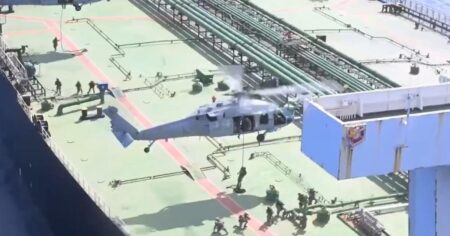
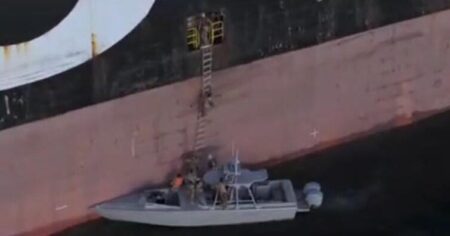
The enforcement has moved beyond paperwork, with U.S. forces seizing vessels linked to sanctioned Venezuelan oil, including one sailing under a Russian flag, while France briefly intercepted a suspected shadow fleet vessel. Meanwhile, Ukrainian forces have conducted direct strikes on Russian energy infrastructure, hitting refineries, pipelines, export terminals, and even tankers themselves. The combined effect has been to dramatically increase the risk premium associated with Russian oil. Buyers now demand substantial discounts to compensate for the risk of violating U.S. sanctions and the practical difficulties of arranging payments through banks that are increasingly reluctant to touch anything connected to Russian energy. The discount on Russia’s primary crude export, Urals blend, has widened to approximately $25 per barrel, with prices falling below $38 per barrel compared to the international Brent crude benchmark of about $62.50 per barrel. Since Russian production taxes are calculated based on oil prices, these lower prices translate directly into reduced state revenues. Mark Esposito, a senior analyst at S&P Global Energy, described the situation as creating “a really dynamic sanctions package, a one-two punch” affecting both crude oil and refined products, essentially saying “if it’s coming from Russian crude, it’s out.”
Economic Stagnation Compounds the Crisis
The revenue crisis coincides with—and is compounded by—a broader economic slowdown that threatens to create a vicious cycle for the Russian government. Economic growth has essentially ground to a halt as the initial boost from war-related government spending reaches its natural limits and severe labor shortages prevent businesses from expanding even when demand exists. Russia’s GDP increased by a mere 0.1% in the third quarter, and forecasts for this year range between just 0.6% and 0.9%, a dramatic drop from the over 4% growth rates recorded in both 2023 and 2024. Lower economic growth means reduced tax revenue from all sources, not just the struggling energy sector, creating additional pressure on state finances at precisely the moment when oil revenues are collapsing.
The current situation has created an unusual dilemma in global shipping markets as well. With buyers reluctant to take delivery of Russian oil, approximately 125 million barrels have accumulated in tankers sitting at sea—an extraordinary floating inventory that has driven up costs for scarce tanker capacity. Rates for very large crude carriers have reached $125,000 per day, costs that Esposito notes are “directly correlated with the ramifications of the sanctions.” The Kremlin faces a difficult choice: it can continue storing oil at sea at enormous expense, or it can slash prices even further to attract buyers willing to navigate the sanctions maze, either option further eroding already diminished revenues.
Putin’s Patchwork Solutions and Long-Term Implications
Faced with this financial squeeze, Putin has turned to traditional government responses: raising taxes and increasing borrowing. The Kremlin-controlled parliament, the Duma, increased the value-added tax that consumers pay on purchases from 20% to 22%, while also raising levies on imported cars, cigarettes, and alcohol. The government has ramped up borrowing from compliant domestic banks, and still has reserves in its national wealth fund available to patch budget holes. So far, these measures have allowed the Kremlin to maintain state finances on relatively even footing and continue funding the war effort. However, these are short-term solutions that create their own problems and cannot be sustained indefinitely without consequences.
Raising taxes during an economic slowdown risks making that slowdown worse, as consumers have less money to spend and businesses face higher costs. Increased government borrowing, particularly when channeled into war spending rather than productive investment, risks worsening inflation—a problem Russia has been fighting with aggressive interest rates of 16% from the central bank, down from a peak of 21%, managing to bring inflation down to 5.6%. Kluge points out the fundamental tension: “The Kremlin is worried about the overall balance of the budget, because it coincides with the economic downturn. And at the same time the costs of the war are not decreasing.” Looking ahead, Kluge suggests the economic pressure might not force Putin to seek peace, but could influence his military strategy: “Give it six months or a year, and it could also affect their thinking about the war. I don’t think they will seek a peace deal because of this, but they might want to lower the intensity of the fighting, focus on certain areas of the front and slow the war down. This would be the response if it’s getting too expensive.” After years of sanctions that Russia seemed to weather relatively well, the combination of more targeted measures, better enforcement, shifting international relationships, and domestic economic challenges may finally be creating the kind of financial pressure that influences strategic calculations in Moscow.