

Suspicious Oil Trading Activity Raises Red Flags Before Trump’s Iran Announcement
A Market-Moving Message That Came With Warning Signs
Financial markets operate on information, and timing is everything. So when President Trump posted a surprising message on Truth Social about productive talks with Iran early Monday morning, causing oil prices to drop sharply and the Dow Jones to shoot up over 1,000 points, it naturally caught everyone’s attention. But what’s raising serious eyebrows among financial experts isn’t just the market’s reaction—it’s what happened in the minutes just before Trump hit “post” on that message. Trading data shows an absolutely massive spike in oil futures contracts changing hands right before the president’s announcement became public, and that’s got people asking some uncomfortable questions about whether someone with inside knowledge might have been making moves to profit from information the rest of the world didn’t have yet.
The announcement itself was quite a departure from Trump’s previous stance. Just two days earlier, on Saturday, the president had posted a threatening message saying he would “obliterate” Iran’s power plants if they didn’t reopen the Strait of Hormuz to ship traffic. Then suddenly on Monday morning, shortly after 7 a.m. Eastern time, the tone completely changed to talk of “productive” peace discussions. For investors worried about rising oil prices feeding inflation and slowing economic growth, this was welcome news—but the abrupt reversal caught the market completely off guard. And that’s exactly the kind of unexpected shift that makes unusual trading activity before the announcement look particularly suspicious.
The Numbers That Don’t Add Up
Let’s talk about what actually happened in those crucial minutes before Trump’s post. According to analysis from Bloomberg News and the Financial Times looking at trading data, between 6:49 and 6:50 a.m.—just minutes before the president’s announcement—approximately 6,200 Brent and West Texas Intermediate futures contracts traded hands. We’re talking about a notional value of around $580 million in contracts. Now, that might not mean much without context, so here’s the comparison that matters: during that same one-minute window over the previous five trading days, the average was only about 700 contracts. That’s nearly nine times the normal trading volume for that specific time period.
Stephen Piepgrass, a partner specializing in futures trading at the law firm Troutman Pepper Locke, didn’t mince words about what this looks like: “The massive spike in volume of trades right before that post is certainly enough to raise eyebrows, and I think to launch an investigation into what was behind that.” Tim Skirrow, who heads energy and derivatives at consulting firm Energy Aspects, found that trading at 6:50 a.m. Monday was six times the typical volume for that hour. While he noted the size wasn’t exceptionally large in absolute terms, he emphasized it was definitely “unusual for this time of day.” What makes this particularly noteworthy is that Monday morning had no scheduled market-moving events—no major government economic releases, no Federal Reserve speeches, nothing that would typically explain a sudden surge in trading activity.
Why This Matters and Why It’s Illegal
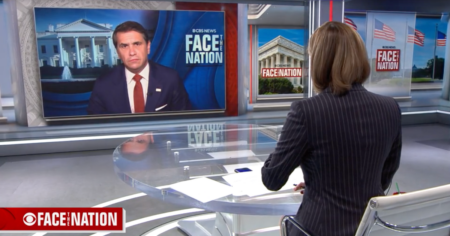
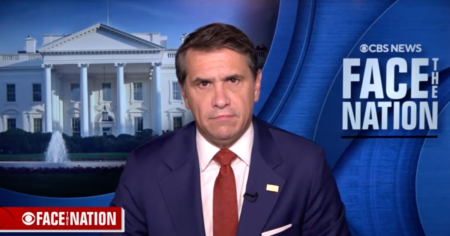
For those who don’t spend their days watching markets, the concept of insider trading might seem abstract. But as CBS News business analyst Jill Schlesinger, herself a former options trader, explains it in plain terms: “Does it seem fair that someone is trading and making money and profiting on information that you and I don’t have? Yeah, that kind of stinks.” That’s really what it comes down to. Insider trading—when individuals or firms make trades based on material information that isn’t available to the public—is illegal precisely because it undermines the fundamental fairness that markets need to function properly. If regular investors believe the game is rigged and that well-connected insiders are profiting from information they’ll never have access to, confidence in the entire market system erodes.
Nobel Prize-winning economist Paul Krugman addressed this situation directly in a blog post, writing that the trading spike “was especially bizarre because there were no major news items — no major publicly available news items — to drive sudden big market transactions.” He went further, adding that “The story would be baffling, except that there’s an obvious explanation: Somebody close to Trump knew what he was about to do, and exploited that inside information to make huge, instant profits.” It’s worth noting, though, that despite these suspicions from market watchers and experts, it’s not definitively clear whether a human trader initiated these positions or whether some algorithm might have been involved. Modern trading relies heavily on computerized systems that use preset strategies, so that remains a possibility, though the timing certainly looks suspicious either way.
A Pattern of Questionable Betting and Trading
Unfortunately, this oil futures situation isn’t happening in isolation. There have been several recent examples of trading activity that have raised similar red flags about people potentially acting on confidential or even classified government information. On Polymarket, a prediction market platform where users bet on future events, a trader using the account name “Magamyman” reportedly made nearly $600,000 betting on the February timing of U.S. and Israeli strikes on Iran. Another Polymarket user has racked up $967,000 in winnings, including many bets involving Iran, with a success rate exceeding 93% on bets valued above $10,000—an unusually high win rate that’s difficult to explain by luck or even exceptional analysis alone.
Then there was the case in January where a Polymarket trader made more than $436,000 by betting that former Venezuelan President Nicolás Maduro would be captured by U.S. forces, with the wager placed shortly before President Trump ousted Maduro. And just recently, The Guardian reported on bets totaling $70,000 made by eight Polymarket users on a U.S.-Iran ceasefire that also suggest potential insider trading. These patterns paint a troubling picture of information possibly leaking from government circles to well-positioned traders who can profit from knowledge the public doesn’t have. Whether this involves government officials themselves, people close to decision-makers, or some other channel of information flow, the consistency of these incidents suggests this isn’t just coincidence or exceptional market intuition.
The Regulatory Response (Or Lack Thereof)
So what are regulators doing about all this? That’s where things get complicated. The Commodity Futures Trading Commission (CFTC), which oversees futures markets, didn’t immediately respond to requests for comment about the oil trading spike. Neither did the White House. Jill Schlesinger voiced skepticism about whether we’d see aggressive investigation, partly because President Trump has previously expressed support for lighter regulation of financial markets. However, according to Piepgrass, the CFTC may actually be shifting its approach: “My sense is the CFTC is undergoing a sea-change right now because of this. They’re seeing more activity than they have seen in decades, maybe since they were created. They’re reassessing everything.”
The agency has recently launched a proposed rulemaking process focused in part on what actions prediction markets should take to prevent insider trading, and the outcome could have implications not just for prediction exchanges but for oil markets too. Meanwhile, Congress is also getting involved. Last week, a bipartisan group of senators and House representatives introduced legislation that would prevent traders from betting on government actions, war, and events where an individual knows or can control the outcome. The lawmakers explicitly stated their goal includes blocking government officials from making bets based on insider information. In what some experts see as an effort to get ahead of stricter government oversight, prediction market platforms Kalshi and Polymarket are moving to tighten their own rules on insider trading, with both companies stating Monday they have systems in place to detect suspicious activity.
Context and What Comes Next
To be fair, the oil market has been exceptionally volatile over the past several weeks due to escalating conflict involving Iran. Brent crude, the international benchmark, has been trading around $100 a barrel—a 37% increase from before the conflict started on February 28. Oil futures trading volume has been elevated throughout this period, with more than 3 million contracts traded on several days in March compared to typical trading of about 700,000 to 1.4 million contracts in the three weeks before the conflict began. Darrell Fletcher, managing director of commodities at Bannockburn Capital Markets, noted that “The volume [on Monday] was a bit more normal than the usual time of the day, but there’s a lot going on in the market.”
That context is important—volatile markets naturally see more trading activity. But the specific timing of Monday’s spike, occurring in the minutes immediately before a major market-moving announcement from the president, is what transforms this from general market volatility into something that looks potentially problematic. The question now is whether regulators will investigate seriously, whether they’ll find evidence of wrongdoing if they do, and whether we’ll see concrete changes to prevent this kind of thing in the future. With mounting concerns among lawmakers, regulators reassessing their approaches, and prediction markets implementing their own safeguards, we may be at a turning point in how seriously potential insider trading connected to government information is treated. Whether that leads to meaningful accountability or just more talk remains to be seen, but one thing is clear: a lot of people are watching these markets much more carefully now.