


Olympic Officials Bar Ukrainian Athlete From Honoring Fallen Comrades at 2026 Winter Games
A Heartbreaking Decision for a Nation at War
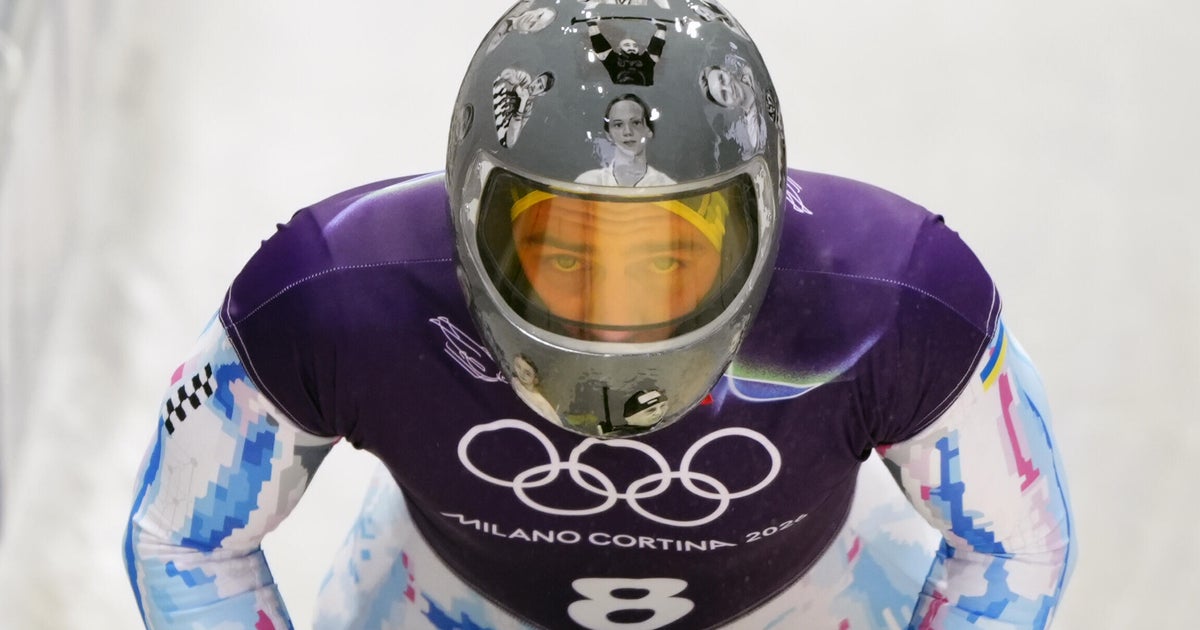
In a decision that has sparked international controversy and brought tears to many eyes, the International Olympic Committee has ruled that Ukrainian skeleton racer Vladyslav Heraskevych cannot wear his specially designed helmet when he competes at the 2026 Winter Olympics in Milan, Italy. The helmet, which Heraskevych had worn during training sessions, features powerful imagery depicting Ukrainian athletes who have lost their lives during Russia’s ongoing war against Ukraine. For Heraskevych, the IOC’s ruling represents far more than just a uniform violation—it feels like a betrayal of the very athletes who once stood alongside him as part of the Olympic family but will never have the chance to compete again. In an emotional social media post, the athlete expressed his devastation, saying the decision “simply breaks my heart” and lamenting that the IOC appears to be setting “special rules just for Ukraine” despite allowing similar tributes in the past during other conflicts and tragedies.
The IOC’s Stance on Political Neutrality
The International Olympic Committee’s decision comes wrapped in the language of neutrality and unity, principles that have long guided the Olympic movement but have become increasingly complicated in today’s fractured world. In a letter shared with CBS News by the Ukrainian Olympic team, the IOC acknowledged the painful reality of our times, stating that “sadly, today’s world is divided and full of conflicts and tragedies.” The committee emphasized that while they fully understand athletes’ desires to remember friends lost in various conflicts around the globe, the fundamental mission of the Olympic Games must remain focused on athletic performance, international unity, and the harmony that the Games are meant to promote. According to the IOC, allowing Heraskevych to wear his personalized helmet would violate a core principle applied equally to all delegations and athletes—that Olympic sports must remain separated from political, religious, or any other form of interference. However, in what some might see as a small concession, the IOC offered to allow Heraskevych to wear a plain black armband or ribbon without any personalization as a way to pay tribute to his fallen comrades.
The Stories Behind the Helmet
The images on Heraskevych’s banned helmet tell stories of young lives cut tragically short, athletes who shared his Olympic dreams but whose futures were stolen by war. Among those depicted is Dmytro Sharper, Heraskevych’s own national teammate in skeleton racing, who died fighting in the battles near Bakhmut, one of the war’s most brutal and prolonged confrontations. There’s 19-year-old biathlete Yevhen Malyshev, killed by Russian forces near Kharkiv, a young man who should have had decades of competition ahead of him. The helmet also honors boxer Maksym Halinichev, a Youth Olympic medalist whose potential was extinguished before he could fully realize it. Beyond these athletes, Heraskevych’s tribute extends to children who lost their lives and individuals who supported veteran sports programs in Ukraine. “Among them are representatives of summer sports and winter sports. Among them are Olympicians—members of the so-called Olympic family,” Heraskevych explained in his social media posts. For him, wearing this helmet wasn’t a political statement but a sacred promise: “I will compete for them.” These weren’t just statistics or names in a news report—they were friends, teammates, and fellow believers in the power of sport to transcend boundaries and bring people together.
Presidential Support and National Outrage
Ukrainian President Volodymyr Zelenskyy has thrown his full support behind Heraskevych, using the controversy to highlight what he sees as the world’s selective memory when it comes to ongoing atrocities. In a statement delivered Tuesday morning, Zelenskyy specifically named the fallen athletes depicted on the helmet, reminding the international community that these were real people with real dreams. “His helmet bears portraits of our athletes who were killed by Russia. Figure skater Dmytro Sharpar, who died in the battles near Bakhmut, 19-year-old biathlete Yevhen Malyshev, who was killed by the occupiers near Kharkiv, and other athletes who lost their lives in the Russian war,” the president stated, making sure each name was spoken and remembered. Zelenskyy went further, directly challenging the IOC’s characterization of the helmet as a political action. “I thank Vladislav Heraskevich, the flag bearer of our team at the Winter Olympics, for reminding the world of the price of our struggle. This truth cannot be inconvenient, inappropriate, or called a ‘political action at sporting events,'” he declared. For Zelenskyy, Heraskevych’s helmet serves a higher purpose—reminding the world what modern Russia represents and what the Olympic movement should truly stand for: peace and the preservation of life. In his view, Ukraine remains faithful to these ideals while Russia demonstrates the opposite through its continued aggression.
The Larger Debate About Sports and Politics
This controversy highlights a tension that has existed throughout Olympic history—the persistent question of whether sports can or should be separated from the political realities that shape athletes’ lives. The IOC has long maintained that the Games should serve as a neutral ground where politics are left at the door, allowing competition to unite rather than divide. However, critics argue that this position of neutrality can sometimes enable injustice by silencing those who wish to bear witness to ongoing atrocities. Heraskevych’s supporters point to historical precedents where the IOC has allowed various forms of political expression or tribute, questioning why this particular case is being treated differently. The fact that Heraskevych is being asked to choose between honoring his fallen friends and competing at the Olympics—something those friends will never have the opportunity to do—strikes many as profoundly unfair. The offered compromise of a plain black armband feels inadequate to those who believe the faces and names of the fallen deserve to be seen and remembered, not reduced to an anonymous symbol that could represent anything or nothing. Meanwhile, defenders of the IOC’s position worry about opening doors to countless political messages that could transform the Games into a battleground of competing narratives rather than a celebration of human athletic achievement.
Moving Forward With a Broken Heart
As the 2026 Winter Olympics approach, Vladyslav Heraskevych faces an impossible choice that no athlete should have to make. He can comply with the IOC’s ruling, competing without his tribute helmet and carrying the weight of that compromise in his heart. He can accept the offered alternative of a plain black armband, a gesture that acknowledges loss without specifying whose loss is being mourned. Or he could take a stand that might cost him his Olympic dream but would ensure the world sees and remembers the faces of his fallen comrades. Whatever he decides, his initial impulse to honor those who died—teammates who shared his passion for sport, his love of competition, and his pride in representing Ukraine—has already succeeded in drawing international attention to their stories. The debate sparked by this controversy extends far beyond one athlete’s helmet design; it forces all of us to consider what we believe the Olympics should represent in a world where conflicts continue to rage and innocent lives continue to be lost. For Heraskevych and his fellow Ukrainians, the Games cannot be separated from the daily reality of war, the constant threat of loss, and the ongoing struggle for their nation’s survival. The question facing the IOC, Olympic spectators, and the international community is whether acknowledging that reality diminishes the Olympic ideal or actually fulfills its deepest promise—that sport belongs to all people and should honor the human spirit in all its complexity, including our grief.