



Curling Controversy: When Olympic Ice Gets Heated
A Shocking Outburst Rocks the Genteel World of Curling
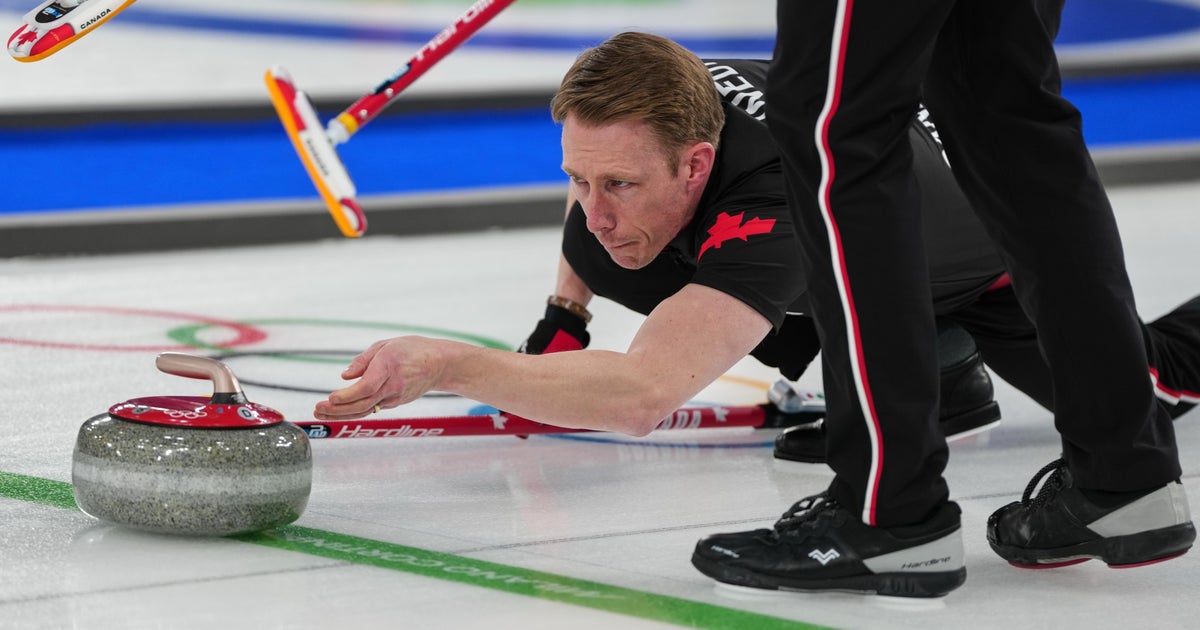
The sport of curling has long been celebrated as one of the most respectful and courteous competitions in the Olympic Games, where players are known for their impeccable sportsmanship and gentlemanly conduct. That reputation took a significant hit during the 2026 Winter Olympics when a match between Sweden and Canada descended into a war of words that left spectators stunned and officials scrambling to restore order. What should have been a standard round-robin match turned into a memorable confrontation when Swedish curler Oskar Eriksson accused Canadian veteran Marc Kennedy of “double touching” – a violation that occurs when a player touches the stone after the initial release while it’s traveling down the ice. Kennedy, a 44-year-old four-time Olympian with 25 years of professional curling experience, didn’t take kindly to what he perceived as an accusation of cheating. His response was far from the polite demeanor typically associated with the sport, unleashing a barrage of expletives that could be heard across the ice and brought the match to a temporary standstill. The incident has raised questions about sportsmanship, rule enforcement, and whether the traditionally reserved sport of curling is experiencing a cultural shift in how competitors interact under pressure.
The Technical Violation That Sparked the Firestorm
To understand the controversy, it’s important to grasp what exactly Kennedy was being accused of and why it matters in the highly technical sport of curling. According to the sport’s rules, a curling stone must be delivered using the handle that sits on top of the rock, and crucially, it must be completely released from the player’s hand before the stone crosses the hog line – the thick green boundary line that sits at each end of the sheet. This rule exists to ensure fair play and prevent players from gaining an unfair advantage by guiding or influencing the stone’s path beyond the point of release. Eriksson claimed he observed Kennedy releasing the stone properly using the handle, but then touching it again – this time on the granite surface of the stone itself rather than the handle – with an outstretched finger as the stone approached the hog line. This second touch, if it occurred, would constitute a clear violation of the rules. Replays of the incident appeared to support Eriksson’s claim, showing what looked like Kennedy making contact with the stone after the initial release. However, in a sport that prides itself on honor and self-regulation, such accusations carry significant weight and can be perceived as questioning a competitor’s integrity rather than simply calling out a technical mistake.
Kennedy’s Defiant Defense and the Escalating Confrontation
Marc Kennedy’s reaction to the accusation was immediate, visceral, and completely out of character for a sport known for its civility. The veteran curler, whose resume includes four Olympic appearances and a quarter-century of professional competition, felt his reputation was being attacked and responded accordingly. Using language that would make most athletes blush, Kennedy vehemently denied breaking any rules and made his feelings about the accusation abundantly clear. In his post-match comments, Kennedy explained his perspective: “I don’t like being accused of cheating after 25 years on tour and four Olympic Games. So I told him where to stick it. Because we’re the wrong team to do that to.” His words reveal the depth of offense he took at what he perceived not as a simple rules clarification but as a direct assault on his character and professional integrity. The confrontation brought the match to a brief standstill as fingers were pointed and Kennedy argued with members of the Swedish team across the ice, creating an uncomfortable scene that seemed more suited to a hockey match than a curling competition. Canada ultimately won the match 8-6, but the victory was overshadowed by the ugly exchange that had viewers and officials alike questioning what had just transpired on the Olympic ice.
Official Response and Enhanced Oversight Measures
The World Curling Committee couldn’t ignore such a public display of unsportsmanlike conduct, even from a respected veteran like Kennedy. The governing body issued a statement on Saturday announcing they had spoken with Canadian officials to deliver a verbal warning regarding the language used by Kennedy during the match. The committee made it explicitly clear that any further incidents involving inappropriate language would result in additional sanctions, though they didn’t specify what those sanctions might be. More significantly, the committee announced immediate changes to oversight procedures for the remainder of the competition. Starting from Saturday’s afternoon session, which included matches for both Canada and Sweden, two officials would be assigned to observe player deliveries across the four concurrent matches rather than the usual single official. This enhanced scrutiny represents an acknowledgment that the current honor system, while traditionally effective in curling, may need supplementation during high-stakes Olympic competition where emotions run high and national pride is on the line. The Swedish team had actually alerted officials to their concerns during the early ends of the match, and an official had subsequently stationed themselves at the hog line for three ends to monitor Canada’s deliveries. According to World Curling’s statement, no violations were recorded during this period of enhanced observation, adding another layer of complexity to the controversy.
The Technology Gap and Final Decisions in Curling
One of the most fascinating aspects of this controversy is that unlike virtually every other modern Olympic sport, curling does not utilize video replay to review game decisions. In an era where tennis has Hawk-Eye, football has VAR, and even swimming uses electronic timing to thousandths of a second, curling remains resolutely old-school in its approach to officiating. The World Curling Federation’s position is clear and unambiguous: “Decisions made during a game are final.” This means that despite the existence of television replays that appeared to show Kennedy’s finger making contact with the stone after the initial release, there was no mechanism for officials to review the footage and make a definitive ruling. The sport relies heavily on the honor system, with players expected to call violations on themselves or accept the judgment of on-ice officials without the possibility of technological intervention. This traditional approach has both advantages and drawbacks. It preserves the gentlemanly spirit that has defined curling for centuries and keeps the game moving without lengthy replay reviews. However, it also means that controversial moments like Kennedy’s alleged double touch cannot be definitively resolved, leaving both teams feeling potentially aggrieved – the Swedes because they believe a violation occurred, and the Canadians because they feel wrongly accused without the ability to prove their innocence through replay.
The Cultural Clash: Old-School Sportsmanship Meets Modern Competitive Intensity
This incident highlights a broader tension within curling and indeed across many Olympic sports – the conflict between traditional values of sportsmanship and the intense competitive pressure of modern elite athletics. Eriksson’s perspective represents the purist view of the sport. “We want a game that is as sportsmanlike, honest and clean as possible,” he explained, “so we call it out as soon as I see that the Canadian No. 2 is, in my eyes, there poking the stone.” For Eriksson, pointing out what he believed to be a rule violation wasn’t a personal attack but rather an attempt to ensure fair play and uphold the integrity of the competition. He emphasized wanting everyone to “play by the same rules,” suggesting his concern was about consistency and fairness rather than singling out an opponent. Kennedy’s reaction, however, reveals how such “calling out” can be perceived very differently by the player being accused. For someone who has dedicated their life to a sport and built a reputation over 25 years, being accused of cheating – even in the technical sense of rule-breaking – feels like a fundamental attack on their character and legacy. The intense pressure of Olympic competition, where athletes represent not just themselves but their entire nation, amplifies these emotions exponentially. As curling has grown in popularity and stakes have risen, the sport may be experiencing growing pains as it tries to maintain its traditional character while accommodating the fierce competitive spirit of world-class athletes who have trained their entire lives for these moments. Whether this incident represents an isolated outburst or signals a broader cultural shift in how curling is played at the highest levels remains to be seen, but it has certainly sparked important conversations about the balance between tradition and competition in Olympic sport.