
A Married Couple’s Shared Journey Into Iowa Politics
When Campaign Season Becomes a Family Affair
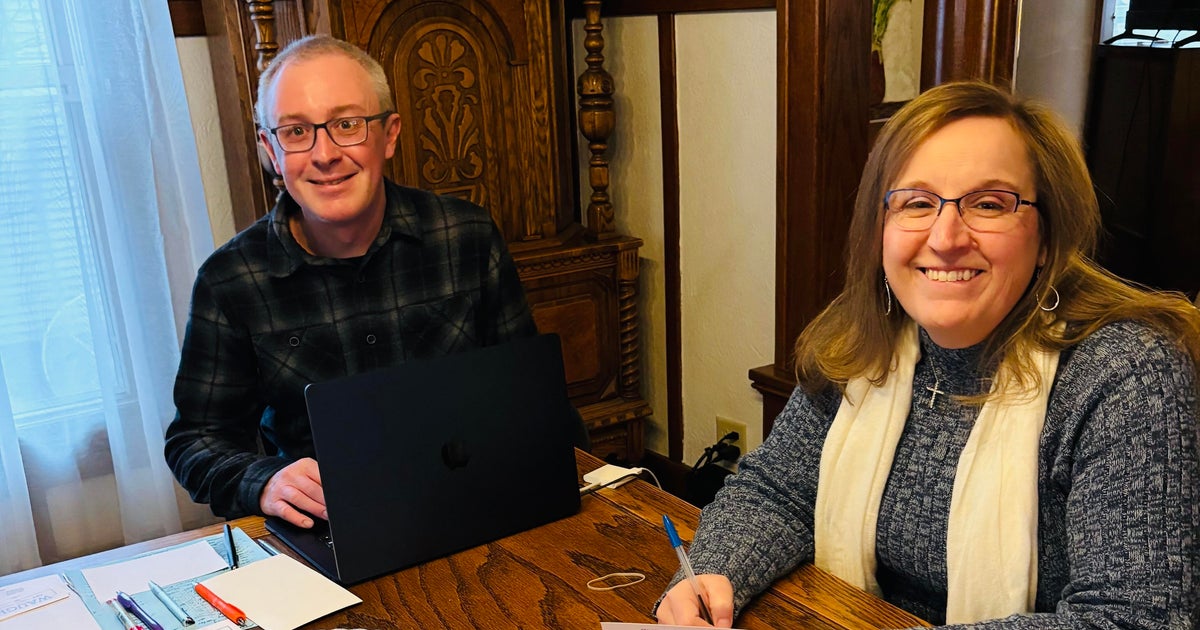
In the heart of Iowa, an unusual political story is unfolding at the Waugh family dinner table. Spencer and Sinikka Waugh, married for nearly three decades, have transformed their dining room into campaign headquarters – not for one candidate, but for two. The table that once hosted family dinners now groans under the weight of notebooks filled with voter data, carefully marked campaign maps showing different districts, and dual sets of yard signs bearing two different names. This isn’t a political rivalry playing out under one roof; it’s a shared mission that has the couple running for different offices in Iowa’s state legislature. Spencer is seeking a seat in the state House of Representatives, while Sinikka has thrown her hat in the ring for the state Senate. Their journey from a traditional marriage to dual political candidates reveals something deeper about commitment, community service, and how couples can support each other’s ambitions while maintaining their own identities.
From Defeat to Determination: How It All Began
The Waughs’ political adventure didn’t start with a grand strategic plan hatched over morning coffee. Spencer, who works as an associate dean at Simpson College, had already tested the political waters in the previous election cycle – and the results weren’t encouraging. He lost his race by a significant margin of 17 points, the kind of defeat that makes many people hang up their political ambitions for good. But Spencer isn’t most people. When he announced early last year that he intended to run again, his wife’s reaction was less than enthusiastic. “I looked at him, I said, ‘Why?'” Sinikka recalls with characteristic honesty. It was a fair question. Why put yourself through the grueling process of campaigning again after such a decisive loss? What followed was a series of deep conversations between the couple about their motivations, their values, and what they felt they owed to their community. They talked about “the work and the care that we have for the community and the service that we can do along the way.” As a small business owner, Sinikka understood commitment and hard work, and as she listened to her husband articulate his reasons for running again, something shifted in her thinking. She began asking herself how she could best support him in this endeavor: “How could I use my gifts and my skills and my talents to support him best in the campaign?”
The Unexpected Candidate Emerges
At first, Sinikka’s support took traditional forms. She became the supportive political spouse we’ve all seen at campaign events – standing beside Spencer at his campaign kickoff, knocking on doors in their community, showing up at events to demonstrate solidarity and support. She was content in this role, using her considerable skills and energy to help advance her husband’s political aspirations. But then something unexpected happened. At one campaign gathering, someone in the crowd made an observation that would change everything: “You know, the Senate seat is open.” It wasn’t just a passing comment. The same suggestion came up again at another event, and then another. People weren’t just being polite; they were recognizing something in Sinikka that she hadn’t fully seen in herself – the qualities of a candidate. The moment she decided to act on these suggestions has become part of their family lore, a story they tell with laughter and obvious affection. In late December, Sinikka turned to Spencer and asked, “What if I really ran?” What happened next still amazes her. Spencer immediately ran downstairs and returned within seconds carrying a printed map. “This is the Senate district map. Take a look at this,” he told her. When she asked why he already had the map printed, his response was simple and telling: “I printed it a few weeks ago. Because I could tell.” He had seen her potential before she had fully recognized it herself.
Making It Work: Politics and Partnership Under One Roof
For the Waughs, it turns out that running dual political campaigns fits surprisingly well into the established rhythm of their long marriage. They’ve been together since 1998, weathering all the challenges and changes that come with nearly three decades of partnership. But this is uncharted territory even for them. The campaigns operate as separate entities with their own schedules, volunteers, and strategies, but the boundaries inevitably blur when you share a home and a life. “We share the dining room table,” Sinikka explains with a laugh. “We have to alternate the time when we’re working sometimes.” It’s a practical arrangement born of necessity but also symbolic of their approach to marriage – taking turns, making space for each other, supporting one another’s goals while maintaining individual identities. When asked why he chose to run for the state House again after his previous defeat, Spencer delivered a perfectly timed joke: “We already had the yard signs.” It’s true – after his 2024 race ended, a dedicated volunteer collected all 500 signs, and Spencer painstakingly wiped them clean, preparing them for another campaign. It was an act of either optimism or stubbornness, or perhaps both.
Sensing Change in the Political Winds
Despite his previous loss, Spencer says this race already feels fundamentally different. He’s not making bold predictions about the outcome – he’s been through this before and knows better than to count his chickens – but he senses something shifting in the community. “People care about their community. They care about education. They care about clean water,” he observes, drawing a contrast with the atmosphere during his last campaign. These aren’t abstract political issues; they’re the concrete concerns that affect people’s daily lives. Sinikka shares his perception: “The energy is changing,” she says simply. The reactions to their joint candidacies have been as varied as you might expect. Some people have been overwhelmingly positive, inspired by the idea of a married couple both stepping up to serve their community. Others have been incredulous, struggling to imagine how anyone would voluntarily sign up for the stress and scrutiny of one campaign, let alone two simultaneous ones. Sinikka laughs recalling one friend’s blunt assessment: “You people are crazy!” Even one of their own children initially misunderstood the situation, thinking that Mom was running against Dad in some kind of political family feud. But Spencer says that overall, people have been supportive and encouraging, recognizing the genuine commitment to public service that motivates both campaigns.
The Journey Matters More Than the Destination
The Waughs are nothing if not realistic about the mathematical possibilities facing them. “There’s four possible outcomes,” Sinikka notes matter-of-factly: they could both win, they could both lose, or one could win while the other loses. But she doesn’t spend time dwelling on which outcome would matter most or ranking her preferences. “Right now, we’re focused on the journey,” she explains. “What kind of good we can do, how we can serve, how we can educate?” It’s a perspective that comes from maturity and from understanding that some things matter more than winning or losing. Someone suggested that if they both win, they could commute together to the state Capitol, perhaps using the drive time to coordinate their legislative agendas or just enjoy each other’s company. Spencer’s immediate response: “Absolutely not!” Sinikka laughs at his vehemence, explaining simply, “We have a different relationship to time.” It’s a small detail that speaks volumes about their marriage – they know each other well enough to recognize that some togetherness is wonderful while too much could strain even the strongest relationship.
If only one of them wins, Sinikka says without hesitation, “that’s okay.” After nearly 28 years of marriage, they’ve learned that love isn’t about matching achievements or synchronized success. It looks less like romantic certainty and more like shared work, mutual support, and the understanding that you’re on the same team even when you’re not in the same race. Eventually, the dining room table will be cleared of campaign materials and return to hosting family dinners. The yard signs – whether celebrating victory or acknowledging defeat – will come down. The carefully marked maps will be folded and put away in a closet or drawer. However the election turns out, whatever the final vote counts show, the commitment between Spencer and Sinikka Waugh will remain. Their marriage has survived nearly three decades, and it will survive this too. For now, as Spencer puts it, “We’re focused on the journey.” In a political landscape often dominated by personal ambition and individual achievement, the Waughs remind us that sometimes the most powerful campaigns are the ones we run together.