
A Night of Recognition: Tragedy and Resilience at the State of the Union
Honoring Sarah Beckstrom: A Life of Service Cut Short
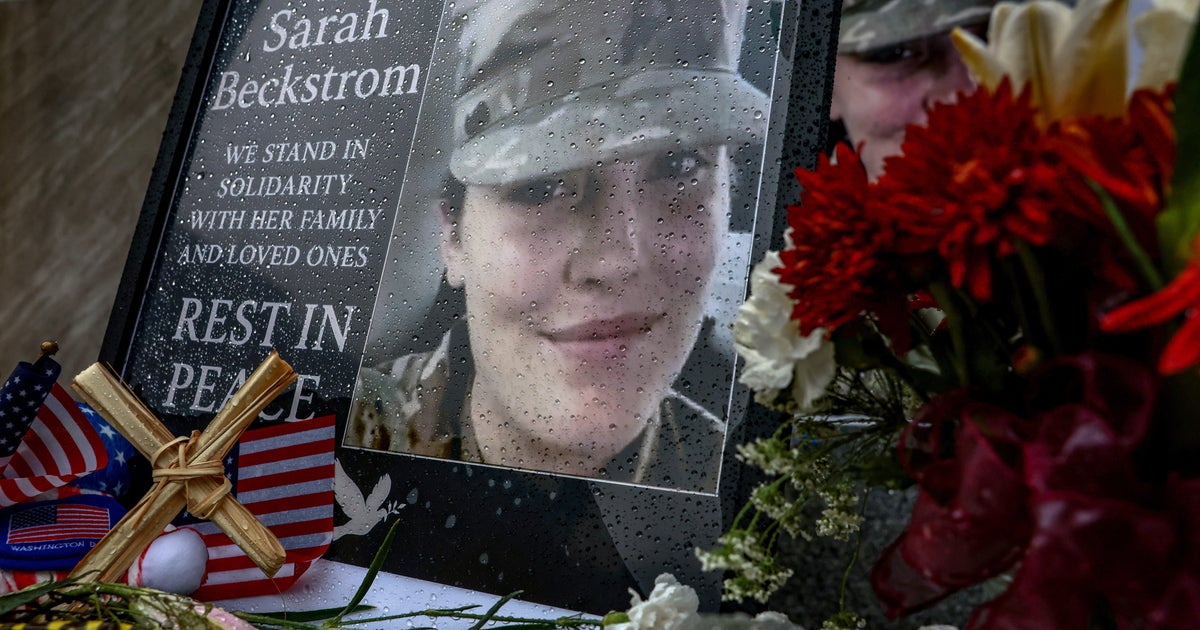
President Trump’s upcoming State of the Union address will carry particular emotional weight as he welcomes special guests whose stories embody both heartbreak and the ongoing national conversation about border security and public safety. Among those seated in the chamber will be Evalea and Gary Beckstrom, parents of 20-year-old Army Specialist Sarah Beckstrom, whose life was tragically cut short while serving her country on the streets of Washington, D.C.
Sarah Beckstrom’s story is one of dedication and compassion that extended far beyond her military service. Before her deployment, this young woman worked at a behavioral health agency, where she devoted herself to supporting individuals at risk of psychiatric hospitalization—a calling that demonstrated her commitment to helping others during their most vulnerable moments. When the opportunity arose to serve in the Trump administration’s D.C. National Guard deployment, Sarah didn’t hesitate. She volunteered for the assignment, showing the kind of selfless courage that defines the best of military service. At the time of the attack, she was serving with the 863rd Military Police Company, 111th Engineer Brigade, patrolling the very heart of the nation’s capital.
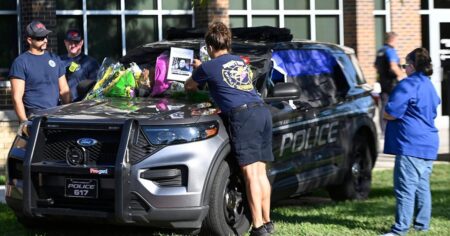
The attack that claimed Sarah’s life occurred on November 26th, just one day before Thanksgiving—a time when most Americans were preparing to gather with loved ones in gratitude and celebration. Instead, the Beckstrom family faced unimaginable loss. Sarah and fellow service member Air Force Staff Sergeant Andrew Wolfe, 24, were ambushed in an attack that occurred not far from the White House itself. While Wolfe survived after undergoing surgery and continues his recovery, Sarah’s family was left to mourn a daughter whose entire life had been dedicated to serving and protecting others. The suspect in this horrific attack, an Afghan national, has pleaded not guilty to multiple serious charges including first-degree murder and two counts of assault with intent to kill, relating to the two Guard members who heroically subdued him at the scene.
Dalilah Coleman’s Journey: A Young Life Forever Changed
Alongside the Beckstroms, another guest will capture the nation’s attention during the State of the Union: 7-year-old Dalilah Coleman, whose young life was forever altered by a devastating traffic accident in California. White House officials have confirmed that President Trump intends to acknowledge both families during the portion of his speech addressing southern border security and homeland security issues, using their stories to illustrate the human cost of current immigration challenges.
Dalilah’s story begins when she was just five years old, riding in a car that became part of a horrific six-car pileup. According to her parents, Marcus Coleman, who works as a truck driver himself, and her mother Ileana Krause, a commercial tractor-trailer crashed into their vehicle with devastating consequences. The impact fractured Dalilah’s skull, broke her femur, and caused a traumatic brain injury that would change the trajectory of her entire childhood. The driver of that truck, according to the Department of Homeland Security, was Partap Singh, a man from India who was in the country illegally but had somehow obtained a valid California driver’s license. Authorities determined that Singh failed to stop for traffic and a construction zone, leading to the catastrophic crash.
The aftermath of that terrible day has been a long and difficult journey for the Coleman family. Dalilah fell into a coma following the crash, and when she finally emerged, her parents discovered the full extent of the challenges ahead. Now, at seven years old, Dalilah remains nonverbal and has been diagnosed with diplegic cerebral palsy, a form of the condition that primarily affects the legs and lower body. Her recovery continues, but the little girl who was in that car at age five will face lifelong challenges as a result of injuries sustained in those few terrible moments. Immigration and Customs Enforcement officials took Singh into custody in August 2025, but no amount of legal accountability can restore what was taken from Dalilah and her family.
The Political Context: Stories That Shape Policy Debates
President Trump’s decision to invite these particular families to the State of the Union is not without political significance. Their presence serves to humanize abstract policy debates about immigration and national security, putting faces and names to statistics and talking points. The President has been vocal about the attack on Sarah Beckstrom and Andrew Wolfe, characterizing the shooter’s actions in stark terms. “He went cuckoo. I mean, he went nuts,” Trump has said of the attacker, adding, “It happens too often with these people”—a statement that reflects his broader messaging on immigration and security concerns.
These invitations follow a long-standing tradition of presidents using State of the Union guests to illustrate policy priorities and create memorable moments that resonate beyond the policy details of the speech itself. By featuring the Beckstroms and the Coleman family during the sections of his address dealing with border security and homeland security, Trump is making a clear argument that current immigration policies have real-world consequences for American families. Whether one agrees or disagrees with the President’s broader immigration stance, the suffering these families have endured is undeniable and their stories demand to be heard.
The Broader Conversation: Security, Immigration, and American Values
The presence of these families at the State of the Union raises important questions about how America balances security concerns with its traditional identity as a nation of immigrants. The cases of Sarah Beckstrom and Dalilah Coleman represent different aspects of this complex issue—one involving an Afghan national whose background and entry into the United States will undoubtedly face scrutiny, the other involving someone who had lived in the country long enough to obtain state documentation despite lacking legal status. These distinctions matter in crafting effective policy, even as both stories illustrate tragic outcomes.
For the Beckstrom family, their daughter’s decision to volunteer for service in the nation’s capital reflected the best of American values—selfless service, courage, and dedication to protecting others. Sarah’s work in behavioral health before her deployment showed a young woman committed to making a difference in the lives of vulnerable people. That such a person would be killed while serving in uniform, in the heart of Washington, D.C., raises profound questions about how the nation protects those who volunteer to protect us. For the Coleman family, watching their young daughter struggle with the permanent consequences of someone else’s actions—someone who shouldn’t have been in the position to cause such harm—represents a different kind of violation of the social contract that governs our communities.
Moving Forward: Remembrance, Recovery, and Reform
As these families take their seats at the State of the Union, they carry with them not just their personal grief and challenges, but also the weight of representing broader national conversations. The Beckstroms must navigate their loss while watching it become part of political discourse—a difficult position for any grieving family, yet one they’ve apparently accepted, perhaps in hopes that Sarah’s death might contribute to preventing future tragedies. The Colemans face the daily reality of caring for a child whose needs will be lifelong, while also seeing their daughter’s story used to illustrate policy arguments about immigration enforcement.
What remains clear, regardless of one’s political perspective, is that these are real families facing real consequences of decisions made by others and systems that failed in their protective functions. Sarah Beckstrom’s service deserves to be honored not just as a political talking point but as the sacrifice of a young woman who could have chosen an easier path but instead volunteered to stand watch over her nation’s capital. Dalilah Coleman’s ongoing recovery deserves attention not just as evidence in a policy debate but as a reminder that behind every accident, every failure of systems and enforcement, there are children whose entire futures are reshaped by moments they had no power to prevent. As President Trump delivers his State of the Union address with these families present, the challenge for all Americans will be to hold both truths simultaneously—to honor these individual stories in their full humanity while also engaging seriously with the difficult policy questions they raise about how we protect our communities, secure our borders, and live up to our values as a nation.