
The Hidden Health Crisis: How Industrial Pollution and Political Promises Collide in America’s Steel Towns
A Community Living in the Shadow of America’s Largest Coke Plant
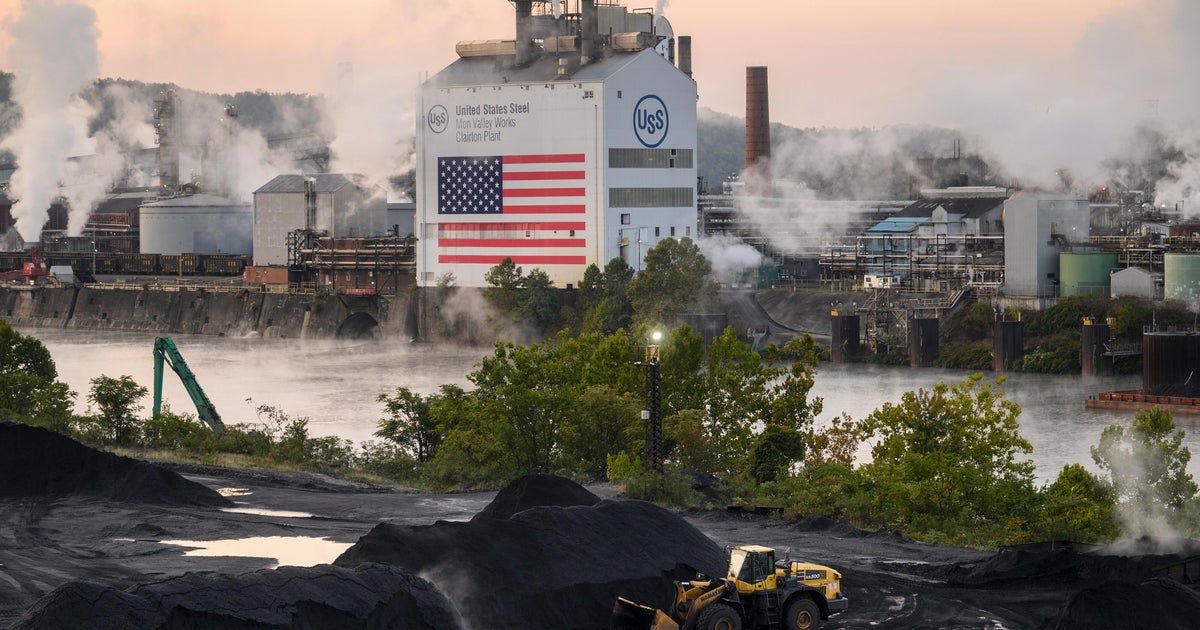
In the small town of Clairton, Pennsylvania, located along the Monongahela River’s west bank, residents wake up each day to the sight and smell of North America’s largest coke plant. This massive industrial facility transforms superheated coal into a carbon-rich fuel essential for steel production, but at a tremendous cost to the surrounding community. The plant sprawls across nearly 400 acres and operates ovens that reach temperatures as high as 2,000 degrees Fahrenheit to produce up to 4.3 million tons of coke annually. While this industrial operation provides crucial materials for manufacturing and employs 1,200 workers, researchers have discovered a disturbing pattern: children attending Clairton Elementary School, located about a mile from the plant, suffer from asthma rates nearly triple the national average. The situation has become so severe that studies show children with asthma living near the facility have an 80% higher chance of missing school when sulfur dioxide pollution levels spike. This dirty industrial process releases hazardous emissions including benzene, a known carcinogen linked to anemia and leukemia, as well as sulfur dioxide that triggers severe asthma attacks. The Clairton operation has a troubled history, including fatal explosions, excessive releases of toxic chemicals, and more than $56 million in fines from the Allegheny County Health Department since 2022. The facility has violated the Clean Air Act in each of the last 12 quarters as of July 2025, painting a picture of an industrial giant that has consistently struggled to operate within environmental safety standards while the community pays the price in health complications and lost lives.
The Political Clash Between Health Promises and Industrial Priorities
The tension between environmental protection and industrial interests has reached a critical point under the current administration. While President Trump and Republicans have publicly aligned themselves with the Make America Healthy Again (MAHA) movement’s populist ideals—including improving Americans’ food choices and reducing corporate environmental harm—their actions tell a different story. A Biden administration rule designed to reduce coke oven plant pollution offered hope to communities like Clairton, requiring plants to meet new limits on leaks from oven lids and doors, monitor benzene levels at property lines, and take steps to lower emissions of this carcinogen when certain thresholds were exceeded. However, before the rule even took effect with its July 2025 compliance deadline, President Trump granted all 11 coke plants in the United States, including Clairton’s facility, a two-year exemption from these standards. The administration’s justification was that the technology needed to meet the new standards wasn’t ready yet and that forcing compliance would simply shut down facilities and eliminate jobs without improving air quality. EPA spokesperson Brigit Hirsch argued that “forcing plants to comply before the tools exist doesn’t make the air cleaner, it just shuts down facilities and kills jobs with nothing to show for it.” However, environmental groups vehemently disagree with this assessment, arguing that plants could comply at reasonable costs and that this exemption demonstrates the administration’s prioritization of the coal industry over public health. This contradiction between the MAHA movement’s goals and the administration’s environmental rollbacks has created significant tension among supporters, with polling data showing that only 1 in 5 American adults, including about a quarter of Republicans, actually support rolling back environmental protections.
A Town’s Decline and the Price of Industrial Heritage
Clairton’s story reflects the complicated relationship many American communities have with heavy industry. The town was once a vibrant hub with movie theaters, diverse grocery stores, riverside parks featuring dance pavilions and performing hot-air balloonists. However, the decline of the steel industry hit Clairton hard, causing its population to plummet from more than 19,000 people in the mid-20th century to fewer than 6,000 by 2024. Today, approximately 33% of residents live in poverty, and dozens of abandoned homes have been razed and replaced with keep-out signs. The town became so emblematic of industrial hardship that it was featured in the 1978 movie “The Deer Hunter,” which depicts a struggling industrial community. Despite this decline, or perhaps because of it, the community remains conflicted about the coke plant. The facility generates hundreds of millions in tax revenue and creates nearly $3 billion in annual economic output according to estimates from the Pennsylvania Manufacturers’ Association, making it an economic lifeline for the region. Yet residents have long complained about health problems they attribute to the plant’s emissions. At a 2025 County Council meeting, resident Carla Beard-Owens spoke emotionally about her losses: “My parents are gone. My mom had cancer, my dad. I lost a lot of loved ones and seen other ones pass because of this mill.” The broader Allegheny County, which includes Clairton and Pittsburgh, has been linked to increased deaths, chronic heart disease, and adverse birth outcomes related to air pollution, and was ranked in the top 1% of counties nationwide for cancer risk from stationary industrial air pollutants in a 2018 EPA report. Clairton specifically has an age-adjusted cancer death rate of 170 per 100,000 people, significantly higher than the county’s overall rate of 150 deaths per 100,000 people.
The Scientific Evidence of Environmental Health Impacts
The health impacts documented by researchers paint a troubling picture of environmental injustice. Dr. Deborah Gentile, a pediatric allergist, led a groundbreaking study examining asthma rates among 1,200 children attending schools near major pollution sites in the area, including Clairton Elementary School. The findings shocked even the researchers themselves. Children at these schools had nearly triple the national rate of asthma, with the highest rates occurring among African American youth. “We were shocked,” Dr. Gentile recalled. “It was double or triple what we expected. The people are proud of their industrial background. We need steel, but they’re not running a good enough operation.” A follow-up study provided even more specific evidence, finding that children with asthma living near the coke plant had an 80% higher chance of missing school when sulfur dioxide pollution was elevated. The American Lung Association gave Allegheny County an F rating for its particle pollution levels in 2025. Environmental group PennEnvironment reported that the Clairton coke operation caused 1.1 million pounds of toxic releases in 2021, accounting for 60% of all such releases in the county that year. From 2020 through 2025, the Clairton plant accumulated more in fines from Clean Air Act penalties than any other coke oven facility nationwide, costing U.S. Steel (now operated as a subsidiary of Nippon Steel Corp. following last year’s acquisition) over $10 million. Six of the 11 coke factories nationwide had “high priority” violations of the Clean Air Act as of last May, with five plants logging major violations every quarter for at least three years straight. This pattern of persistent violations suggests systemic problems within the industry rather than isolated incidents, making the case for stronger regulations rather than exemptions.
The MAHA Movement’s Disillusionment and Political Ramifications
The contradiction between the Make America Healthy Again movement’s goals and the Trump administration’s environmental policies has created a rift that could have significant political consequences. MAHA supporters, who were drawn to promises of reducing corporate harm to the environment and improving public health, have become increasingly vocal about their disappointment. The situation reached a crisis point when President Trump issued an executive order to promote glyphosate, a herbicide the World Health Organization has linked to cancer. This move particularly angered MAHA enthusiasts because HHS Secretary Robert F. Kennedy Jr. had previously called glyphosate poison. “The glyphosate thing really ticks off a lot of them; they’re really upset,” explained Christopher Bosso, a professor of public policy and politics at Northeastern University. “Kennedy said it was poison. If it is a poison, why aren’t we regulating it? That’s where the tension plays out.” A petition to President Trump on Change.org with more than 15,000 signatures called for the removal of EPA Administrator Lee Zeldin, citing deregulatory actions that supported corporations over MAHA goals. Social media has become a battleground for frustrated MAHA supporters. Kelly Ryerson, a leader of American Regeneration which focuses on conservation farming approaches, stated on X that “No one should believe that MAHA is being upheld at the EPA at this point.” Alex Clark, host of a health and wellness podcast, expressed similar concerns, saying “there is something really freaking spooky going on at the EPA and I refuse to let the American people be gaslit into thinking they’re upholding the MAHA agenda.” Democratic strategist Max Burns noted that “a significant number of people who supported Trump are worried these rollbacks are going to hurt their health. The MAHA voters, especially women, are very sensitive to this. Republicans have put themselves in a bind.” However, some defend the administration’s overall record on MAHA priorities, with David Mansdoerfer, who served in HHS leadership during Trump’s first term, arguing that “MAHA has a pretty diverse set of policy goals, ranging from medical freedom to food and the environment. In totality, the Trump administration has strongly delivered on much of the MAHA agenda.”
The Future of Environmental Health Protection in Industrial Communities
The situation in Clairton and at other coke plants across America represents a critical test case for how the nation will balance industrial needs with public health protection. Nearly 300,000 people live within three miles of the 11 active coke plants across the United States, according to EPA data compiled by the Environmental Defense Fund, meaning the decisions made about these facilities affect hundreds of thousands of Americans directly. The Trump administration has taken several steps that environmental advocates say weaken health protections beyond just the coke plant exemptions. The EPA has decided to stop considering the health-related economic benefits of reducing pollution when making policy decisions, instead focusing exclusively on the cost to industry of complying with rules. The agency also rescinded the legal and scientific basis that had long established greenhouse gases as dangerous to public health. EPA spokesperson Brigit Hirsch defended the administration’s overall approach, pointing to actions taken to reduce PFAS chemicals, prevent lead poisoning, strengthen chemical safety, and protect Americans’ food and water supply, stating “We are building a future where the next generation of Americans is the healthiest in our nation’s history, and they inherit the cleanest air, land and water in the world.” Meanwhile, at a February White House gathering, coal industry executives and lobbyists, including coal miners wearing white hard hats adorned with American flags, presented President Trump with a bronze-colored trophy labeled “The Undisputed Champion of Beautiful Clean Coal,” to which he responded, “We love clean, beautiful coal.” The coming months will reveal whether the administration’s approach helps or hinders the MAHA movement’s goals, and whether communities like Clairton will finally see relief from the pollution they’ve endured for generations, or if the promise of jobs and economic activity will continue to trump health concerns. As health researchers warn that these anti-environmental initiatives will lead to more pollution-related illnesses and higher healthcare spending, the political ramifications could extend to the November midterm elections if MAHA followers conclude the party is more beholden to industry than to genuine health reform.