
Remembering the Fallen: Four Army Reserve Soldiers Killed in Iranian Strike
The Ultimate Sacrifice in Service to Our Nation
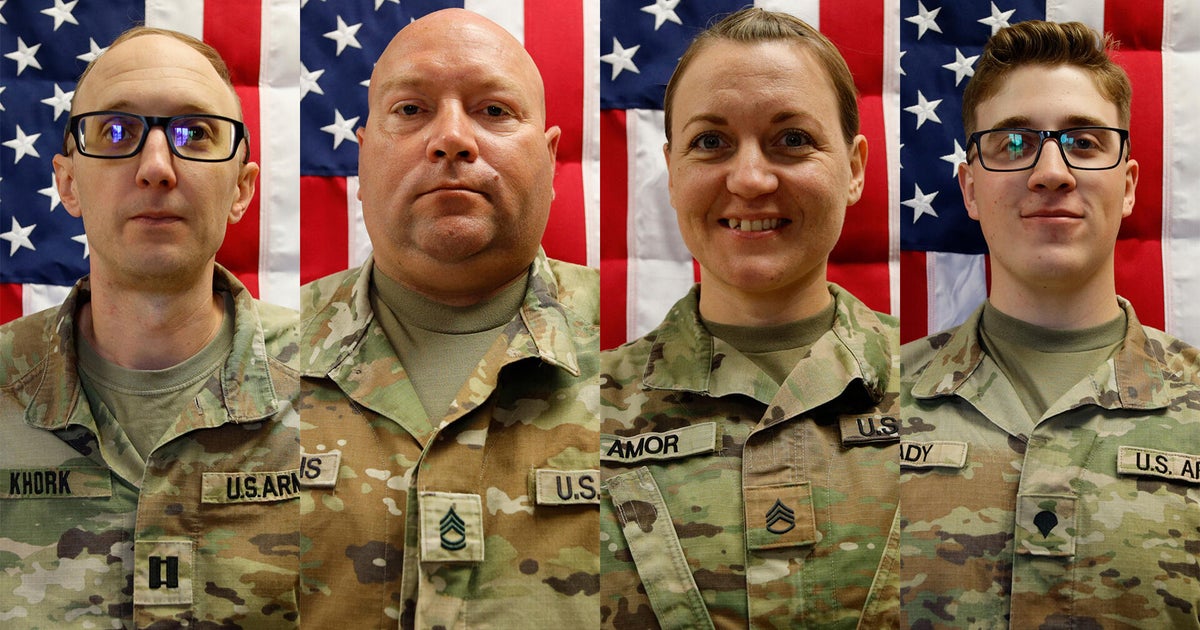
The Pentagon has confirmed the heartbreaking loss of four U.S. Army Reserve soldiers who gave their lives during the ongoing military conflict with Iran. Among the six service members who perished when an Iranian drone strike devastated a tactical operations center in Kuwait, these brave individuals represent the very best of what it means to serve one’s country. The Defense Department has identified them as Captain Cody A. Khork, 35, from Winter Haven, Florida; Sergeant First Class Noah L. Tietjens, 42, from Bellevue, Nebraska; Sergeant First Class Nicole M. Amor, 39, from White Bear Lake, Minnesota; and Sergeant Declan J. Coady, 20, from West Des Moines, Iowa. These weren’t just statistics or names on a casualty report—they were real people with families, dreams, and communities that loved them. Each had chosen to dedicate themselves to protecting our freedoms, and on Sunday at Port Shuaiba, they paid the ultimate price. The unmanned aircraft system attack that claimed their lives has left a profound void in the hearts of their fellow soldiers, their families, and a grateful nation that will forever remember their sacrifice.
Heroes Who Answered the Call
Lieutenant General Robert Harter, chief of the U.S. Army Reserve and commanding general of the U.S. Army Reserve Command, captured the sentiment of a mourning military community when he stated, “We honor our fallen Heroes, who served fearlessly and selflessly in defense of our nation. Their sacrifice, and the sacrifices of their families, will never be forgotten.” These words, while formal, cannot fully express the depth of loss felt by those who knew these soldiers personally. All four service members were assigned to the 103rd Sustainment Command based in Des Moines, a unit now grappling with the devastating loss of its own. Major General Todd Erskine, commanding general of the 79th Theater Sustainment Command, spoke directly to the families and teammates of what he called “these Cactus Nation Soldiers,” expressing his deepest sympathy and respect. He emphasized that our nation’s safety depends on brave men and women exactly like these four soldiers—people who put everything on the line every single day without hesitation. “They represent the heart of America,” Erskine said. “We will remember their names, their service, and their sacrifice.” These aren’t empty platitudes but genuine expressions of gratitude for individuals who embodied the warrior spirit and commitment to service that defines the American military tradition.
Lives Dedicated to Service
Each of these fallen soldiers had their own unique journey to military service, yet all shared an unwavering commitment to defending their country. Captain Cody Khork’s military career began when he enlisted in the National Guard in 2009, later earning his commission as a military police officer in the Army Reserve in 2014. Over his years of service, Khork deployed to some of the world’s most challenging regions—Saudi Arabia in 2018, Guantanamo Bay in 2021, and Poland in 2024. His progressive career and multiple deployments speak to a dedication that went far beyond mere obligation. Sergeant First Class Nicole Amor began her service journey in 2005 when she enlisted in the National Guard, transferring to the Army Reserve the following year. Her 2019 deployment took her to both Kuwait and Iraq, where she served with distinction. Sergeant First Class Noah Tietjens joined the Reserve in 2006 and demonstrated his commitment through two separate deployments to Kuwait, in 2009 and 2019, developing expertise and leadership that proved invaluable to his unit. Perhaps most poignant is the story of Sergeant Declan Coady, who at just 20 years old had enlisted in the Reserve in 2023—making him the newest to military service among the fallen. The Army Reserve posthumously promoted him from specialist to sergeant, a recognition of his valor and a small measure of honor for a life cut tragically short. Together, these four individuals represented decades of combined military experience, from the seasoned veteran to the promising newcomer, all united in their service.
The Broader Context of Loss
The four identified soldiers represent only part of the human cost of this recent attack. The names of two other U.S. service members killed in the same incident remain withheld pending notification of their next of kin—a reminder that behind every military casualty are families whose lives will be forever changed. U.S. Central Command initially reported three service members killed in Kuwait on Sunday, then updated that count when another succumbed to their injuries on Monday. The situation grew even more tragic when officials announced that remains of two previously unaccounted-for service members had been recovered from a facility hit during Iran’s initial attacks. Defense Secretary Pete Hegseth confirmed that the deadly incident occurred when an incoming munition struck a tactical operations center in Kuwait, with the Pentagon announcing a full investigation into the circumstances. Beyond the fatalities, the conflict dubbed “Operation Epic Fury” has left numerous service members wounded, though there has been some positive news on that front. As of Tuesday morning, the number of seriously wounded had decreased from 18 to 10 as injured personnel progressed through medical treatment, according to U.S. officials. While this represents improvement for some families anxiously waiting for news, it serves as a stark reminder that the true cost of military operations extends far beyond those who don’t return home—it includes those who carry physical and emotional scars for the rest of their lives.
Leadership Responds to the Crisis
In a somber video message delivered Sunday night, President Trump addressed the nation, offering condolences to the grieving families while delivering a sobering message about the realities of warfare. “We pray for the full recovery of the wounded and send our immense love and eternal gratitude to the families of the fallen,” the President said, before adding a difficult truth that military families understand all too well: “And sadly, there will likely be more before it ends. That’s the way it is.” Trump emphasized that combat operations “will continue until all of our objectives are achieved,” acknowledging that the path forward would likely claim additional American lives. Defense Secretary Hegseth honored the fallen service members by calling them “the absolute best of America,” expressing hope that the remainder of the operation would be prosecuted in a manner that honors their memory and sacrifice. These statements from the nation’s highest civilian and military leaders reflect the weight of responsibility they carry in ordering Americans into harm’s way. The conflict began when the U.S. and Israel launched a massive military operation early Saturday in Iran, which included striking Iranian Supreme Leader Ayatollah Ali Khamenei’s compound in Tehran, resulting in his death. According to the Israel Defense Forces, other Iranian officials and commanders were also killed, including a close adviser to Khamenei. Iran’s military has since launched retaliatory strikes on Israel and other U.S.-allied nations throughout the Middle East, creating a dangerous escalation that threatens regional stability.
The Road Ahead and Honoring Their Memory
On Monday, President Trump characterized the U.S.-Israeli military operation as the “last best chance” of addressing the threat posed by the Islamic Republic’s ballistic missiles and nuclear program, with the administration estimating the campaign would last four to five weeks. This timeline means that the families of Captain Khork, Sergeant First Class Tietjens, Sergeant First Class Amor, and Sergeant Coady—along with countless other military families—face weeks of uncertainty and anxiety about what comes next. The loss of these four soldiers serves as a powerful reminder that freedom isn’t free, and that the security Americans often take for granted comes at an enormous cost paid by a small percentage of our population who volunteer to serve. As communities in Winter Haven, Florida; Bellevue, Nebraska; White Bear Lake, Minnesota; and West Des Moines, Iowa, prepare to welcome home their fallen heroes for the last time, the nation must grapple with the reality that more families may soon face similar grief. Yet even in the midst of tragedy, there is something profoundly American about these stories—ordinary people from small towns and cities across the country who answered an extraordinary call to service. They represent different generations, different backgrounds, and different levels of military experience, yet they were united by a common commitment to something greater than themselves. Their sacrifice reminds us that the blessings of liberty we enjoy were purchased at great price by those willing to stand between us and harm. As Major General Erskine promised, we will remember their names, their service, and their sacrifice—not just in the immediate aftermath of this tragedy, but for generations to come. These four soldiers embodied the warrior ethos and the selfless service that has defined the American military since our nation’s founding, and their legacy will continue to inspire future generations who choose to wear the uniform and defend our freedoms.