


Pentagon Shoots Down Border Patrol Drone in Texas: A Breakdown of What Happened
The Incident at Fort Hancock
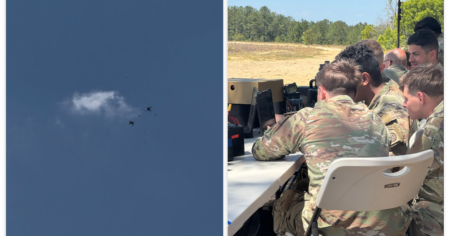
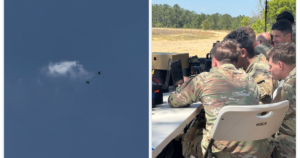
In a startling development that has raised serious questions about coordination between federal agencies, the U.S. Department of Defense confirmed on Wednesday that it had shot down a drone belonging to U.S. Customs and Border Protection in southwest Texas. The incident occurred near Fort Hancock, a small border community that sits right on the line separating the United States and Mexico. According to federal officials who spoke on the matter, the military used a laser weapon system to bring down the CBP drone. This wasn’t some science fiction scenario—this was one branch of the U.S. government using advanced weaponry to take down an aircraft operated by another branch of the same government. The fact that this happened at all speaks to either a catastrophic breakdown in communication or a deliberate action taken in response to what military officials perceived as a genuine threat to their operations and airspace security.
Official Explanations and Justifications
Late Thursday night, a joint statement was issued by the Defense Department, Customs and Border Protection, and the Federal Aviation Administration attempting to explain what had transpired. The statement used carefully chosen language, noting that “this reported engagement occurred when the Department of War employed counter-unmanned aircraft system authorities to mitigate a seemingly threatening unmanned aerial system operating within military airspace.” It’s worth noting here that “Department of War” is the current White House administration’s preferred terminology for what has traditionally been called the Defense Department—a semantic shift that itself signals a change in how the government frames military operations. The agencies were quick to reassure the public that the engagement happened “far away from populated areas and there were no commercial aircraft in the vicinity,” addressing immediate safety concerns that might arise from the military firing weapons in domestic airspace. The FAA, for its part, had already expanded a temporary flight restriction around Fort Hancock in response to the incident, citing “Special Security Reasons” for the closure, though officials emphasized that commercial flights were not affected by these restrictions.
Congressional Response and Concerns About Coordination
The response from Capitol Hill was swift and pointed. Democratic Representatives Rick Larsen, André Carson, and Bennie Thompson—all serving members of the House Committee on Transportation and Infrastructure—issued a joint statement that pulled no punches in expressing their alarm. “Our heads are exploding over the news that DoD reportedly shot down a Customs and Border Protection drone using a high risk counter-unmanned aircraft system,” they declared, their frustration palpable even in the formal language of congressional statements. The core of their concern centered on what appears to be a fundamental lack of coordination between federal agencies that should, in theory, be working in concert rather than at cross purposes. When one considers that both the Department of Defense and Customs and Border Protection ultimately answer to the American taxpayer and operate under the authority of the federal government, the fact that military forces felt compelled—or were authorized—to shoot down a CBP drone raises troubling questions about internal communication protocols, chain of command clarity, and whether proper deconfliction procedures were followed or even existed in the first place.
A Pattern of Airspace Incidents Near the Southern Border
This incident in Fort Hancock doesn’t exist in isolation but rather represents the second time within the same month that U.S. military drone operations near the southern border in Texas have resulted in airspace restrictions and operational complications. Earlier in February, specifically on the 11th, the FAA created widespread confusion and disruption when it briefly closed airspace around El Paso due to a safety disagreement with the Pentagon regarding military drone tests being conducted near Fort Bliss. Fort Bliss is situated adjacent to El Paso International Airport and located approximately 50 miles northwest of Fort Hancock, placing it squarely in the same region where this latest incident occurred. Sources familiar with those earlier drone tests indicated they involved high-energy laser systems—the same type of weapon system that was reportedly used to down the CBP drone. The El Paso airspace closure was initially announced as a 10-day shutdown of commercial airspace, a decision that would have had massive economic and logistical impacts on the region. However, the FAA reversed course just hours later and reopened the airspace, though not before causing significant confusion among travelers, airlines, and local officials trying to understand what was happening and why.
The Cartel Drone Question and Border Security Context
Adding another layer of complexity to an already complicated situation, White House officials provided CBS News with an explanation for the earlier El Paso airspace closure that introduced a new element into the narrative: Mexican cartel drones breaching U.S. airspace. This revelation places both incidents within a broader context of border security challenges that extend beyond traditional ground-based concerns. Drug cartels and criminal organizations operating along the U.S.-Mexico border have increasingly turned to drone technology for surveillance, smuggling operations, and potentially more threatening activities. This reality has forced U.S. military and law enforcement agencies to develop and deploy counter-drone capabilities, including the high-energy laser systems that have been tested in the region. The fact that the military is actively testing and deploying these systems near the border suggests a recognition of drones as a genuine security threat. However, this also creates a situation where multiple federal agencies—CBP, the military, the FAA—are all operating aerial assets or managing airspace in the same region, creating potential for the exact kind of incident that occurred at Fort Hancock.
Implications for Inter-Agency Operations and Public Safety
The shooting down of a CBP drone by the Department of Defense represents more than just an isolated incident of miscommunication—it reveals systemic challenges in how different branches of the federal government coordinate their operations, particularly in sensitive border regions where multiple agencies have overlapping jurisdictions and missions. Customs and Border Protection operates drones as part of its border surveillance and security mission. The military conducts training exercises and tests new weapons systems, including counter-drone technologies. The FAA manages airspace to ensure safe commercial and private aviation. When these missions intersect without proper coordination, the results can range from inconvenient (temporary flight restrictions) to dangerous (one agency shooting down another’s aircraft) to potentially catastrophic if such incidents occur near populated areas or active flight paths. The Congressional representatives who expressed alarm about this incident are right to demand answers about coordination protocols. The public deserves to know whether proper procedures were followed, whether the CBP drone was operating where it was authorized to be, whether the military had legitimate reasons to view it as a threat, and what steps are being taken to prevent similar incidents in the future. As drone technology becomes increasingly common in both government operations and civilian use, and as counter-drone systems become more sophisticated and widely deployed, establishing clear rules of engagement and communication protocols isn’t just bureaucratic box-checking—it’s essential for public safety and efficient government operation.