
Escalating Conflict: U.S. Intensifies Military Operations Against Iran
The Largest Strike Package Yet
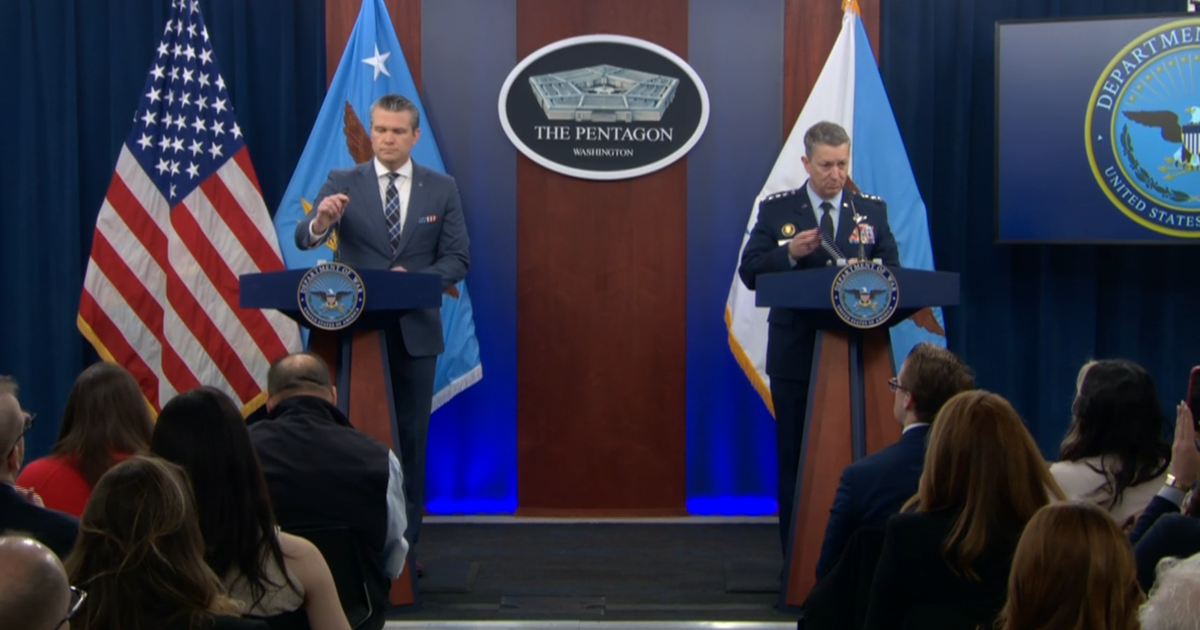
The conflict between the United States and Iran has reached a critical turning point, with Defense Secretary Pete Hegseth announcing on Thursday what he described as the “largest strike package yet” in the ongoing military operation. This escalation comes in response to a complex series of events: Israel launched strikes against an Iranian gas field, prompting Iranian retaliation across the region, which in turn triggered an intensified U.S. military response. According to Hegseth, American forces have already struck more than 7,000 targets throughout Iran, focusing primarily on the country’s military infrastructure. The scale of these operations is staggering, representing one of the most significant American military campaigns in recent memory. The strike packages continue to grow in magnitude, with each day seemingly surpassing the previous one in terms of firepower and strategic targets. This dramatic escalation has raised concerns both domestically and internationally about the trajectory of the conflict and its potential consequences for regional stability.
The Financial Cost of War
The financial implications of this expanding military operation are becoming increasingly apparent, with significant budgetary requests now making their way through Washington. The Washington Post reported that the Pentagon is seeking an additional $200 billion to fund the war effort, a request that underscores the massive scale and intensity of ongoing operations. While Defense Secretary Hegseth didn’t directly confirm this specific figure during his press conference, he made the administration’s position clear with a blunt assessment: “it takes money to kill bad guys.” This straightforward, if somewhat jarring, statement reflects the administration’s commitment to pursuing the military campaign regardless of cost. Hegseth further explained that the government would be returning to Congress to ensure proper funding “for what’s been done, for what we have to in the future,” suggesting that current operations are just the beginning of what could be a prolonged and expensive conflict. The request for such a substantial sum has sparked debate among lawmakers and policy experts about fiscal responsibility, war powers, and the appropriate level of congressional oversight for military operations of this magnitude.
Military Strategy and Tactical Operations
Joint Chiefs Chairman Dan Caine provided detailed insights into the military strategy being employed against Iran, painting a picture of a comprehensive and technologically sophisticated campaign. Caine acknowledged that Iran “came into this fight with a lot of weapons,” but emphasized that the United States has successfully developed “layered defenses throughout the region” to counter Iranian capabilities. The tactical approach includes the deployment of massive 5,000-pound penetrator weapons specifically designed to destroy underground storage facilities housing coastal defense cruise missiles and other military support equipment. These bunker-busting weapons represent some of the most powerful conventional munitions in the American arsenal, capable of reaching deeply buried targets that would otherwise be protected from standard aerial bombardment. Perhaps most significantly, Caine revealed that U.S. forces are “penetrating deeper into Iranian airspace to hunt and kill,” indicating an increasingly aggressive posture that extends American military operations well into Iranian territory. Both Caine and Hegseth stressed their intention to continue striking Iran’s industrial base, suggesting a strategy aimed not just at immediate military targets but at degrading Iran’s long-term capacity to sustain military operations.
Energy Markets and Israel’s Controversial Strike
The conflict took a dramatic turn when Israel conducted strikes against critical energy infrastructure in the Persian Gulf region, targeting both Qatar’s Ras Laffan facility—the world’s largest liquefied natural gas terminal—and Iran’s South Pars gas field, which is shared between Iran and Qatar. The immediate market reaction was severe: U.S. crude futures surged above $97 per barrel, natural gas prices jumped 3%, and Brent crude futures climbed to $111.87 per barrel, representing a 4% increase in a single day. These price spikes have direct consequences for consumers worldwide, with higher gas prices at the pump and increased energy costs rippling through the global economy. In an unusual twist, President Trump distanced himself from Israel’s decision to strike the South Pars gas field, claiming in a social media post that the United States “knew nothing about” Israel’s choice to “violently” attack this shared energy infrastructure. The President declared there would be “NO MORE ATTACKS” by Israel on South Pars unless Iran attacks Qatar, but added the ominous caveat that if such an attack occurred, the U.S. would “massively blow up” all of South Pars. This public disagreement with Israel’s tactical decisions represents a rare moment of daylight between the two allies and highlights the complex diplomatic challenges inherent in managing a coalition approach to the conflict.
Defending the Mission and Addressing Concerns
Defense Secretary Hegseth used his press conference to directly address growing concerns that the operation, dubbed “Operation Epic Fury” by the administration, might become another protracted and ultimately unsuccessful American military engagement in the Middle East. Speaking with the authority of personal experience, Hegseth emphasized that this conflict is fundamentally different from previous wars: “Hear it from me, one of hundreds of thousands who fought in Iraq and Afghanistan, who watched previous foolish politicians like Bush, Obama and Biden squander credibility. This is not those wars.” He insisted that Operation Epic Fury should not be viewed as an “endless abyss or a forever war or quagmire,” attempting to reassure both the public and skeptical lawmakers that the administration has learned from past mistakes. However, some intelligence assessments suggest the campaign may not be achieving all its objectives as quickly as hoped. Director of National Intelligence Tulsi Gabbard testified at a Senate hearing that despite extensive U.S. and Israeli strikes against senior Iranian leaders, the regime “appears to be intact,” though she noted it has been “largely degraded.” This assessment raises questions about how much more military pressure will be required to achieve the administration’s strategic goals and what those goals ultimately are.
Regional Complications and Domestic Investigations
The conflict has created significant complications both regionally and domestically. The Strait of Hormuz, one of the world’s most critical shipping chokepoints, has been effectively closed to the U.S. and its allies, contributing directly to the surge in oil prices. President Trump suggested that other countries should “be responsible” for reopening the waterway after some nations rejected American demands for assistance with this effort. NATO Secretary General Mark Rutte indicated that alliance members are discussing the “best way” to reopen the strait, while U.K. military planners are collaborating with American counterparts to develop viable options. On the domestic front, a potentially significant scandal is unfolding within the intelligence community. The FBI has launched an investigation into former National Counterterrorism Center Director Joe Kent in connection with alleged leaks of classified information, according to multiple sources with direct knowledge of the matter. Kent resigned earlier this week over his disagreements with the Trump administration’s handling of the Iran war, but the investigation reportedly began before his resignation. This development raises troubling questions about internal dissent within the national security establishment, the handling of classified information during a major military operation, and whether policy disagreements may have motivated unauthorized disclosures. As the conflict continues to escalate, these domestic political and legal complications add another layer of complexity to an already challenging situation, potentially affecting both the conduct of operations and public support for the mission.