


Tragedy at LaGuardia: Remembering Two Young Pilots Who Died Pursuing Their Dreams
Two Lives Cut Short in Pursuit of Aviation Dreams
The aviation community and families across Canada are mourning the devastating loss of two young pilots whose promising careers were tragically cut short in a runway collision at New York’s LaGuardia Airport on Sunday night. Captain Antoine Forest and First Officer Mackenzie Gunther were at the controls of an Air Canada Express flight arriving from Montreal when their aircraft collided with a fire truck on the runway just before midnight. The impact of this tragedy extends far beyond the immediate loss of life, touching the hearts of their families, friends, colleagues, and the tight-knit communities they called home. These weren’t just statistics or names in a news report—they were ambitious young men who had spent years working tirelessly to achieve their dream of becoming pilots, only to have their futures stolen in an instant during what should have been a routine landing.
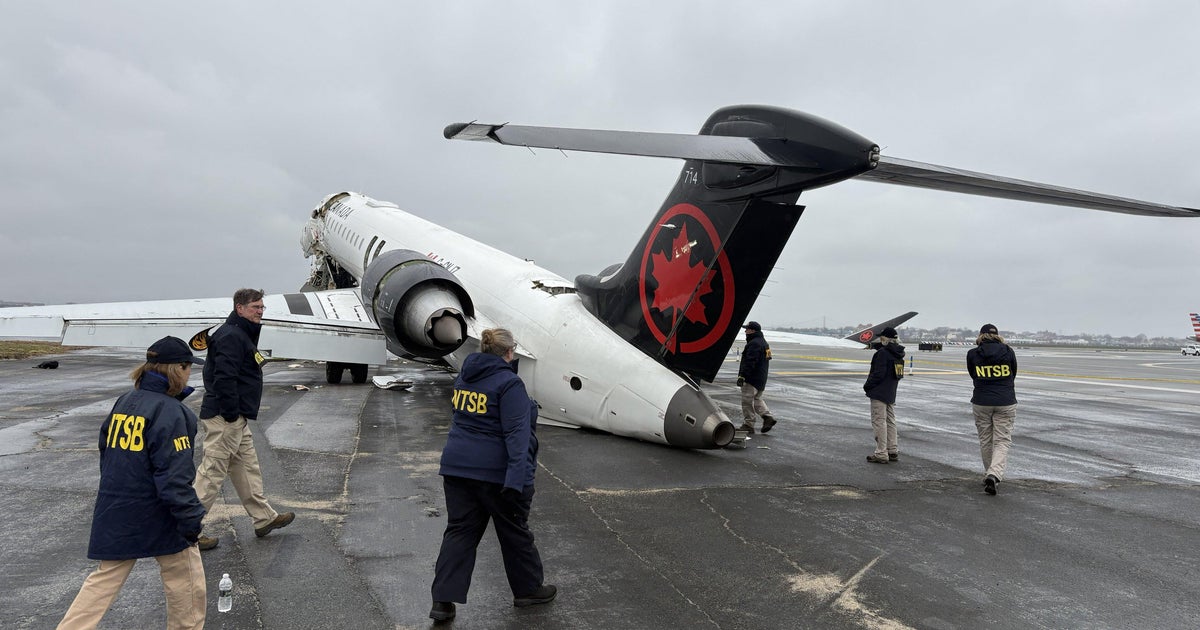
FAA Administrator Brian Bedford captured the profound sadness of the situation when he addressed reporters, emphasizing that “these were two young men at the start of their careers” and calling the incident “an absolute tragedy.” His words resonated with anyone who understands the dedication and passion required to become a commercial airline pilot. The collision injured 39 of the 76 people on board—72 passengers and four crew members—with six individuals still hospitalized as of Tuesday. While investigators work to piece together exactly what went wrong, preliminary information suggests that air traffic control recordings revealed the fire-rescue vehicle was apparently cleared to cross the runway before being told to stop. The plane was traveling at approximately 100 mph at the moment of impact, and troublingly, a runway warning system that should have activated in the moments before the collision failed to do so, according to the National Transportation Safety Board.
Antoine Forest: A Hometown Hero with Wings
Antoine Forest was a 32-year-old pilot from Coteau-du-Lac, a small, close-knit city in southwestern Québec where everyone knows everyone, and where his loss has left an enormous void. His great aunt, Jeannette Gagnier, who said Forest looked to her as a grandmother figure, shared with The Associated Press that her great nephew had always dreamed of flying. This wasn’t a passing fancy or a career chosen on a whim—it was a lifelong ambition that Forest pursued with determination and dedication. His LinkedIn profile showed that he had worked for two different airlines over the past five years, steadily building his experience and working his way up through the ranks of commercial aviation, a field known for its demanding requirements and competitive nature.
The impact of Forest’s death rippled through his entire community. Andrée Brosseau, the mayor of Coteau-du-Lac, posted heartfelt condolences on Tuesday, writing in French that “Antoine was one of our own. In a community like ours, everyone knows someone who knew him. His passing represents an immense loss for our entire community.” These words perfectly capture the intimate nature of small-town life, where tragedies don’t just affect immediate families but reverberate through entire networks of friends, neighbors, and acquaintances. Forest’s brother, Cédric, shared a childhood photograph of the two brothers together, accompanied by a moving tribute that revealed the deep bond between them. “Have a safe flight, my brother! Oh yes, we’ve often heard that phrase, but this time will be the last,” he wrote on Facebook. “You were coming and going in the wind, always full of new projects in mind. Gone again in the wind too soon to say goodbye I love you brother you can leave with your head held high.”
The personal tributes continued to pour in, painting a picture of a man who was not just a skilled pilot but also a loving partner and friend. A woman who identified herself as Forest’s girlfriend, also a young pilot herself, shared a photo of the couple with the simple but powerful caption: “the love of my life.” These glimpses into Forest’s personal life remind us that behind every tragedy are real people with relationships, dreams, and futures that have been irrevocably altered. Forest represented the best of what small communities produce—someone who dreamed big, worked hard to achieve those dreams, and never forgot where he came from.
Mackenzie Gunther: A Recent Graduate Living His Dream
Mackenzie Gunther’s story is particularly poignant because he was just beginning his professional journey as a pilot. He had graduated from Seneca Polytechnic’s Honors Bachelor of Aviation Technology program in Toronto only in 2023, making him an extraordinarily recent addition to the world of commercial aviation. The ink on his degree was barely dry when he joined the Jazz Aviation Pathways Program, a specialized training initiative operated by Air Canada designed to prepare new pilots for careers with the airline. The flight that crashed was operated by Jazz Aviation on behalf of Air Canada, meaning Gunther was flying for the very program that had trained him, living out the dream that countless aviation students work toward throughout their years of study.
Seneca Polytechnic released a statement expressing their grief: “Seneca sends our deepest condolences to Mr. Gunther’s family and friends, and to his former colleagues and professors. He will be deeply missed.” The school lowered its flags to half-staff on Tuesday in honor of their fallen graduate, a solemn gesture that acknowledged the profound loss felt by the entire academic community. For educators who had worked with Gunther, watching him progress from student to professional pilot only to lose his life so early in his career must be devastating. The pathway from aviation student to commercial airline pilot is long, expensive, and challenging, requiring thousands of hours of flight time, numerous certifications, and unwavering commitment. Gunther had successfully navigated all these obstacles and was beginning to reap the rewards of his hard work when tragedy struck.
Heroes in the Final Moments
While the investigation into what went wrong continues, some passengers have already begun crediting the two pilots with saving lives in the final moments before impact. At least one passenger, Clément Lelièvre, specifically praised Forest and Gunther’s “incredible reflexes” for preventing an even more catastrophic outcome. According to Lelièvre’s account, the pilots applied the brakes with extreme force just as the plane touched down, a split-second decision that likely reduced the severity of the collision and prevented additional casualties. This detail is crucial because it demonstrates that even in the face of an emergency situation unfolding at terrifying speed, both pilots maintained their professional composure and took immediate action to protect their passengers.
Some observers have described it as miraculous that more people weren’t seriously hurt or killed in the collision, given that the aircraft was traveling at approximately 100 mph when it struck the fire truck. The fact that most passengers survived and that many escaped without serious injury speaks to both the structural integrity of modern aircraft and the actions taken by the flight crew in those critical final seconds. While Forest and Gunther tragically lost their own lives, their final actions as pilots may well have saved dozens of others. This is the reality of aviation—pilots are not just operators of machinery but guardians of human life, trained to make split-second decisions under pressure that can mean the difference between tragedy and survival. In their final moments, Forest and Gunther embodied the very best of their profession.
The Investigation and Unanswered Questions
The National Transportation Safety Board has launched a comprehensive investigation into the collision, and early findings have already raised troubling questions about the sequence of events leading to the crash. Air traffic control recordings indicate that the fire-rescue vehicle was cleared to cross the runway before being told to stop—a communication breakdown that may have placed the vehicle directly in the path of the landing aircraft. Even more concerning is the revelation that a runway warning system, designed specifically to prevent these types of collisions, failed to activate in the moments before impact. This technological failure represents a serious breach in the multiple layers of safety systems that are supposed to make modern aviation the safest form of transportation.
Investigators will spend months analyzing flight data recorders, cockpit voice recordings, air traffic control communications, and physical evidence from the crash site to determine exactly what went wrong and why. They’ll examine whether proper protocols were followed, whether equipment functioned as designed, whether training was adequate, and whether there were systemic failures that contributed to the tragedy. These investigations are exhaustive because aviation safety depends on learning from every incident to prevent future ones. While answers may provide some measure of understanding to the families and loved ones of Forest and Gunther, no explanation can truly compensate for the loss of two young lives full of promise and potential.
A Community United in Grief and Gratitude
The aftermath of this tragedy has seen an outpouring of grief, sympathy, and gratitude from multiple communities—the families and friends of the pilots, their hometowns in Canada, the aviation community, and the passengers whose lives they may have saved. The contrast between the promise these young men represented and the abrupt end of their stories is almost too painful to contemplate. Forest, with his years of experience and infectious enthusiasm for new projects, and Gunther, fresh from graduation and just beginning to build his career, both embodied the future of aviation. Their deaths serve as a stark reminder that flying, despite being statistically very safe, still carries inherent risks, and that the pilots who transport us safely to our destinations deserve our respect and appreciation.
As the investigation continues and as families begin the difficult process of grieving and healing, the memory of Antoine Forest and Mackenzie Gunther will endure in the hearts of those who knew them and in the broader aviation community. Their dedication to their craft, their final heroic actions, and their tragically cut-short dreams will not be forgotten. The flags flying at half-staff at Seneca Polytechnic, the tributes pouring in on social media, and the tears shed in Coteau-du-Lac all testify to lives that mattered, that made a difference, and that ended far too soon. In remembering these two young pilots, we honor not just their memory but the dreams of all those who look to the skies and dare to fly.