



Record-Breaking Drug Bust in Rio: How One Police Dog Uncovered 48 Tons of Marijuana
An Unexpected Discovery in Rio’s Favelas
In what has become Brazil’s largest drug seizure in history, police in Rio de Janeiro stumbled upon an astonishing 48 tons of marijuana hidden in one of the city’s sprawling favelas. What makes this discovery even more remarkable is that it wasn’t the result of months of intelligence gathering or sophisticated surveillance operations—it was thanks to the keen nose of a police dog named Hulk. During what started as a routine operation against criminal factions in the Complexo da Maré, a massive complex of favelas in northern Rio de Janeiro, Hulk’s instincts led officers to an abandoned water tank that concealed something far more significant than anyone had anticipated. The German Shepherd’s alert behavior signaled to his handlers that something wasn’t quite right about the seemingly ordinary structure, prompting them to investigate further. What they found beneath that water tank was a sophisticated bunker containing an unprecedented quantity of marijuana, representing years of criminal enterprise and millions of dollars in street value.
The Hero of the Hour: Hulk the Police Dog
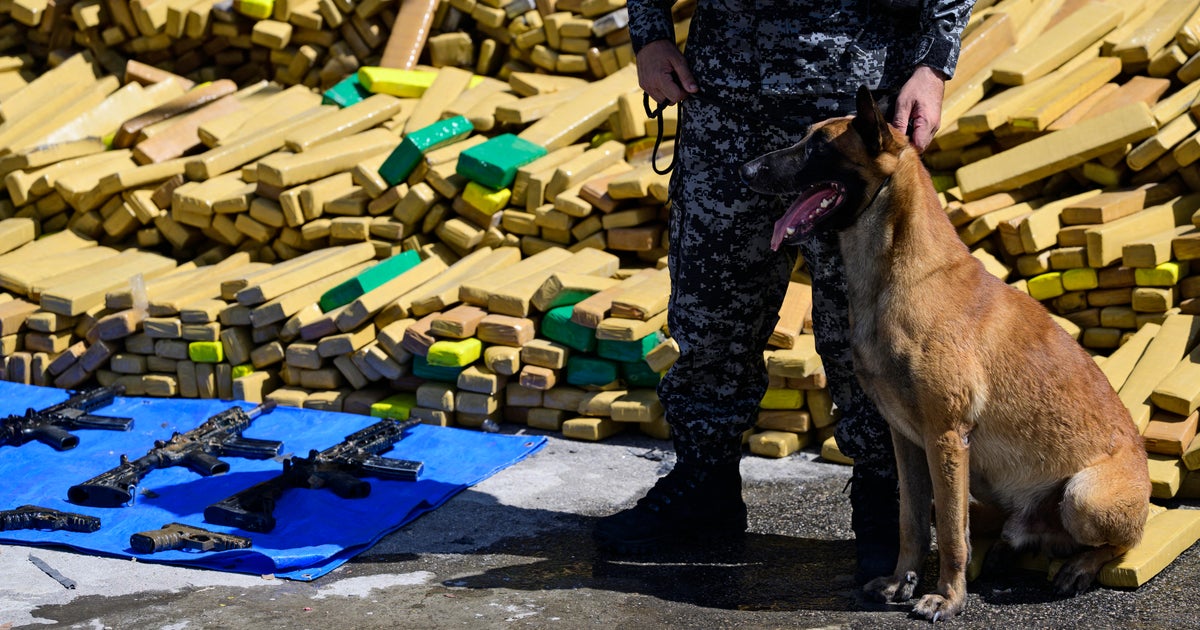
Hulk, a member of the Canine Operations Battalion, has become an unlikely celebrity following his role in this historic bust. Lt. Col. Luciano Pedro Barbosa, commander of the battalion, was quick to credit the four-legged officer with the discovery, emphasizing that an officer “discovered a bunker inside where this entire quantity of drugs had been hidden” only after Hulk indicated the suspicious location. The battalion celebrated their canine hero on Instagram, posting photos of Hulk posing proudly alongside the seized contraband and weapons. The post quickly went viral, with supporters and admirers flooding the comments section with praise for the drug-sniffing dog. One commenter perfectly captured the public sentiment, writing “Hulk deserves 48 tons of treats”—a playful acknowledgment of the magnitude of his contribution to law enforcement. The story resonates because it reminds us that sometimes the most effective crime-fighting tools aren’t high-tech gadgets or complex algorithms, but the natural abilities of specially trained animals working alongside dedicated officers. Hulk’s success highlights the invaluable role that police dogs play in law enforcement worldwide, serving as both working partners and beloved members of police departments.
A Massive Operation with Historic Results
The sheer scale of this seizure cannot be overstated. At 48 tons, the marijuana haul surpassed Brazil’s previous record set in 2021, when highway police seized 36.5 tons in the state of Mato Grosso do Sul. Lt. Col. Barbosa told reporters that the seizure “represents a financial loss of almost $10 million for the criminal faction involved,” dealing a significant blow to organized crime operations in the region. The operation itself was no small undertaking—it required 250 military police officers and took approximately five hours just to remove the drugs from their hiding place. The logistics of transporting such a massive quantity of contraband required four trucks working continuously to haul away the evidence. Beyond the drugs themselves, officers also confiscated five rifles, four pistols, and an astonishing 26 stolen vehicles, including both cars and motorcycles. This additional evidence points to a sophisticated criminal operation that extended far beyond simple drug trafficking, encompassing theft, weapons trafficking, and likely other criminal enterprises. The operation, which launched on a Tuesday, quickly escalated from a routine patrol to one of the most significant drug busts in Brazilian history, all because one alert dog caught a scent that human officers might have missed.
Danger and Violence During the Bust
The operation wasn’t without its dangers, serving as a stark reminder of the risks law enforcement officers face when confronting organized crime in Rio’s favelas. As officers worked to remove the massive drug cache, they came under fire from criminals defending their territory and valuable contraband. This “triggered a shootout” between police and armed criminals, turning what had been a discovery operation into an active combat situation. The exchange of gunfire in densely populated favela communities poses risks not only to officers but also to innocent residents caught in the crossfire. Despite the dangerous circumstances, officers managed to arrest a suspected gunman during the confrontation, adding to the operation’s successes. The violence encountered during this operation reflects the broader reality of law enforcement in Rio de Janeiro, where criminal factions maintain territorial control through intimidation and armed force. These aren’t small-time operators but well-organized, well-armed groups that treat favela territories as their own domains, willing to engage in armed conflict with police to protect their interests. The fact that criminals were prepared to open fire to protect this marijuana cache demonstrates just how valuable these 48 tons were to their operations and how seriously they take threats to their criminal enterprises.
The Reality of Crime in Rio’s Favelas
This record-breaking bust shines a spotlight on a larger issue that has plagued Rio de Janeiro for decades: the control that criminal factions exercise over large portions of the city. The Complexo da Maré, where this operation took place, is just one of many favela complexes where organized crime has established deep roots. These low-income, densely populated communities have become strongholds for criminal organizations engaged in drug trafficking, weapons smuggling, vehicle theft, and other illicit activities. The reality is that large swaths of Rio de Janeiro remain effectively outside government control, with criminal factions operating as parallel authorities in these neighborhoods. Residents of these communities often find themselves caught between criminal organizations and police operations, facing violence and instability as a daily reality. The discovery of such a massive drug cache in the Complexo da Maré illustrates the industrial scale of criminal operations in these areas—this wasn’t a small stash house but a major distribution hub containing enough marijuana to supply dealers across a wide area for an extended period. The sophistication of the bunker’s construction also suggests that considerable resources and planning went into creating this hidden storage facility, indicating that criminal organizations in Rio’s favelas operate with a level of professionalism and organization that rivals legitimate businesses.
Police Dogs: Unsung Heroes in the War on Drugs
While Hulk’s discovery in Rio captured headlines, his success represents just one example of the crucial role police dogs play in drug interdiction efforts worldwide. These specially trained canines possess olfactory capabilities that far exceed human abilities or even most technological detection methods, making them invaluable assets in the fight against drug trafficking. Last July, a K-9 in Chicago sniffed out $1 million worth of cocaine, demonstrating the effectiveness of canine units in urban drug enforcement. In December 2023, police dogs at the U.S.-Mexico border detected over $10 million worth of drugs cleverly hidden in jalapeño paste, showcasing their ability to find contraband even when criminals employ sophisticated concealment methods. Earlier that same year, an Italian police dog helped uncover three tons of cocaine hidden in a shipment of bananas at the port of Gioia Tauro, proving that these four-legged officers are essential for screening the massive volumes of cargo that move through international ports daily. What makes police dogs so effective isn’t just their incredible sense of smell, but their dedication, trainability, and the strong bonds they form with their human handlers. These working dogs undergo extensive training to distinguish between countless different scents, remain focused in distracting environments, and alert their handlers when they detect target odors. Unlike technological detection equipment, dogs can work in varied terrain, don’t require power sources, and can adapt to changing circumstances on the fly. Stories like Hulk’s remind us that while we live in an increasingly high-tech world, sometimes the most reliable and effective tools are those that nature has already provided—we just need the wisdom to train and deploy them effectively.