



Texas Democrat Christian Menefee Wins House Special Election, Vows to Challenge Trump Administration
A Hard-Fought Victory in Houston’s 18th District
In a special election held this past Saturday, Democrat Christian Menefee secured a significant victory in Texas’s 18th congressional district, a win that will further slim down the already narrow Republican majority in the U.S. House of Representatives. Menefee, who currently serves as Harris County Attorney, defeated former Houston City Council member Amanda Edwards in what turned out to be a closely watched runoff election. This seat had been vacant for nearly a year following the tragic passing of Representative Sylvester Turner, the former Houston mayor who died in March 2025. The election took on added significance not just because of the prolonged vacancy, but also because of what it represents in the broader political landscape—a Democratic stronghold sending a clear message to Washington about resistance to the current administration’s policies.
The path to this runoff was lengthy and complicated. Texas Republican Governor Greg Abbott didn’t schedule the initial round of voting until November, a delay that drew sharp criticism from Democratic officials who argued that Houston constituents deserved representation much sooner. That first election featured a crowded field of 16 candidates from all parties competing for the seat. Menefee and Edwards emerged as the top two vote-getters, but since neither secured a majority, they advanced to Saturday’s decisive runoff. The extended timeline meant that one of Texas’s most prominent districts—a heavily Democratic area based in Houston—went without congressional representation for an extraordinarily long period, raising questions about the political motivations behind the scheduling decisions.
A Defiant Message to the White House
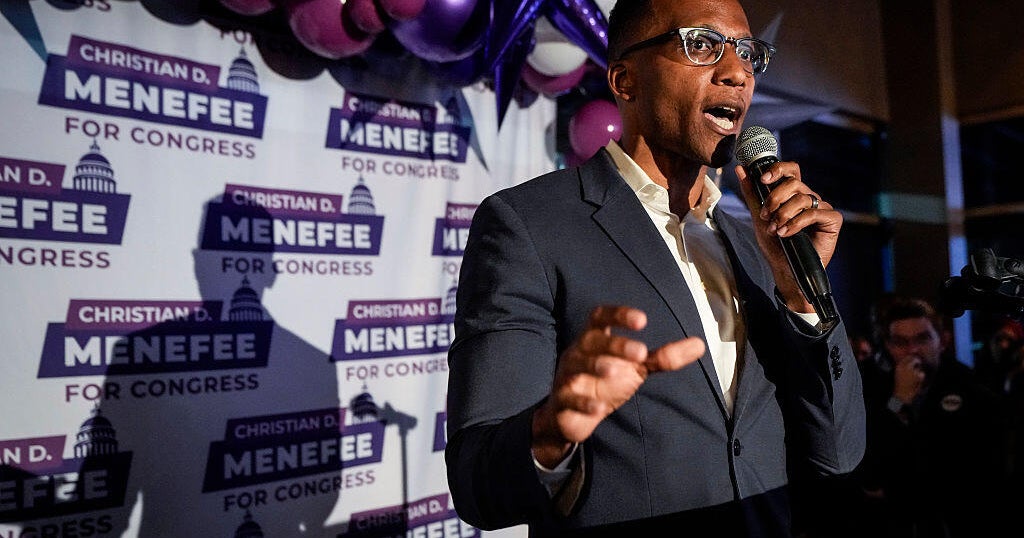
Speaking to an enthusiastic crowd of supporters at his victory celebration, Menefee didn’t mince words about his intentions once he takes office in Washington. In a moment that captured national attention, he directly addressed President Trump, invoking the legacy of one of the district’s most celebrated former representatives, Barbara Jordan. Jordan, who served with distinction in the 1970s, became nationally recognized for her powerful and eloquent advocacy for President Richard Nixon’s impeachment before his resignation in 1974. Drawing a parallel between that historical moment and today’s political climate, Menefee characterized his district as one that “topples corrupt presidencies,” sending an unmistakable signal about his stance toward the current administration.
“The results here tonight are a mandate for me to work as hard as I can to oppose your agenda, to fight back against where you’re taking this country and to investigate your crimes,” Menefee declared, addressing the president directly. His victory speech outlined an ambitious and confrontational agenda that includes fighting for universal health insurance and taking aggressive action against current immigration enforcement policies. Specifically, Menefee promised to seek the impeachment of Homeland Security Secretary Kristi Noem over U.S. Immigration and Customs Enforcement operations and vowed to “tear ICE up from the roots”—a position that reflects the progressive values of his district and the broader Democratic base that propelled him to victory. His willingness to take such strong stances right from the start signals that he intends to be an outspoken voice of opposition during his time in Congress.
A Complex Political Landscape and What Lies Ahead
Despite this victory, Menefee’s political journey is far from over. He will fill the remainder of Turner’s term, which concludes when the new Congress is sworn in during January 2027. However, in just over a month, on March 3rd, voters will head to the polls once again. Both Menefee and Edwards will appear on the ballot in another election—this time a Democratic primary for a newly drawn 18th congressional district for the full term beginning in 2027. Adding another layer of complexity, they’ll be facing Democratic Representative Al Green, who currently represents the neighboring 9th congressional district. This means that despite Saturday’s definitive result, the competition for long-term representation of this area continues almost immediately.
The redistricting that created this new map happened last summer when GOP lawmakers controlling the Texas state government redrew congressional boundaries. This effort was pushed by President Trump with the explicit goal of creating five additional winnable seats for Republicans to help preserve and potentially expand their House majority. The redistricting has scrambled political calculations across the Houston area, forcing established representatives like Green to compete in reconfigured districts and creating uncertainty even for candidates like Menefee who just won election. This political chess game demonstrates how partisan redistricting continues to shape American democracy, sometimes forcing quality candidates from the same party to compete against each other rather than focusing on general election contests against opposing parties.
Controversy Over Timing and Access to Voting
The extended vacancy in this seat sparked considerable controversy and debate about political motivations versus practical considerations. Governor Abbott defended the long gap between Representative Turner’s death in March and the November first-round election by arguing that Houston officials needed six months to properly prepare for conducting the special election. However, Democratic critics viewed this explanation with skepticism, suggesting instead that the delay was a calculated political maneuver designed to give Republicans a slightly larger cushion in the House during a period when difficult and potentially close votes were anticipated. The difference of even one or two votes in the closely divided House can determine the fate of significant legislation, making the timing of special elections a matter of real political consequence.
Further complications arose when winter weather disrupted the runoff election process. Local officials were forced to cancel two full days of advance voting during the week leading up to Saturday’s election, creating confusion among voters and raising concerns about voter access. Civil rights organizations responded by taking the matter to court, ultimately winning a two-day extension for early voting that ran through Thursday. Amanda Edwards, Menefee’s opponent, addressed this issue while campaigning on Saturday, posting a video to social media in which she referenced the prolonged vacancy, emphasizing that voters had gone far too long without proper representation in Washington. At her own watch party later that evening, Edwards struck a gracious tone despite her loss, telling supporters that the race “never was about winning a particular seat” but rather “about creating a community where every single person in it, no matter what their background, no matter where they were from, no matter where they lived, would have the opportunity to thrive,” including access to healthcare, education, and economic opportunities.
The Candidates and Their Coalitions
Christian Menefee, at 37 years old, brought to this race a track record of taking on established powers. He first made a name for himself in 2020 when he ousted an incumbent to become Harris County’s first Black county attorney, a position in which he represents the county in civil cases. In that role, he has already been actively engaged in challenging Trump administration policies, having joined legal challenges against several of the president’s executive orders on immigration. His campaign benefited from endorsements by several prominent Texas Democrats, including former congressman Beto O’Rourke, who remains influential in progressive circles despite his own electoral setbacks, and Representative Jasmine Crockett, who joined Menefee on Saturday and is currently running for the U.S. Senate. These endorsements helped Menefee consolidate support among different factions of the Texas Democratic Party.
Amanda Edwards, 44, brought her own impressive credentials to the race. She served four years on the Houston City Council beginning in 2016, gaining experience in local governance and building relationships throughout the city. Her political ambitions extended beyond local office—she ran for U.S. Senate in 2020, though she finished fifth in a crowded 12-person primary. More recently, she unsuccessfully challenged U.S. Representative Sheila Jackson Lee in the 2024 primary. When Lee tragically died in July of that year, local Democrats narrowly selected Turner over Edwards as Lee’s replacement on the ballot, another close loss for Edwards in her quest for federal office. Despite finishing behind Menefee in the initial primary round, Edwards received a significant boost when state Representative Jolanda Jones, who finished third, endorsed her for the runoff, arguing that Edwards possessed the skills “best suited to go against Trump.” Ultimately, however, this endorsement wasn’t enough to overcome Menefee’s momentum and broader coalition of support, leading to Saturday’s result and setting the stage for yet another competitive race just weeks away.