

Kayleigh McEnany’s Claims About Trump Film Screening Spark Widespread Skepticism
Former Press Secretary Describes “Electric” Theater Experience
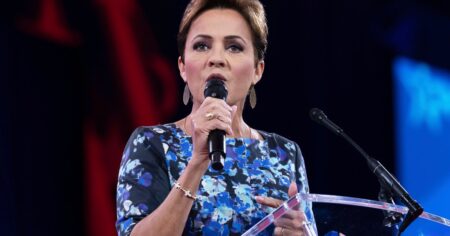
Kayleigh McEnany, who previously served as White House Press Secretary during Donald Trump’s first presidential term, recently shared an enthusiastic account of her mother’s movie theater experience that has generated considerable online debate. Speaking to her fellow co-hosts on the Fox News program “Outnumbered,” McEnany recounted what she described as an extraordinary screening of a film related to the former president that took place at a Florida cinema over the weekend. According to McEnany’s telling, her mother witnessed something quite unusual for a typical movie theater visit—a packed house with audience members standing due to lack of available seating, creating what she characterized as an almost concert-like atmosphere. The former press secretary painted a vivid picture of an engaged, passionate audience that treated the film viewing as an interactive event rather than the typically quiet, reserved experience most moviegoers expect. Her description included details about people cheering throughout the screening, displaying visible excitement, and actively engaging with the content on screen in a manner that created what her mother allegedly described as an “electric” energy in the theater.
Box Office Performance Exceeds Industry Predictions
The film in question, which made its theatrical debut over the weekend, reportedly generated approximately $7 million in ticket sales, according to figures cited by The Associated Press. This financial performance notably surpassed what industry analysts and box office experts had initially projected for the movie’s opening weekend, suggesting a level of audience interest that caught some observers by surprise. For context, while $7 million represents a modest figure compared to major Hollywood blockbusters that often debut with tens or hundreds of millions in opening weekend revenue, it represents a significant achievement for what would be considered a smaller, more niche political documentary or film. The better-than-expected performance indicates that there exists a dedicated audience willing to purchase tickets and visit theaters to see content related to the former president, despite the increasingly polarized nature of American political discourse. This box office achievement has been cited by supporters as evidence of genuine grassroots enthusiasm for Trump-related content, while critics have questioned whether the figures tell the complete story about broader public sentiment toward such material.
Safety Concerns and Credibility Questions Emerge Online
McEnany’s specific claim that the theater featured “standing room only” conditions quickly became a focal point of skepticism and criticism across social media platforms. Numerous commentators pointed out that movie theaters in the United States typically have strict fire safety codes and occupancy regulations that would prohibit such arrangements. These safety standards, which are enforced at local and state levels, generally require that all patrons have assigned seats and that aisles and exits remain clear to allow for safe evacuation in case of emergency. The idea that theater management would allow customers to stand at the back of the auditorium, or that people would attempt to “sneak” into such positions, struck many observers as implausible given both standard industry practices and legal requirements. Theater chains invest considerable resources in ensuring compliance with these regulations precisely to avoid liability issues and maintain safe environments for their customers. Critics noted that if such conditions actually existed, it would represent a serious violation that could result in fines or other penalties for the theater operator, making it highly unlikely that any reputable cinema would permit such circumstances.
Demands for Evidence and Comparisons to Past Controversies
As McEnany’s account spread across social media and news platforms, skeptics increasingly called for concrete evidence to support the extraordinary claims being made. Many requested photographic or video documentation that would substantiate the description of standing-room-only crowds and the enthusiastic audience participation described by the former press secretary. In today’s smartphone-equipped society, where nearly every moviegoer has the capability to capture and share images instantly, the absence of such documentation struck critics as particularly noteworthy. Several commentators drew parallels between this theater anecdote and previous instances during McEnany’s tenure at the White House briefing podium, where her statements and defenses of President Trump were frequently challenged by journalists and fact-checkers. During her time as press secretary, McEnany developed a reputation among critics for making assertions that seemed designed more to create favorable narratives than to provide accurate, verifiable information. These observers suggested that the theater story fits a familiar pattern of making bold, attention-grabbing claims that generate headlines and social media engagement while remaining difficult to independently verify or refute.
The Broader Context of Political Media and Audience Engagement
This controversy over a movie theater experience reflects larger questions about how political content is consumed, discussed, and promoted in contemporary American society. The description of an interactive, enthusiastic audience engaging with political film content highlights the ways in which political partisanship has created distinct media ecosystems with their own products, personalities, and consumption patterns. For supporters of Donald Trump, films and documentaries that present favorable narratives about his presidency or political movement represent opportunities to reinforce shared beliefs and connect with like-minded individuals in public spaces. The theatrical experience, in this context, becomes not just about viewing content but about participating in a communal affirmation of political identity. Meanwhile, the skeptical response to McEnany’s account demonstrates how deep partisan divisions have eroded trust in information sources, with claims from political figures immediately subjected to intense scrutiny based largely on the political affiliation of the person making them. This dynamic creates an environment where virtually any statement with political implications becomes instantly polarized, with acceptance or rejection often determined more by tribal loyalty than by available evidence.
Implications for Political Discourse and Media Credibility
The incident underscores ongoing challenges regarding credibility, verification, and the role of political figures in shaping public narratives through media appearances. When former government officials like McEnany transition to roles as media personalities, they bring with them both the authority of their previous positions and the baggage of controversies from their time in office. Their statements carry weight with supporters who view them as trusted insiders with valuable perspectives, while critics approach their claims with heightened skepticism based on past performance. This particular episode, whether the theater experience happened exactly as described or not, serves as a reminder of how difficult it has become to establish shared facts in political discourse. The absence of universally trusted arbiters of truth means that anecdotal stories, second-hand accounts, and unverifiable claims can circulate widely without resolution, with different audiences reaching completely opposite conclusions about their accuracy. As the 2024 election cycle continues and political content across various media formats proliferates, these questions about credibility, evidence, and the responsibilities of public figures in making verifiable claims will likely remain contentious. The theater story may fade from headlines, but the underlying issues it represents about trust, verification, and political communication continue to shape how Americans receive and evaluate information about their political leaders and movements.