

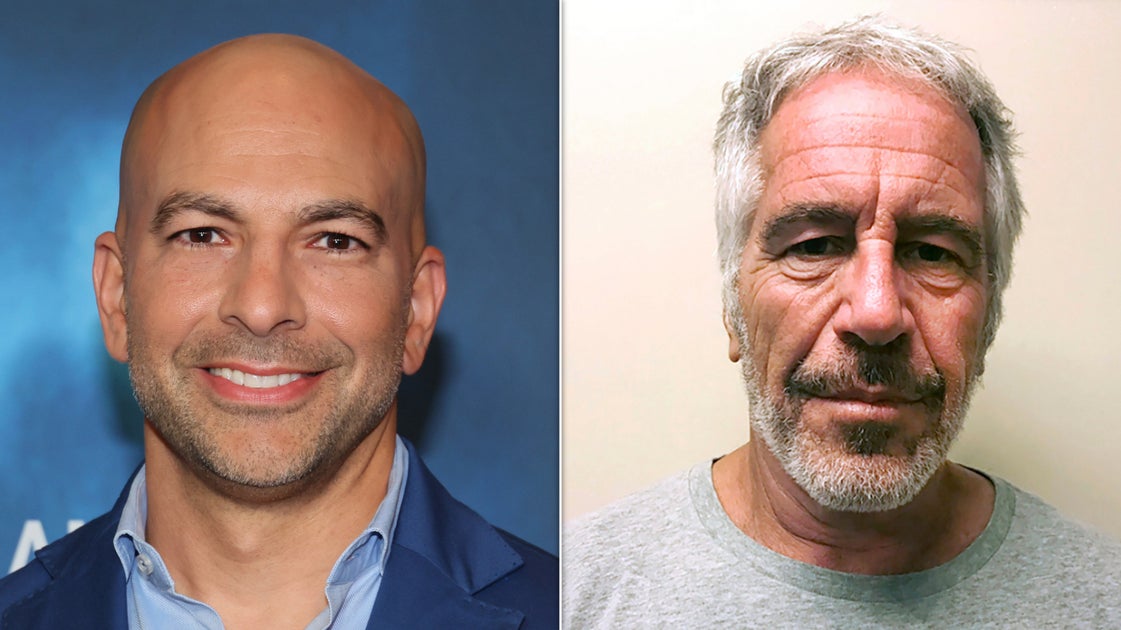

CBS Contributor Faces Dismissal Over Revealed Jeffrey Epstein Emails
The Controversy Unfolds
CBS News found itself in an uncomfortable position this weekend when newly released documents from the JeffreyEpstein case revealed troubling email exchanges involving one of their recently announced contributors. Dr. Peter Attia, a physician known for his work on longevity and preventive health, was among 19 expert contributors introduced by the network just last week. However, his tenure with CBS appears destined to end before it truly begins. The embarrassing correspondence between Attia and the convicted sex offender has prompted Paramount, CBS’s parent company, to signal that they will likely terminate his contributor position. The emails, which span several years beginning around 2014—roughly eight years after Epstein’s initial 2008 conviction—paint a picture of a relationship that has raised serious questions about Attia’s judgment and character. A spokesperson for Paramount told media outlets that the network is moving toward ending the arrangement, though as of Monday afternoon, no official announcement had been made. The situation highlights the continuing fallout from the Epstein scandal and serves as a reminder of how associations with the disgraced financier continue to damage reputations and careers years after his death.
The Damaging Email Evidence
The content of the emails between Attia and Epstein ranges from fawning to crude, revealing a relationship that appears to have gone beyond mere professional networking. In one particularly cringe-worthy exchange, Attia wrote to Epstein that “the biggest problem” with their friendship was that “the life you lead is so outrageous, and yet I can’t tell a soul.” This statement alone has drawn significant criticism, as many interpret it as awareness of Epstein’s illicit activities, though Attia has denied this interpretation. Another email showed Attia engaging in vulgar banter with Epstein, including an exchange involving crude comments about women that Attia himself now describes as “tasteless and indefensible.” Perhaps most disturbing to observers was the revelation that Attia prioritized a meeting with Epstein over being with his family during a medical emergency. According to the documents, Attia chose to remain in New York to meet with the financier while his wife and son dealt with a serious health crisis in another state. This decision has led many to question just how important Attia considered his relationship with Epstein to be for his career advancement. The emails collectively suggest a level of admiration and deference that goes beyond normal professional courtesy, bordering on what some have characterized as sycophancy—an eagerness to please someone powerful that overrode better judgment and personal priorities.
Attia’s Public Response and Explanation
On Monday, Dr. Attia took to social media platform X to address the controversy in a lengthy post, apologizing for not responding sooner while explaining that he wanted to be thorough in his statement. He began by categorically denying participation in, enabling, or witnessing any criminal activity related to Epstein’s sexual abuse and exploitation. Attia emphasized three key points: he was not involved in any criminal activity, his interactions with Epstein had nothing to do with sexual abuse or exploitation, and he was never on Epstein’s plane, island, or present at any sex parties. Despite these denials, Attia acknowledged the problematic nature of the emails, stating, “I apologize and regret putting myself in a position where emails, some of them embarrassing, tasteless, and indefensible, are now public, and that is on me. I accept that reality and the humiliation that comes with it.” He addressed specific email exchanges, including one with the subject line “Got a fresh shipment,” which he explained referred to metformin medication he had received from a pharmacy. When Epstein responded with similar words and a photo of an adult woman, Attia admitted engaging in “crude, tasteless banter” that he now finds “very embarrassing” and will not defend. He characterized the exchange as “juvenile” at the time but acknowledges how poorly it reads now, expressing shame for his behavior.
The Context of Their Relationship
According to Attia’s explanation, he first met Jeffrey Epstein in 2014 while raising funds for scientific research. At that time, Epstein “was widely known in academic and philanthropic circles as a funder of science and moved openly among credible institutions and public figures,” Attia noted. For someone who hadn’t previously been around such levels of wealth and prominence, the access Epstein provided was “novel” and intoxicating. Attia described being impressed by Epstein’s excessive lifestyle—the largest home in Manhattan, a Boeing 727 aircraft, parties with powerful business and political leaders. This environment, he admitted, led him to “make assumptions about him that clouded my judgment in ways it shouldn’t have.” Attia claims he met with Epstein in New York seven or eight times between summer 2014 and spring 2019, always in the city and never at Epstein’s island, ranch, or on his planes. He addressed the email line about not being able to tell anyone about Epstein’s “outrageous” life, explaining that it referred to the discretion expected in those elite social circles rather than awareness of criminal activity. “What I was referring to, poorly and flippantly, was the discretion commanded by those social and professional circles–the idea that you don’t talk about who you meet, the dinners you attend and the power and influence of the people in those settings,” Attia wrote, acknowledging that his words “read terribly.”
Confronting the Truth About Epstein
Attia claims that he directly asked Epstein about his 2008 conviction shortly after they met, but the financier minimized the prostitution-related charges, and Attia accepted this explanation. He insists he never witnessed illegal behavior or saw any underage individuals during his interactions with Epstein. However, his perspective changed dramatically after reading a comprehensive Miami Herald exposé on Epstein’s crimes in 2018. Attia states he was “repulsed by what he learned” and subsequently confronted Epstein, telling him “to his face” that he “needed to accept responsibility for what he did.” Going further, Attia claims he attempted to get Epstein to pay for residential care and lifelong therapy for his victims—an effort he now views as misguided. “In hindsight, even attempting to facilitate accountability was a mistake and, once again, reflected just how naive I was at the time. Once the full scope of his actions was clear, disengagement should have been the only appropriate response,” he reflected. This acknowledgment suggests Attia recognizes he should have simply cut ties rather than trying to manage or influence Epstein’s response to his own crimes, an approach that could be seen as maintaining a relationship that should have been immediately terminated.
Accountability and Moving Forward
In concluding his statement, Attia made clear he wasn’t seeking “a pass” from his followers or asking anyone to ignore his emails or defend his actions. Instead, he emphasized personal growth and change: “the man I am today roughly ten years later, would not write them and would not associate with Epstein at all.” He revealed that he had sent similar messages to both his team and his patients, acknowledging the impact his associations might have on those who trusted him. “You’ve put your trust, your credibility, and your hard work into what we have built together, and I take that responsibility seriously,” he wrote to his team. This situation raises important questions about how we evaluate relationships with powerful but problematic individuals, the responsibility of professionals to thoroughly vet their associations, and how much distance time and personal growth can create from past poor judgment. While Attia’s explanation provides context, many observers note that meeting with Epstein eight years after his initial conviction, when information about his behavior was already public, represents a significant lapse in judgment. The incident also highlights the ongoing consequences of the Epstein scandal, as more documents continue to be released and more connections come to light. For CBS and Paramount, the decision to cut ties appears straightforward from a public relations standpoint, even as Attia’s career and reputation face uncertain futures in the wake of these revelations.