


A Conversation with Venezuela’s Opposition Leader: María Corina Machado on Hope, Struggle, and Freedom
A Moment of Gratitude and Complex Diplomacy
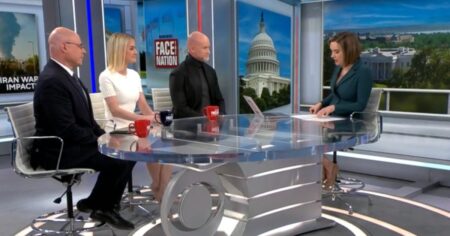
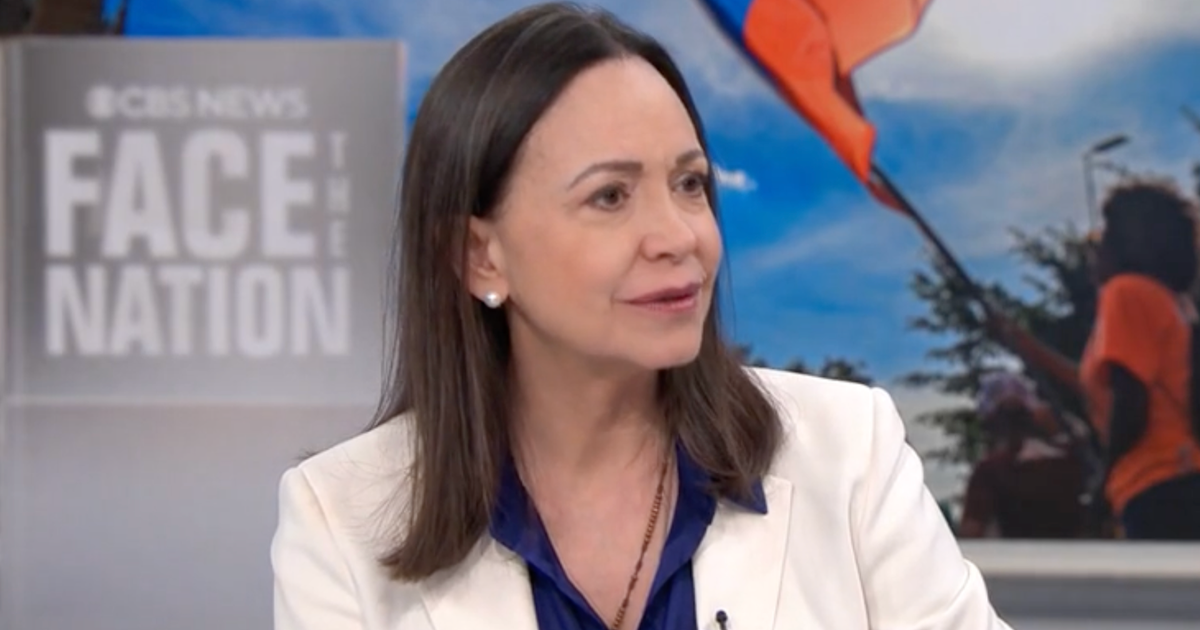
Venezuelan opposition leader María Corina Machado sat down with “Face the Nation” host Margaret Brennan in what marked a significant moment – her first in-person interview after enduring years of persecution and a harrowing escape from her homeland. The conversation, which took place on January 30, 2026, revealed a woman deeply committed to her cause yet realistic about the complicated path ahead. Machado opened with profound gratitude toward the American people, President Trump, Secretary of State Marco Rubio, and congressional leaders for their unwavering support during Venezuela’s darkest hours. When questioned about the U.S. decision to avoid military intervention in Venezuela while potentially reopening an embassy, Machado carefully navigated the sensitive topic. Rather than expressing concern about reduced pressure, she emphasized that the current approach is working, pointing to the actions of Delcy Rodríguez, Venezuela’s acting president, as evidence that the regime is responding to American instructions. For Machado, this diplomatic pressure represents not just hope for Venezuela but for the entire Western Hemisphere, as she believes the struggle against the Maduro regime’s criminal structure has implications far beyond her nation’s borders.
The Reality of Living Under an Oppressive Regime
The conversation took a sobering turn when Brennan pressed Machado about what has actually changed for ordinary Venezuelans still living under the regime’s control. The opposition leader didn’t sugarcoat the situation. With more than 700 political prisoners still behind bars – down from over 1,000 at the start of January but still unconscionably high – the human cost of Venezuela’s political crisis remains devastating. Machado spoke emotionally about mothers who have maintained vigils for 23 consecutive days and nights, waiting for their children to be released from prison. Some political prisoners, including three members of the Policía Metropolitana, have been incarcerated for 23 years. Not a single military political prisoner has been freed. Yet, in these desperate circumstances, Machado sees signs of hope. The fact that these public vigils can occur at all represents something that was “unthinkable” before January 3rd, when a significant shift in the political landscape occurred. She interprets this as evidence that the Venezuelan people are becoming more empowered and confident that the process will eventually lead to a legitimate government based on the will of the people. However, she acknowledges the critical question of patience – how much longer can people suffering under brutal repression wait for promised change? Secretary Rubio himself has admitted that prisoner releases aren’t happening as fast as America wants, and for families waiting for loved ones, every day feels like an eternity.
The Question of Legitimacy and Economic Future
When the discussion turned to Venezuela’s economic future, particularly regarding oil privatization laws recently passed by the National Assembly, Machado took an uncompromising stance on legitimacy. She flatly refused to recognize the National Assembly as a legitimate governing body, stating that neither the Venezuelan people nor the U.S. government recognizes it. Therefore, in her view, anything emanating from that body has no legal standing. That said, she acknowledged that the proposed reforms contain “positive signals” about what Venezuelans want for their future – a rejection of socialism, an embrace of private property, and a welcoming environment for both foreign and local investment. However, Machado emphasized a critical obstacle that’s often overlooked in discussions about Venezuela’s economic recovery: human capital. She painted a vivid picture of the brain drain that has devastated her country, with nearly a third of Venezuela’s population forced to flee, including the specialized professionals and engineers necessary to rebuild industries like oil production. These talented individuals are now working around the world, from Saudi Arabia’s oil fields to industries across continents. The crucial question, as Machado frames it, is whether a Venezuelan engineer working for Saudi Aramco would abandon that secure position to return to a country where Delcy Rodríguez – part of the same cartel that originally forced them to flee – remains in power. The answer, she believes, is obviously not. Economic revival requires more than policy changes; it requires trust, security, and legitimate governance that can only come from democratic transition.
Personal Risk and the Price of Leadership
Perhaps the most gripping portion of the interview came when Brennan asked about Machado’s personal safety should she return to Venezuela. The opposition leader’s response revealed both the danger she faces and the shifting dynamics of power. Before her dramatic escape from Venezuela, if the regime had captured her, she believes she “probably would have been disappeared or worse.” The current situation has evolved somewhat due to intense U.S. pressure and international attention – Machado doesn’t believe the regime would now dare to kill her outright. However, she remains uncertain about how much freedom of movement she would have within the country, acknowledging that the regime fears the “intimate connection” between the opposition leadership and the Venezuelan people. This personal vulnerability exists despite the fact that Machado won the election alongside Edmundo González in a landslide victory, a result recognized even by the Trump administration. When Brennan confronted her with President Trump’s public statement suggesting the opposition lacked sufficient public support to form a transitional government, Machado chose to focus instead on what Trump told her privately, face-to-face. She expressed confidence that he truly understands the nature of the regime and that Delcy Rodríguez is only cooperating with current demands because of sustained American pressure. Without that pressure, Machado believes, Rodríguez would immediately revert to her loyalties with Russia, Iran, China, and Cuba – enemies of American interests.
A Vision Beyond Venezuela’s Borders
Throughout the interview, Machado consistently framed Venezuela’s struggle within a broader geopolitical context, making the case that what happens in her country has profound implications for the entire Western Hemisphere and particularly for American security. She described the Maduro regime not as an isolated dictatorship but as a “criminal structure” deeply intertwined with hostile foreign powers including Russia, Iran, China, and Cuba, as well as extremist terrorist organizations like Hezbollah and Hamas, drug cartels, and guerrilla groups. Dismantling this complex network, she acknowledged, requires a careful, controlled process that can’t happen overnight. When asked about her own political future and whether she would run for president, Machado’s response was both humble and determined. “I will be president when the time comes,” she stated, but emphasized that this decision should ultimately rest with the Venezuelan people through legitimate elections. She wasn’t allowed to run in the last election because Maduro feared competing against her, instead facing Edmundo González, whom he incorrectly assessed as less threatening. In less than three months, Machado and her movement rallied the entire country behind González, proving that the fight transcends individual personalities – it’s about freedom itself. She characterized the struggle as “spiritual” and “existential,” emphasizing that unlike other diaspora communities, Venezuelans desperately want to return home, but only to a country where safety, freedom, and democratic values are guaranteed.
A Symbol of Hope and International Solidarity
The interview concluded with a poignant discussion about Machado’s Nobel Peace Prize and her decision to give it to President Trump after already dedicating it to him. To understand the significance of this gesture, one must remember the circumstances under which she received the prize. Her journey to Oslo involved a daring, covert escape from Venezuela by land, sea, and air – a harrowing experience during which she broke her back, found herself lost at sea, and at points feared for her life. Despite keeping most details private for security reasons, she has shared enough to convey the extraordinary risks she took simply to accept international recognition for her courage. Her decision to physically give the Nobel Prize to President Trump, she explained, was about justice and putting Venezuela’s superior interests first. It represented tangible gratitude for what Trump has done and confidence in what he will continue to do. Machado sees the alignment of American and Venezuelan interests clearly: dismantling the criminal regime saves millions of Venezuelan lives while simultaneously addressing critical American concerns about security, migration, and geopolitical influence in the hemisphere. She believes that once Venezuela achieves freedom, it will create a domino effect, leading to the collapse of repressive regimes in Cuba and Nicaragua, and eliminating Iran’s safe haven just three hours from Florida. As the interview ended, Machado expressed her confidence that she will soon host Brennan in a “wonderful country that is very grateful to yours” – a free Venezuela where families can reunite, children can return home, and people can live with dignity, solidarity, justice, and freedom. It’s a vision worth fighting for, and María Corina Machado has proven she’s willing to risk everything to make it reality.