

Trump’s Controversial Plan for a Massive Triumphal Arch Near Reagan National Airport
A Monument to Outsize All Others
President Trump has unveiled an ambitious and controversial plan to construct what he envisions as the world’s largest triumphal arch, serving as a grand gateway to the nation’s capital. The proposed monument would stand at an imposing 250 feet tall, deliberately designed to commemorate America’s 250th anniversary while simultaneously surpassing every similar structure worldwide. For perspective, this would tower over the current record-holder, Mexico City’s Monumento a la Revolución, which reaches 220 feet. It would also dwarf the iconic Lincoln Memorial, situated just across the Memorial Bridge from the proposed site, which stands at a comparatively modest 99 feet. Speaking to reporters aboard Air Force One, President Trump made his intentions crystal clear: “I’d like it to be the biggest one of all. We’re the biggest, most powerful nation.” This statement encapsulates the president’s vision of creating a physical manifestation of American power and prestige, a monument that would dominate the Washington skyline and serve as an unmistakable symbol of national greatness for generations to come.
Aviation Safety Concerns and Flight Path Complications
The proposed location for this massive structure has raised immediate red flags among aviation experts and safety officials, primarily because the site sits directly along a critical flight path for Reagan National Airport in nearby Arlington, Virginia. The Potomac River corridor is essential for aircraft operations precisely because planes cannot fly over the National Mall or the Pentagon due to strict flight restrictions protecting these sensitive areas. This forces commercial aircraft to follow the river at relatively low altitudes, creating a narrow and carefully managed airspace where any new obstruction could pose significant risks. The timing of this proposal is particularly sensitive given that the region is still reeling from the devastating January 2025 crash, when a military Black Hawk helicopter collided with an American Airlines commercial plane over the Potomac River, killing all 67 people aboard in what became the deadliest commercial aviation disaster in the United States in years. Investigators determined the helicopter was flying at 278 feet above the river, exceeding its required maximum altitude of 200 feet, when it struck the passenger jet. The U.S. government has since admitted liability for that tragedy, making the introduction of a 250-foot structure into this already dangerous airspace seem remarkably tone-deaf to many observers and safety advocates.
Regulatory Questions and Government Silence
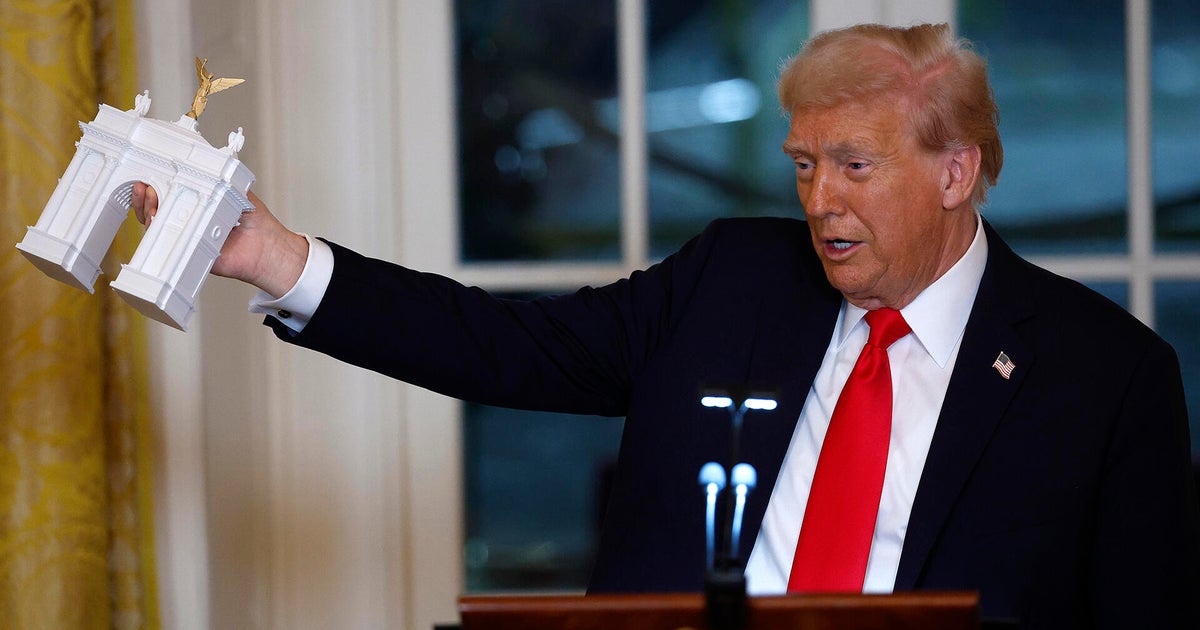
CBS News attempted to contact the Federal Aviation Administration to clarify how such a structure would impact existing flight paths and whether any safety assessments had been conducted, but due to an ongoing government shutdown, no response has been forthcoming. More troubling for aviation safety experts is the apparent lack of any formal submission to the FAA’s Obstruction Evaluation/Airport Airspace Analysis system, the regulatory mechanism designed specifically to assess potential hazards to aircraft before construction begins. This absence suggests that either the proposal remains in preliminary stages or that normal safety protocols may be bypassed in the rush to begin construction. President Trump first announced his vision for the triumphal arch last year and even displayed a scale model to reporters in October, demonstrating his personal investment in the project. In January, he posted images of the proposed arch to his Truth Social platform without additional commentary, letting the ambitious design speak for itself. In a December interview with Politico, the president expressed hope that construction would commence within two months, an aggressive timeline that raises questions about whether proper environmental reviews, structural assessments, and aviation safety studies could be completed in such a compressed timeframe. The total cost of the project remains undisclosed, though a structure of this magnitude would presumably require hundreds of millions of dollars in federal funding.
Presidential Vision and Official Messaging
White House spokesman Davis Ingle has enthusiastically championed the project, describing it in grand, sweeping terms that mirror the president’s own rhetoric. “The arch is going to be one of the most iconic landmarks not only in Washington, D.C., but throughout the world,” Ingle declared, positioning the structure as a transformative addition to the American landscape. He continued: “President Trump’s bold vision will be imprinted upon the fabric of America and be felt by generations to come. His successes will continue to give the greatest nation on earth — America — the glory it deserves.” This messaging frames the arch not merely as a construction project but as a lasting testament to the Trump presidency itself, a physical monument to his administration’s achievements that would stand for centuries. The language deliberately echoes the grand architectural visions of past empires and leaders who sought to leave permanent marks on their nations’ capitals. By tying the height of the structure to the 250th anniversary of American independence, the administration has sought to wrap the project in patriotic significance, suggesting that opposition to the arch would somehow diminish the commemoration of this historic milestone.
Broader Architectural Transformation Plans
The triumphal arch proposal exists within a larger pattern of the president’s desire to reshape federal architecture and landmarks throughout Washington. Trump announced over the weekend that the Kennedy Center for the Performing Arts would shut down for a full two years for construction, pending approval from the venue’s board, which has become increasingly aligned with the administration. This suggests a comprehensive vision for remaking the visual and cultural landscape of the nation’s capital according to Trump’s aesthetic preferences and political symbolism. Critics have expressed concern that these architectural interventions prioritize grandiosity over functionality and historical preservation, potentially altering the character of Washington’s carefully planned monumental core. The National Capital Planning Commission, which typically reviews such proposals, has not publicly commented on either the arch or the Kennedy Center plans, leaving questions about the normal review process and whether it will be followed or circumvented.
Public Reaction and Unanswered Questions
As news of the arch proposal has spread, reactions have ranged from enthusiastic support among the president’s base to serious concerns from urban planners, historians, aviation experts, and fiscal conservatives. Supporters see the structure as a fitting celebration of American achievement and a monument that would attract tourists and inspire national pride for generations. Detractors question the wisdom of constructing such a massive structure in a location that poses obvious aviation risks, especially so soon after a major air disaster in the same area. The lack of transparency regarding costs, timelines, safety reviews, and regulatory approvals has fueled skepticism about whether the project can or should proceed as currently envisioned. Environmental groups have raised questions about the impact on the Potomac riverfront, while historical preservationists worry about disrupting the carefully balanced visual relationships between existing monuments. As the government shutdown continues and formal channels for review remain dormant, the triumphal arch exists in a peculiar state of ambitious presidential vision without the normal checks, balances, and public input that typically accompany major federal construction projects in the nation’s capital.