


President Trump to Award Medal of Honor to Two American Heroes
A Long-Awaited Recognition for Extraordinary Courage
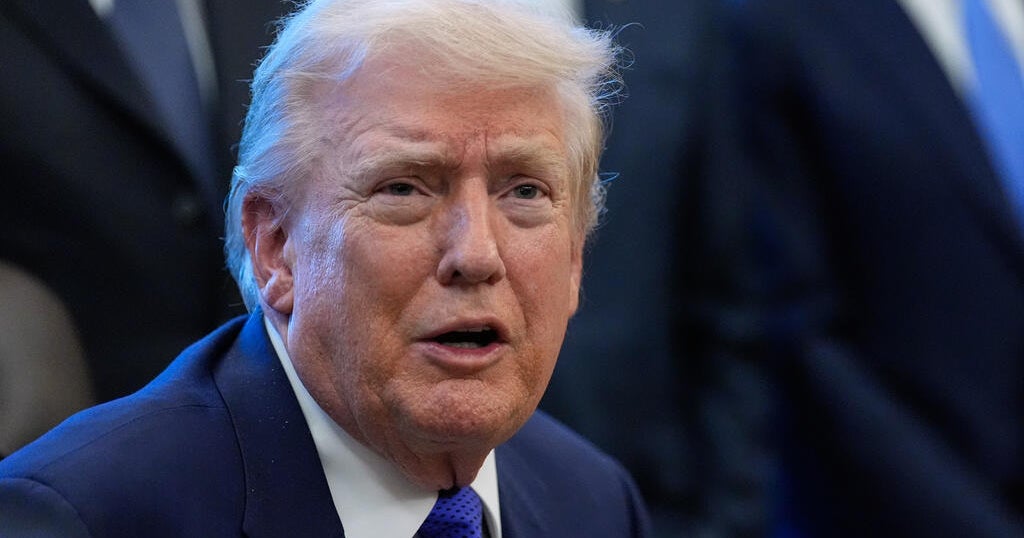
President Trump has announced plans to award the Medal of Honor, America’s highest military distinction, to two remarkable servicemen whose stories embody the very essence of courage and selflessness. The recipients are Navy Captain E. Royce Williams, a 100-year-old veteran whose incredible aerial combat during the Korean War remained classified for half a century, and the late Army Staff Sergeant Michael Ollis, who made the ultimate sacrifice in Afghanistan when he shielded a Polish soldier from a suicide bomber with his own body. The President personally called Captain Williams and the family of Staff Sergeant Ollis to share this momentous news, according to White House officials. Since its creation during the Civil War, approximately 3,500 individuals have received this prestigious honor, and these two new recipients represent the finest traditions of American military service. Their stories, though separated by decades and continents, share a common thread of extraordinary bravery in the face of mortal danger.
Staff Sergeant Michael Ollis: The Ultimate Sacrifice
Michael Ollis, a young soldier from Staten Island, New York, demonstrated the highest form of heroism on a fateful day in 2013 at a forward operating base in Afghanistan. The base came under a devastating attack when insurgents breached the perimeter using a car bomb, followed by a group of fighters wearing suicide vests. In the chaos that followed the initial explosion, Ollis rushed toward the blast site where he discovered Polish Army Lieutenant Karol Cierpica lying wounded. Without hesitation, he began administering first aid to the injured Polish soldier, showing the kind of international brotherhood that defines coalition warfare. As Ollis worked to save Cierpica’s life, an insurgent wearing a suicide vest approached their position. In a split-second decision that would cost him his life but save another, Ollis physically placed himself between the attacker and Lieutenant Cierpica. When the suicide vest detonated, the 24-year-old American soldier absorbed the blast, sacrificing himself so that his Polish comrade might live. His parents, Bob and Linda Ollis, expressed their profound gratitude in a statement released through a nonprofit organization established in their son’s honor, saying they feel “overwhelming pride and eternal gratitude” knowing that Michael’s final act of courage has not been forgotten.
A Hero Remembered and Honored
Staff Sergeant Ollis had previously been awarded the Distinguished Service Cross in 2019, the nation’s second-highest military decoration, during a ceremony where General James McConville spoke movingly about his sacrifice. “Every generation has its heroes,” General McConville said at the time, “Michael Ollis is one of ours.” The upgrade from the Distinguished Service Cross to the Medal of Honor represents a recognition that Ollis’s actions exemplified the very highest standards of valor and self-sacrifice. His story has resonated deeply with Americans and Poles alike, symbolizing the bonds forged between allied nations in combat. Lieutenant Cierpica, the man whose life Ollis saved, has spoken publicly about his gratitude and the debt he can never repay. The story of Michael Ollis serves as a powerful reminder that heroism isn’t about seeking glory or recognition—it’s about making impossible choices in impossible moments, choosing the welfare of others over one’s own survival. His legacy continues through the nonprofit foundation his parents established, which works to honor his memory and support causes he cared about.
Captain E. Royce Williams: A Secret Hero of the Cold War
At 100 years old, Navy Captain E. Royce Williams will receive recognition for an extraordinary feat of aerial combat that he was forbidden to discuss for more than fifty years. In 1952, during the height of the Korean War, Williams and another American pilot encountered seven Soviet MiG-15 fighter jets while flying off the coast of the Korean Peninsula. What followed was what military historians now describe as “the longest dogfight in U.S. military history”—a 35-minute aerial battle that tested every ounce of Williams’ skill, courage, and determination. When the Soviet jets opened fire, Williams later recalled, “since they started the fight, I shot back.” In the intense engagement that followed, Williams shot down one MiG-15, and his wingman pursued it, leaving Williams alone against the remaining Soviet aircraft. In an almost unbelievable display of piloting skill and marksmanship, he managed to shoot down three more enemy jets while dodging hundreds of rounds of enemy fire. His own aircraft was severely damaged during the encounter, riddled with bullet holes, yet Williams managed to fly it back to his aircraft carrier and execute a high-speed landing rather than ejecting into the freezing waters below.
Decades of Silence and the Slow Path to Recognition
The most remarkable aspect of Williams’ story isn’t just the combat itself, but the decades of enforced silence that followed. Due to the sensitive nature of a direct military confrontation between American and Soviet forces during the Cold War—a time when both superpowers sought to avoid direct conflict that might escalate into nuclear war—Williams was ordered to keep the entire incident classified. For more than half a century, he honored that commitment to secrecy, not even sharing the story with his wife. “In the moment I was a fighter pilot doing my job,” Williams humbly told the news outlet Task & Purpose in a 2022 interview. “I was only shooting what I had.” It wasn’t until after the fall of the Soviet Union that the declassification of records allowed his incredible story to finally come to light. Three years ago, he was awarded the Navy Cross in recognition of his extraordinary valor, but many, including Republican Representative Darrell Issa of California, whose district Williams calls home, believed that the Navy Cross wasn’t sufficient recognition for such an exceptional act of heroism. Representative Issa championed efforts to have Williams awarded the Medal of Honor, but faced a significant obstacle: military regulations typically require that the Medal of Honor be awarded within five years of the action that justified it.
Overcoming Bureaucracy to Honor a Century of Service
Last year, Congress took the extraordinary step of passing special legislation that authorized the President to award Captain Williams the Medal of Honor, specifically overriding the five-year requirement that would have made it impossible to recognize his Korean War heroics. Representative Issa wrote in a statement celebrating the announcement that Williams “richly deserves” this highest recognition. “The heroism and valor he demonstrated for more than 35 harrowing minutes almost 70 years ago in the skies over the North Pacific and the coast of North Korea unquestionably saved the lives of his fellow pilots, shipmates, and crew,” Issa stated. At 100 years old, Williams represents a living link to a generation of warriors who fought in what is often called “the Forgotten War.” His story reminds us that heroism doesn’t always receive immediate recognition, and that sometimes the most important acts of courage must remain hidden for the greater good. The fact that he kept his incredible story secret for so long, out of duty and loyalty to his country, is itself a form of heroism that complements his extraordinary performance in combat. These two Medal of Honor recipients—one who gave his life in the service of an ally, another who fought a secret battle and kept silent about it for decades—represent different eras and different challenges, but both exemplify the timeless values of courage, sacrifice, and devotion to duty that the Medal of Honor was created to recognize.