
Venezuelan Opposition Leader María Corina Machado Eyes Presidency While Advocating for Democratic Elections
A Vision for Democratic Leadership
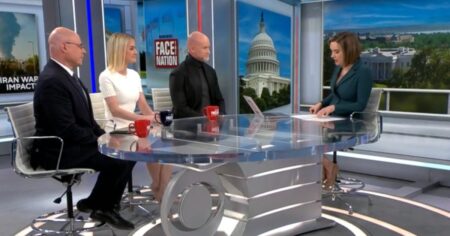
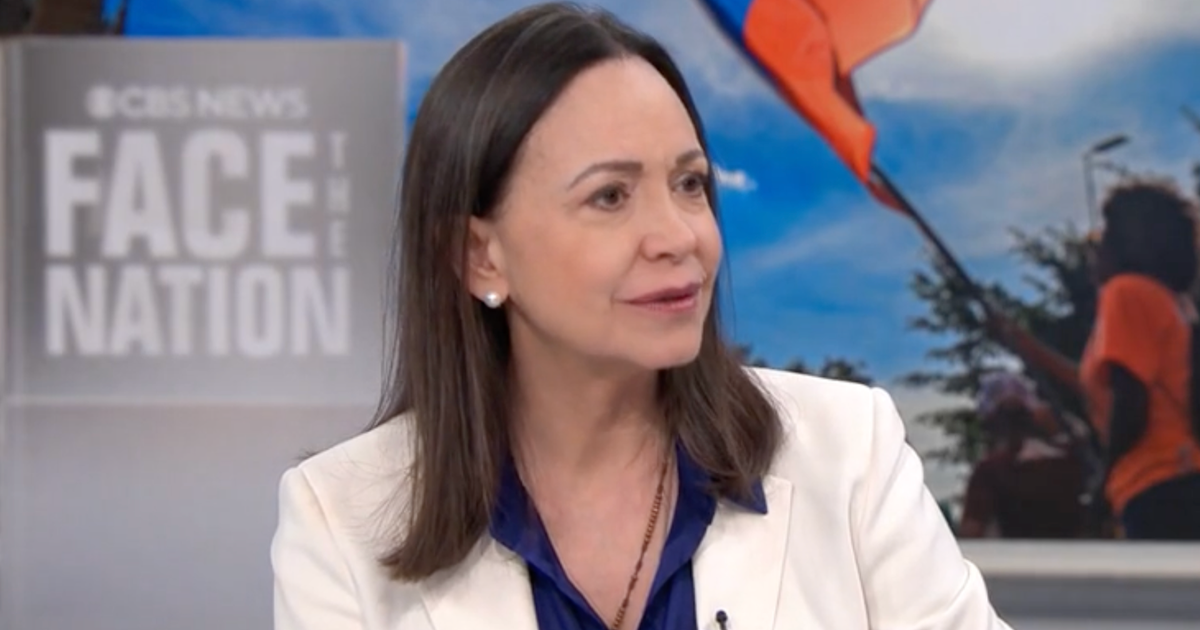
María Corina Machado, Venezuela’s prominent opposition leader, has made it clear that she envisions herself as a future president of her troubled nation, though she emphasizes that such decisions should ultimately rest with the Venezuelan people through free and fair elections. In a candid interview with CBS News’ “Face the Nation,” Machado expressed her presidential ambitions while simultaneously championing the fundamental principle of electoral democracy. “I will be president when the time comes,” she told moderator Margaret Brennan, before quickly adding, “But it doesn’t matter. That should be decided in elections by the Venezuelan people.” This balanced statement reflects both her personal political aspirations and her commitment to democratic processes—a commitment that has defined her career as an opposition figure fighting against authoritarian rule in Venezuela. Her words carry particular weight given the recent dramatic developments in Venezuelan politics, including the ouster of longtime authoritarian President Nicolás Maduro, who now finds himself detained in New York facing serious drug-related charges.
The 2024 Election Controversy and Political Maneuvering
Machado’s path to potential leadership has been fraught with obstacles deliberately placed by the Maduro regime. She was explicitly banned from running against Maduro in Venezuela’s 2024 elections, a move she attributes to fear on Maduro’s part. “Maduro was afraid [of] running against me,” Machado explained, “and he thought Edmundo was not a threat, because nobody knew who he was.” Rather than accepting defeat, Machado threw her considerable political support behind former diplomat Edmundo González Urrutia, transforming an unknown candidate into a formidable challenger. The opposition’s grassroots mobilization proved remarkably effective, with Machado noting that “in less than three months, we managed to [get] the whole country supporting him, because this is [a] matter of freedom.” The 2024 election results became a flashpoint of international controversy, with the United States and much of the international community recognizing González Urrutia as the legitimate winner. However, widespread allegations of electoral fraud allowed Maduro to maintain his grip on power despite lacking democratic legitimacy. This period demonstrated both the resilience of Venezuela’s opposition movement and the lengths to which authoritarian regimes will go to maintain power.
Venezuela’s Current Political Limbo
The political situation in Venezuela remains extraordinarily fluid and uncertain following Maduro’s dramatic removal from power and subsequent detention in the United States. The country currently finds itself in a state of transitional governance, with remnants of Maduro’s government, including interim President Delcy Rodriguez, still controlling the levers of state power. This creates a complex and potentially unstable situation where the old regime’s infrastructure remains largely intact even as its figurehead sits in a New York jail cell awaiting trial on drug trafficking charges. The timeline for Venezuela’s next election remains unclear, leaving both the Venezuelan people and the international community in a state of uncertainty about the country’s democratic future. President Donald Trump has added another layer of complexity to the situation with his comments about Venezuela’s current leadership, telling reporters that they have “been working with us so well.” This statement suggests that the United States may be prioritizing cooperation with Venezuela’s transitional government on certain issues, possibly including migration, drug trafficking, and regional stability, even as questions remain about the country’s path toward genuine democratic governance.
Navigating Relationships with the Trump Administration
Machado’s relationship with President Trump and his administration has evolved significantly in recent weeks, reflecting the rapidly changing dynamics of Venezuelan politics and U.S. foreign policy. Initially, Trump appeared dismissive of Machado’s political prospects, saying just hours after Maduro’s capture that “she’s a very nice woman, but she doesn’t have the respect.” This comment seemed to undermine her standing as Venezuela’s most prominent opposition figure and suggested that the Trump administration might prefer working with other Venezuelan leaders. However, the relationship took a notable turn less than two weeks later when Machado presented her Nobel Peace Prize medallion to President Trump in a symbolic gesture recognizing what she called his “historic” action in removing Maduro from power. This strategic move by Machado demonstrated her political acumen and willingness to build bridges with the administration that played a crucial role in ousting her country’s dictator. The gesture appears to have had its intended effect, with Trump subsequently suggesting, “Maybe we can get her involved in some way.” This shift in tone indicates that Machado’s path to meaningful participation in Venezuela’s political future may run through Washington, requiring her to maintain positive relations with the Trump administration even as she advocates for Venezuelan self-determination.
The Challenge of Building Democratic Institutions
Beyond the immediate questions of who will lead Venezuela and when elections might be held lies the more fundamental challenge of building or rebuilding democratic institutions in a country that has suffered years of authoritarian rule, economic collapse, and social disintegration. Machado’s emphasis on elections as the proper mechanism for selecting leaders reflects an understanding that Venezuela’s transition cannot simply replace one strongman with another, but must instead establish legitimate democratic processes that will outlast any individual leader. The opposition movement she has led has consistently framed its struggle as one for freedom rather than merely a power transfer between political factions. This framing is crucial for maintaining both domestic support and international legitimacy as Venezuela navigates its uncertain transition. The country faces enormous challenges, including rebuilding an economy devastated by years of mismanagement and corruption, addressing a humanitarian crisis that has driven millions of Venezuelans to flee the country, and healing deep social and political divisions. Any future leader, whether Machado or someone else, will need to address these fundamental issues while simultaneously establishing the rule of law and democratic norms that can prevent a return to authoritarianism.
Looking Ahead: Venezuela’s Democratic Future
As Venezuela stands at this critical crossroads, the coming months will be decisive in determining whether the country can successfully transition to genuine democracy or will fall back into old patterns of authoritarian governance. Machado’s role in this process remains to be fully determined, but her prominence in the opposition movement and her recent engagement with the Trump administration suggest she will be a significant player in whatever comes next. Her stated willingness to accept the Venezuelan people’s democratic choice, even while expressing her own presidential ambitions, offers hope that the country’s next chapter might be written through ballots rather than bullets. However, the continued presence of Maduro-era officials in positions of power, the uncertain timeline for new elections, and the complex international dynamics involving the United States and other global powers all create significant uncertainties. The Venezuelan people, who have endured years of hardship under authoritarian rule, deserve a genuine opportunity to choose their own leaders and chart their own future. Whether Machado or another leader ultimately guides the country, the success of Venezuela’s democratic transition will depend on the establishment of transparent institutions, the holding of free and fair elections, and the willingness of all political actors to respect democratic outcomes even when they lose. The world will be watching closely as this Latin American nation attempts to reclaim its democratic heritage and build a more prosperous and free future for all its citizens.