
Democratic Governors Challenge Trump’s Iran Strategy During New Hampshire Visits
Rising Political Stars Take Their Message to Early Primary State
As tensions escalate between the United States, Israel, and Iran, the foreign policy crisis has become a defining issue in Washington’s political discourse. Two Democratic governors widely viewed as potential contenders for the 2028 presidential race—California’s Gavin Newsom and Kentucky’s Andy Beshear—recently made pilgrimages to New Hampshire, the critical early primary state where voters are known for their careful scrutiny of candidates. During their visits, both governors introduced themselves to politically engaged Granite State residents while offering pointed critiques of President Trump’s approach to the escalating conflict with Iran. Their concerns centered on what they characterized as a lack of clear justification, strategy, and congressional oversight regarding military action that could put American lives at risk. The trips signal the beginning of what will likely be a long campaign season, with foreign policy taking center stage alongside the domestic concerns that traditionally dominate Democratic primary debates.
Beshear Questions Presidential Authority and Strategic Vision
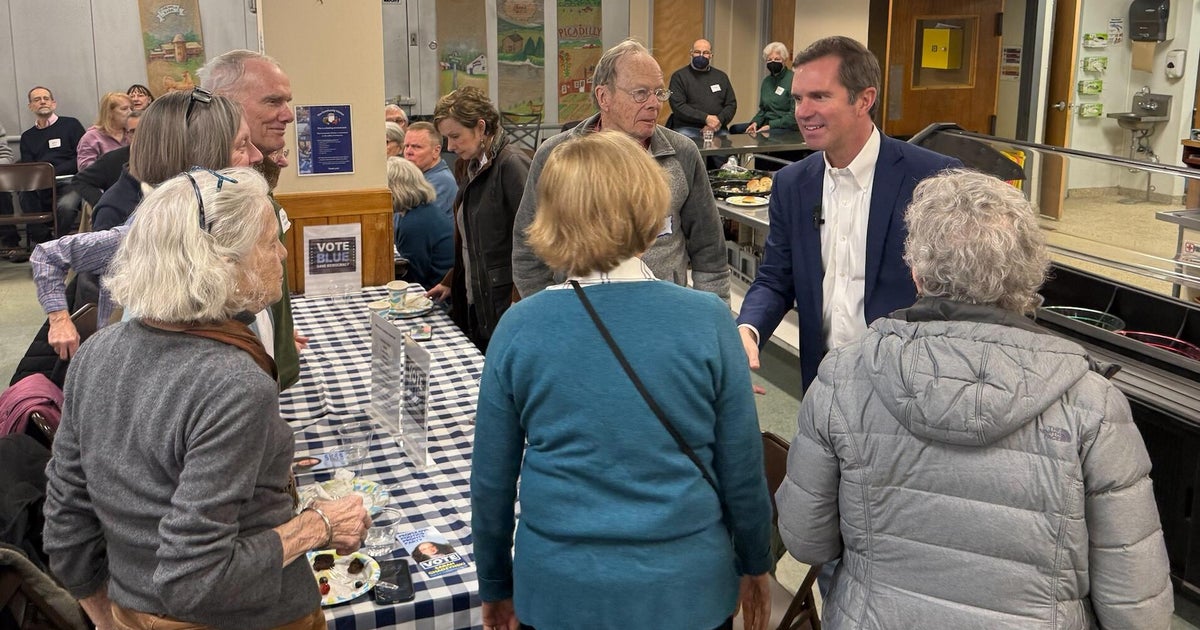
Kentucky Governor Andy Beshear didn’t mince words when speaking to CBS News after attending a Democratic fundraiser in Keene, New Hampshire. The governor articulated deep concerns about the president’s approach to one of the most consequential foreign policy decisions a leader can make—taking the nation to war. “If a president is going to take a country into war, and risk the lives of American troops and Americans in the region, he has to have a real justification and not one that seems to change every five to 10 hours,” Beshear stated, highlighting what he sees as inconsistency in the administration’s messaging. He went further, criticizing Trump’s tendency to prioritize military force over diplomatic channels: “This President seems to use force before ever trying diplomacy, and he has a duty to sell it to the American people and to address Congress with it. He hasn’t done any of that.”
The Kentucky governor expressed particular frustration with what he characterized as a missing strategic framework for success. According to Beshear, the administration’s goals have shifted dramatically—from regime change to strategic objectives and now to demands for unconditional surrender, a position he considers unrealistic given the current circumstances. Beyond questioning the military strategy itself, Beshear argued that Congress has failed in its constitutional responsibility to check executive power when it comes to military action. “He is trying to ignore Congress. He’s trying to even ignore the American people,” Beshear said, adding that President Trump delivered his State of the Union address just days before launching the attack without informing Americans about the threat he believed Iran posed. This lack of transparency and consultation, according to Beshear, represents a fundamental failure of democratic governance. His criticism comes after both chambers of Congress failed to pass resolutions that would have limited Trump’s war powers and required congressional approval for further military action against Iran.
Newsom Links Iran Policy to Broader Criticism of Netanyahu
Governor Gavin Newsom of California approached the Iran situation from a somewhat different angle, connecting it to broader concerns about Israeli Prime Minister Benjamin Netanyahu’s domestic and regional policies. Newsom had recently generated controversy by comparing Israel to an “apartheid state” during an event in Los Angeles, a comment that drew significant attention and required clarification. During his book tour stop in Portsmouth, New Hampshire, Newsom explained that his remarks referenced a recent column by New York Times journalist Tom Friedman, who had used similar language to describe the direction Netanyahu was taking Israel, particularly regarding the annexation of the West Bank. “I’m very angry, with what he is doing and why he’s doing it, what he’s going to ultimately try to do to the Supreme Court there, what he’s trying to do to save his own political career,” Newsom said, suggesting that Netanyahu’s actions were driven more by personal political survival than national interest.
Friedman’s column, which Newsom cited, had highlighted several troubling developments occurring simultaneously with the U.S.-Israeli military operations in Iran. These included Netanyahu’s government undertaking efforts to annex the West Bank while displacing Palestinians from their homes, attempting to fire the attorney general prosecuting Netanyahu on corruption charges, and blocking efforts to establish a commission examining the failures that led to the October 7, 2023, Hamas massacre of Jewish civilians. On the Iran conflict specifically, Newsom expressed a nuanced position that acknowledged the complex nature of the situation while maintaining his criticism of Trump’s approach. “I’m very angry about this war, with all due respect, you know, not because I’m angry the supreme leader is dead. Quite the contrary. I’m not naive about the last 37 years of his reign,” Newsom explained, demonstrating awareness of Iran’s troubling record while still questioning the wisdom and execution of current policy. Like Beshear, he focused on the president’s failure to articulate a clear rationale: “But I’m also mindful that you have a president who still is inarticulate and incapable of giving us the rationale of why? Why now? What’s the endgame?”
New Hampshire Voters Respond to Foreign Policy Focus
The reactions of New Hampshire voters at these events revealed both the salience of foreign policy concerns and the enduring importance of domestic issues in the minds of Democratic primary voters. Many attendees at Newsom’s book event indicated that the Iran situation was foremost in their minds, with some describing themselves as “horrified” by the developments. Twenty-nine-year-old Alicia Marr told CBS News that Newsom’s social media response to the war had directly influenced her decision to attend his event. “There was one spot left, and I decided to pick it up, and it was due to his response to the war, that it is just unacceptable, and I would agree with that,” Marr explained, demonstrating how candidates’ positions on the conflict are already shaping voter engagement.
However, not all attendees prioritized foreign policy concerns equally. Several voters indicated that while they were interested in candidates’ positions on international issues, their primary focus remained on domestic challenges facing American families and communities. Anita Alden, another attendee at Newsom’s Portsmouth event, articulated this perspective clearly: “I’m more focused on getting the middle class back on track and fighting the oligarchy, and I’m less invested in international issues.” She elaborated, “I wouldn’t call myself America first, but we have so many problems at home that are my priority.” This sentiment reflects a tension within the Democratic coalition between those who view foreign policy as a critical moral and strategic concern and those who believe the party should focus primarily on economic inequality, healthcare, education, and other domestic challenges that directly affect Americans’ daily lives.
Harris Joins Criticism as 2028 Field Takes Shape
Former Vice President Kamala Harris, another potential contender for the Democratic nomination in 2028, has also weighed in forcefully against the Trump administration’s Iran policy. In an interview with Fox 2 Detroit, Harris stated that she “unequivocally opposes” the military action and called on Congress to assert its constitutional authority over war-making decisions. “If we want to stop Donald Trump with this random decision that he has arrived at, then Congress must act, and Congress must act immediately,” Harris said, characterizing the Iran operation as “this unauthorized war of choice” that contradicts the will of the American people. Her use of phrases like “random decision” and “war of choice” signals a messaging strategy that portrays Trump as impulsive and reckless rather than strategic and deliberate.
Harris’s statement that “the American people do not want our sons and daughters to go into this unauthorized war” invokes both constitutional concerns about congressional authority and emotional appeals about the human cost of military conflict. Her position aligns her with Newsom and Beshear in what appears to be an emerging Democratic consensus that Trump has overstepped his authority and failed to make a convincing case for military action. This unified front among potential 2028 candidates suggests that criticism of Trump’s Iran policy may become a defining issue in the next Democratic primary, much as the Iraq War shaped the 2008 contest. President Trump has responded to Democratic criticism with characteristic defiance, dismissing his critics as “losers” and suggesting that they would oppose any decision he made regarding Iran. “If I did it, it’s no good. If I didn’t do it, they would have said the opposite, that you should have done this,” Trump said, framing the criticism as reflexive partisan opposition rather than substantive policy disagreement.
Looking Ahead: Foreign Policy in the 2028 Race
The New Hampshire visits by Newsom and Beshear, combined with Harris’s public statements, indicate that the Iran conflict is already shaping the contours of the 2028 presidential race, even though that election remains more than two years away. For Democrats, the challenge will be articulating a foreign policy vision that credibly addresses genuine security threats while avoiding the pitfalls of military overreach and the costs—both human and financial—of prolonged conflict. The governors’ emphasis on congressional authority, diplomatic alternatives, and clear strategic objectives represents an attempt to define a middle ground between appearing weak on national security and endorsing what they characterize as Trump’s reckless militarism.
The tension between foreign policy concerns and domestic priorities that emerged among New Hampshire voters will likely persist throughout the campaign. Democratic candidates will need to demonstrate competence and clarity on international issues while also addressing the economic anxieties and quality-of-life concerns that motivate many primary voters. How Newsom, Beshear, Harris, and other potential candidates navigate this balance—showing strength on foreign policy while maintaining focus on kitchen-table issues—may well determine who emerges as the party’s nominee. As these early visits to New Hampshire demonstrate, the 2028 campaign has already begun, with the Iran conflict serving as an unexpected but consequential opening issue that will test these candidates’ foreign policy credentials and their ability to challenge a president whose approach they view as dangerous and illegitimate.