
Federal Prosecutors Make Controversial Unannounced Visit to Federal Reserve Renovation Site
An Unusual Turn in an Ongoing Investigation
In a move that has raised eyebrows across legal and political circles, prosecutors from U.S. Attorney Jeanine Pirro’s office made an unannounced appearance at the Federal Reserve’s headquarters this past Tuesday. The two prosecutors and an investigator sought access to the building’s ongoing renovation project, which has been under criminal investigation for several months. According to sources close to the matter and correspondence obtained by CBS News, the trio was turned away at the door and instead provided with contact information for the Fed’s legal representatives. This unexpected visit represents a highly irregular approach to criminal investigation procedures, particularly given the sensitive nature of the case and the prominence of those involved.
The decision to show up without prior notice at an active investigation site breaks with standard prosecutorial protocol and has drawn immediate comparisons to similarly controversial tactics. Pirro’s predecessor in the U.S. Attorney’s office faced serious criticism when he made an unannounced visit to New York Attorney General Letitia James’s home during an investigation. That incident prompted allegations from James’s legal team that the prosecutor had violated professional conduct rules for attorneys and ignored internal Justice Department policies requiring fair and balanced treatment in criminal matters. The parallel between these two situations has not been lost on legal observers, many of whom see the Fed visit as another example of aggressive tactics that may cross ethical boundaries. Such moves can undermine the integrity of investigations and raise questions about whether prosecutorial power is being wielded appropriately or weaponized for political purposes.
The Investigation Into Federal Reserve Chair Jerome Powell
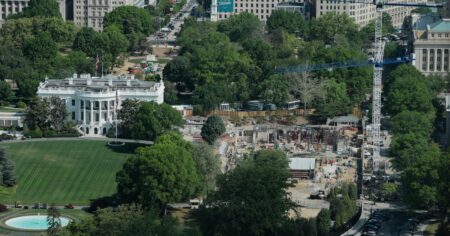
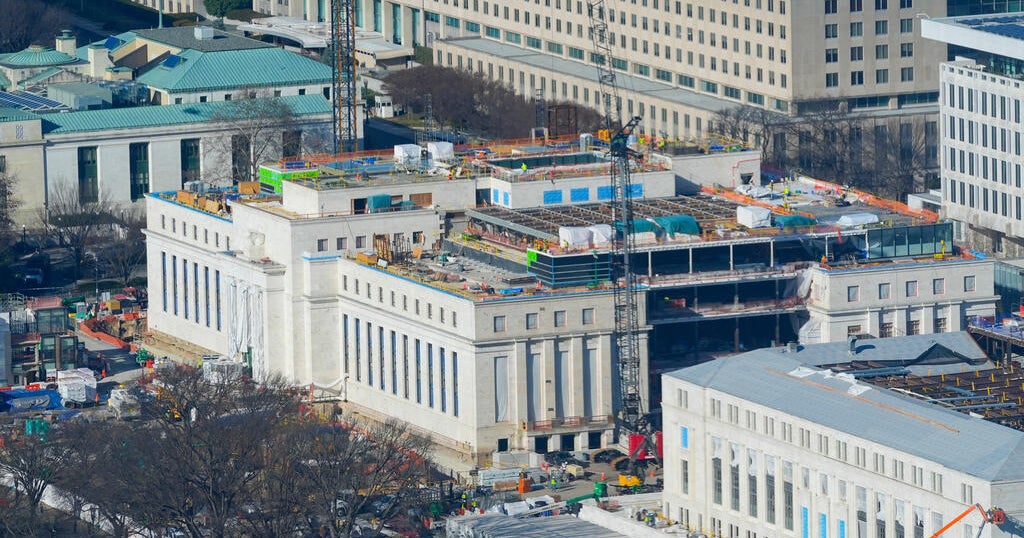
At the heart of this controversy lies a criminal investigation targeting Federal Reserve Chair Jerome Powell, focusing on the expensive and lengthy renovation project at the Fed’s Washington headquarters. The U.S. Attorney’s Office in Washington, D.C., opened this investigation in November, according to court documents, examining a project that has ballooned to approximately $2.5 billion in costs so far. It’s worth noting that the Federal Reserve operates independently and is not funded by taxpayer dollars, which makes the intense scrutiny of this construction project all the more politically charged. The investigation came to public attention in January when Powell himself disclosed that the Federal Reserve had received grand jury subpoenas from the Justice Department as part of a criminal probe into his conduct.
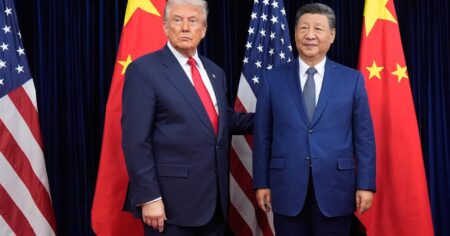
Powell revealed that these subpoenas threatened him with criminal indictment related to testimony he provided before the Senate Banking Committee in June 2025. According to the Fed chair, the investigation centered specifically on his statements about the renovation project and its substantial costs. However, Powell has consistently maintained that the probe is not what it appears to be on the surface. He has argued forcefully that the investigation represents an attempt to intimidate the Federal Reserve and influence its decision-making on interest rates. This accusation carries significant weight, as Powell has become a target of President Trump’s frustration over the Fed’s refusal to lower interest rates as quickly and dramatically as the President has demanded. The tension between maintaining the Federal Reserve’s independence and political pressure from the White House has become a defining issue of this investigation. Despite months of inquiry and the issuance of grand jury subpoenas, no criminal charges have been filed against Powell or anyone else connected to the renovation project.
A Federal Judge Steps In
The investigation took a dramatic turn in March when Chief Judge James Boasberg of the U.S. District Court for the District of Columbia made the extraordinary decision to quash both grand jury subpoenas targeting Powell. In his ruling, Judge Boasberg didn’t mince words about what he believed was really happening. He found abundant evidence that the subpoenas’ primary—if not sole—purpose was to harass and pressure Powell into either giving in to President Trump’s demands for lower interest rates or resigning from his position, thereby allowing the President to appoint a more compliant Federal Reserve chair. The judge noted that the government had provided absolutely no evidence that Powell had committed any crime beyond the act of “displeasing the President.” In unusually blunt language for a federal court opinion, Boasberg characterized the subpoenas as “mere pretexts” for political interference.
This judicial rebuke represents a significant check on prosecutorial power and a defense of the Federal Reserve’s institutional independence. Powell’s situation regarding his tenure is somewhat complex: his term as Fed chair ends in May, but he retains his seat on the Federal Reserve Board until early 2028, meaning he can continue voting on monetary policy decisions even after stepping down from the chairmanship. The Justice Department, unwilling to accept Judge Boasberg’s initial ruling, asked him to reconsider his decision. Earlier this month, the judge denied that request, firmly standing by his original finding that the investigation appeared to be politically motivated rather than based on legitimate criminal concerns. This double rejection by the federal judiciary has done little to slow the prosecutors’ pursuit of the matter, as evidenced by their recent unannounced visit to the renovation site.
The Fed’s Legal Response
The Federal Reserve’s outside legal counsel wasted no time in responding to the prosecutors’ surprise appearance at the renovation site. Robert Hur, a well-known figure in legal circles who previously served as the Justice Department special counsel investigating former President Joe Biden’s handling of classified documents, sent a pointed letter to the prosecutors. In his correspondence, which was reviewed by CBS News, Hur noted that the prosecutors appeared at the Federal Reserve without any prior notice, informed staff members they wanted to “check on progress” of the renovations, and requested a “tour” of the construction site. Hur’s letter reminded the prosecutors that Chief Judge Boasberg had already concluded their interest in the Federal Reserve’s renovation project was pretextual—in other words, a cover for other motives.
The attorney made clear that if the prosecutors wished to challenge Judge Boasberg’s finding, the proper avenue was through the court system, not by attempting to circumvent judicial rulings through unannounced site visits. This firm response from Hur, who has experience navigating politically sensitive investigations from his time examining President Biden’s document handling, underscores the Federal Reserve’s determination to protect its independence and resist what it views as improper pressure. Meanwhile, U.S. Attorney Jeanine Pirro defended her office’s actions in a statement to CBS News, arguing that “Any construction project that has cost overruns of almost 80% over the original construction budget deserves some serious review.” She added rhetorically, “And these people are in charge of monetary policy in the United States?” This statement frames the investigation as a legitimate inquiry into fiscal management rather than the politically motivated harassment that Judge Boasberg determined it to be. The Federal Reserve itself declined to provide a comment on the matter, maintaining its institutional practice of not engaging publicly with ongoing legal disputes.
The Prosecutors and Their Track Record
The two prosecutors who appeared at the Federal Reserve renovation site—Carlton Davis and Steven Vandervelden—are known allies of U.S. Attorney Jeanine Pirro and have been involved in other controversial cases that raise questions about their judgment and approach to prosecution. Both were instrumental in a failed attempt to indict six sitting congressional Democrats who had recorded a video urging military members to reject “illegal orders.” That case ended in an unusual and decisive manner: the grand jury unanimously rejected the proposed charges, as CBS News previously reported. Such a complete rejection by a grand jury is relatively rare and typically indicates that the prosecutors either overreached significantly or presented a case with serious fundamental flaws. The fact that these same prosecutors are now pursuing the Powell investigation adds context to concerns about whether this probe is driven by legitimate law enforcement concerns or political considerations.
Accompanying Davis and Vandervelden to the Fed site was Matthew Fox-Moles, an investigator assigned to a special prosecutions team in Pirro’s office, according to sources familiar with the matter. The involvement of a special prosecutions unit suggests that Pirro’s office views this case as particularly significant or sensitive, though critics might argue it indicates an unusual allocation of resources to what appears to be a politically charged investigation. The track record of the lead prosecutors, combined with Judge Boasberg’s findings and the unusual tactics employed, has created a picture of an investigation that many legal observers view with deep skepticism. The Wall Street Journal first reported on the prosecutors’ surprise visit to the headquarters renovation, and the story has since generated widespread attention and concern about the proper boundaries between legitimate criminal investigation and political interference with independent government institutions.
Political Implications and Future Consequences
The ongoing investigation has created significant complications beyond its immediate legal implications, particularly affecting President Trump’s efforts to reshape leadership at the Federal Reserve. Last summer, Trump personally visited the Fed’s headquarters to tour the renovation project in a scene that captured the unusual nature of this entire situation. Powell and Trump donned hard hats for the cameras, and what might typically be a routine site visit became a public spectacle as the two men openly argued about the scope and cost of the project’s overruns while television cameras recorded every moment. This public confrontation set the stage for the investigation that followed and illustrated the breakdown of the traditional arm’s-length relationship between the White House and the Federal Reserve.
The criminal probe has now become an obstacle to Trump’s plans for the Fed’s future leadership. Republican Senator Thom Tillis of North Carolina, who serves on the influential Senate Banking Committee, has stated publicly that he will not vote to advance Trump’s nominee for Federal Reserve chair—Kevin Warsh—until the Justice Department’s investigation concludes. This stance from a member of the President’s own party demonstrates how the investigation’s perceived political nature has created complications even among Trump’s usual allies. The situation raises fundamental questions about the independence of the Federal Reserve, the appropriate use of prosecutorial power, and the relationship between the executive branch and institutions designed to operate free from political pressure. As Powell’s term as Fed chair winds down toward its May conclusion, the resolution of this investigation—or lack thereof—will likely have lasting implications for how future administrations interact with the Federal Reserve and whether the central bank can maintain the independence that economists generally agree is essential for sound monetary policy. The unannounced visit by Pirro’s prosecutors suggests that despite judicial rebukes and growing political complications, this investigation is far from over.