
America Launches Major Military Operation Against Iran: President Trump’s Historic Announcement
A Decisive Moment in U.S.-Iran Relations
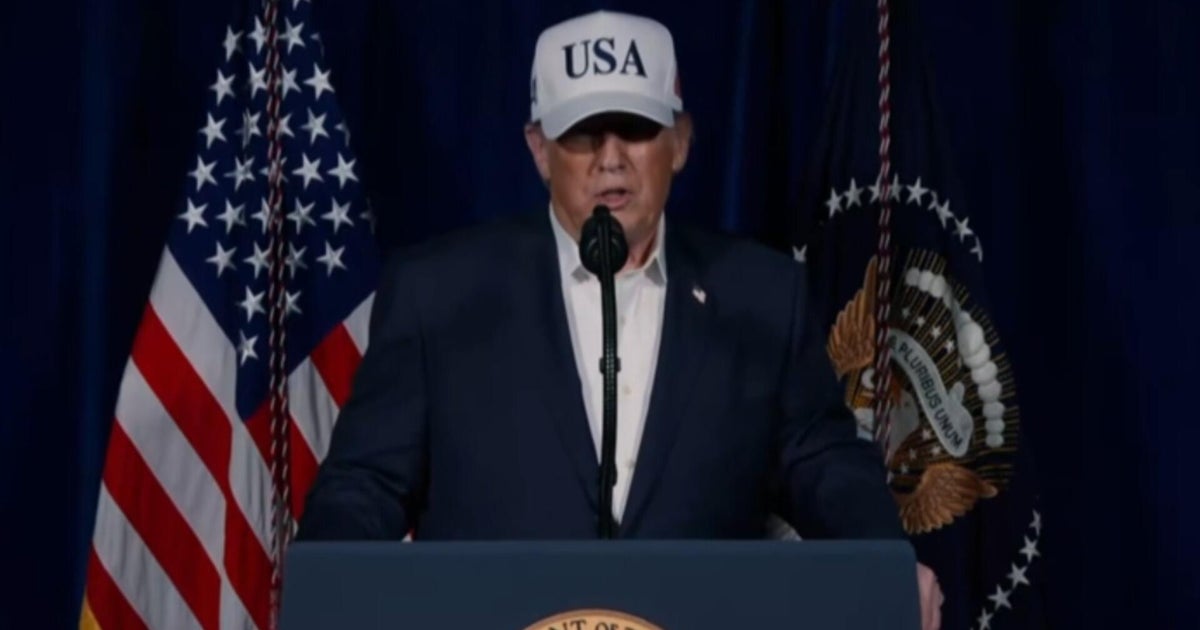
On Saturday, President Donald Trump delivered one of the most consequential addresses of his presidency, announcing that the United States had begun “major combat operations in Iran.” Speaking through a video posted on his Truth Social platform, Trump outlined what he described as a necessary defensive action to protect American lives and prevent Iran from obtaining nuclear weapons. The announcement came as Israel simultaneously launched its own preemptive strikes against Iranian targets. In his address, Trump painted a picture of decades of Iranian aggression against the United States and its allies, framing this military action as both a defensive necessity and an opportunity to fundamentally reshape the Middle East. The president’s tone was resolute, mixing warnings to Iranian military forces with appeals to the Iranian people themselves, urging them to seize what he called a historic opportunity for freedom. This operation, Trump insisted, wasn’t just about present-day security concerns but about safeguarding future generations from the threat of a nuclear-armed Iran.
Four Decades of Grievances and Conflicts
President Trump devoted considerable time to cataloging what he characterized as nearly five decades of Iranian hostility toward America. His historical timeline began with the 1979 takeover of the U.S. Embassy in Tehran, where Iranian revolutionaries held 52 American diplomats and citizens hostage for 444 days—an event that traumatized the nation and marked the beginning of a bitter antagonism between the two countries. The president continued through a litany of attacks that have defined U.S.-Iran relations: the devastating 1983 Marine barracks bombing in Beirut that killed 241 American military personnel; the 2000 attack on the USS Cole; and the deaths of hundreds of American service members in Iraq at the hands of Iranian-backed militias and improvised explosive devices. Trump emphasized that Iranian proxies have launched “countless attacks” against American forces stationed throughout the Middle East in recent years, targeting both military bases and commercial shipping in international waters. He also highlighted Iran’s broader destabilizing role across the region, from Lebanon to Yemen, Syria to Iraq, where Tehran has “armed, trained and funded terrorist militias.” Most recently, Trump pointed to the October 7 attacks on Israel by Hamas—which he identified as an Iranian proxy—an assault that killed more than 1,000 people, including 46 Americans, and took 12 U.S. citizens hostage in what he called a “brutal” attack unlike anything “the world has never seen before.”
The Nuclear Weapons Red Line
At the heart of Trump’s justification for military action was Iran’s nuclear program, which he described as an unacceptable threat that could never be permitted to reach fruition. The president made his position unequivocal: “It has always been the policy of the United States, in particular, my administration, that this terrorist regime can never have a nuclear weapon.” He revealed what he called “Operation Midnight Hammer,” claiming that in June of last year, U.S. forces had already destroyed Iran’s nuclear facilities at Fordow, Natanz, and Isfahan—major sites in Iran’s nuclear infrastructure. According to Trump, American forces delivered clear warnings to Iran following those strikes, demanding they abandon their nuclear ambitions permanently and offering opportunities for diplomatic resolution. However, Trump characterized Iran’s response as inconsistent and ultimately defiant, saying they “wanted to do it, they didn’t want to do it” in reference to potential negotiations. “They just wanted to practice evil,” he added with evident frustration. The president warned that Iran had attempted to rebuild its nuclear program and was developing long-range missiles capable of threatening European allies, American troops overseas, and potentially reaching American soil. The prospect of such weapons in the hands of what Trump called a “very wicked, radical dictatorship” represented an unacceptable risk that demanded immediate action.
The Scope of Military Operations
Trump outlined an extensive military campaign with multiple strategic objectives designed to fundamentally diminish Iran’s capacity to threaten American interests. The operation would target Iran’s missile program and manufacturing capabilities, which Trump promised would be “totally obliterated” and “raised to the ground.” The U.S. military would “annihilate” Iran’s navy, eliminating its capacity to threaten commercial shipping and American naval vessels in the Persian Gulf and surrounding waters. American forces would also work to dismantle the networks of terrorist proxies that Iran has supported throughout the region, ending their ability to destabilize neighboring countries and attack U.S. forces with roadside bombs and improvised explosive devices that have “gravely wounded and killed thousands and thousands of people, including many Americans.” The president emphasized that the ultimate goal remained preventing Iran from obtaining nuclear weapons: “They will never have a nuclear weapon,” he stated emphatically. Trump took the opportunity to remind viewers that he had “built and rebuilt” the U.S. military during his first administration, asserting that “there is no military on earth even close to its power, strength or sophistication.” This superiority, he suggested, would ensure success in the current operations, though he acknowledged the sobering reality that American lives might be lost in the process.
A Message to Iranian Forces and Citizens
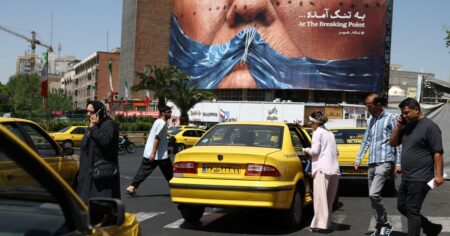
In a remarkable section of his address, President Trump spoke directly to different audiences within Iran itself, delivering starkly different messages to the country’s military forces and its civilian population. To members of the Islamic Revolutionary Guard, the armed forces, and police, Trump issued an ultimatum: lay down your weapons and receive “complete immunity,” or face “certain death.” This offer of amnesty to Iranian military personnel represented an attempt to fracture the regime’s support base and potentially reduce resistance to American operations. However, Trump’s most striking appeal came when he addressed “the great, proud people of Iran” directly. He told them that “the hour of your freedom is at hand,” while simultaneously warning them to “stay sheltered” and not leave their homes because “it’s very dangerous outside” with “bombs dropping everywhere.” Once American operations concluded, Trump urged Iranians to “take over your government” in what he described as potentially their “only chance for generations.” He positioned himself as the first American president willing to provide the support that Iranians had supposedly been requesting for years, saying “no president was willing to do what I am willing to do tonight.” Trump’s message attempted to separate the Iranian people from their government, painting the military action as liberation rather than aggression, and encouraging an uprising that would install a new, presumably pro-American government in Tehran.
The Weight of War and Prayer for Success
As his address drew to a close, President Trump acknowledged the gravity of the decision to commit American forces to combat and the potential human cost of these operations. He admitted, “I do not make this statement lightly,” recognizing that “the lives of courageous American heroes may be lost and we may have casualties.” With characteristic bluntness, he added, “That often happens in war.” Yet Trump framed these potential sacrifices as necessary and noble, undertaken “not for now” but “for the future” to ensure that “Americans and our children will never be threatened by a nuclear armed Iran.” The president called for prayers for every service member “selflessly risking their lives” and expressed trust that “with God’s help, the men and women of the armed forces will prevail.” He invoked divine blessing multiple times in his closing remarks, asking that “God bless the brave men and women of America’s Armed Forces,” that “God bless the United States of America,” and that “God bless you all.” This religious framing positioned the military action as not merely strategic but righteous—a moral imperative to prevent a greater evil. The announcement represented a potentially watershed moment in Middle Eastern geopolitics and American foreign policy, with consequences that may reverberate for decades. Whether this military gambit achieves its stated objectives or triggers unintended consequences remains to be seen, but Trump’s words made clear his conviction that inaction posed a greater risk than the considerable dangers of this dramatic military intervention.