
A Family’s Heartbreak: Remembering Renee Good After a Tragic Shooting
Hours of Agonizing Uncertainty
The Ganger family experienced every parent and sibling’s worst nightmare in January when they learned that Renee Good had been shot by a U.S. Immigration and Customs Enforcement officer in Minneapolis. What followed were excruciating hours of confusion and fear, as family members struggled to piece together what had happened to their beloved Renee. Her brother Brent Ganger described those terrible moments to CBS Evening News, explaining how the manner of her death felt completely at odds with everything his sister represented. “It’s the complete antithesis of who she was to die in that way. It doesn’t feel real still,” he said, his words capturing the surreal quality of loss that feels impossible to accept.
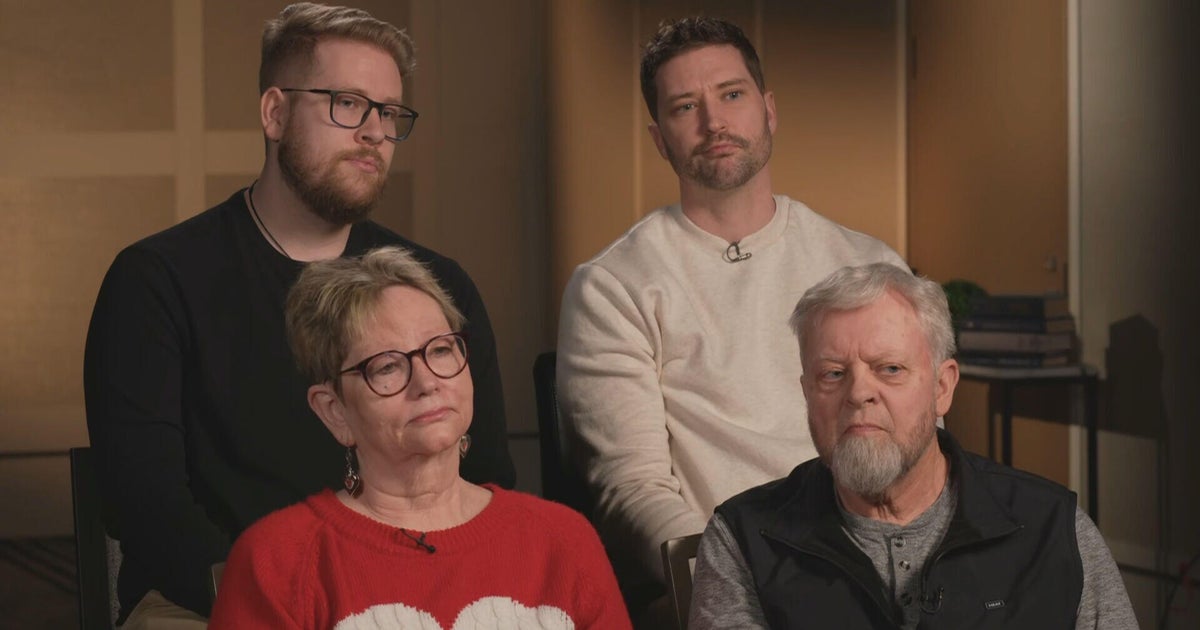
The way the family learned about the tragedy added another layer of pain to an already devastating situation. Renee’s brothers, Brent and Luke Ganger, first heard from their older sister that Renee had been shot, but in those initial moments, they didn’t even know whether she had survived. They then faced the impossible task of relaying this fragmentary, terrifying information to their parents without knowing the full extent of what had happened. Their father, Tim Ganger, reflected on that moment with the kind of raw honesty that only comes from experiencing the unimaginable. “I mean, there’s just no way to even prepare yourself to hear that…There’s nothing to say. But it was just a complete, utter shock,” he said. For Donna Ganger, Renee’s mother, the moment her son called to tell her the news remains frozen in time—a before-and-after moment that divided her life into what came before and what would follow after. “He said, Renee’s been shot by an ICE agent,” Donna recalled. “And you know, she’s passed away, she’s gone. I think I just said no a whole bunch of times.” That instinctive denial, that reflexive rejection of unbearable news, is perhaps the most human response to learning that someone you love is suddenly and violently gone.
The Pain of Public Characterization
In the hours following Renee’s death, while her family was still reeling from shock and grief, Homeland Security Secretary Kristi Noem publicly characterized Good’s actions as “an act of domestic terrorism.” For a family trying to process the loss of a daughter and sister, these words added insult to devastating injury. Luke Ganger described his reaction to Noem’s statement with a kind of numb disbelief: “it just doesn’t even register.” He went on to explain that “those words are just so far removed from who she was as a person.” The disconnect between the public narrative being constructed around Renee’s death and the reality of who she was as a human being created an additional burden for the grieving family to bear.
In the immediate aftermath, as videos of the shooting began circulating online, family members made the difficult decision to support each other by staying offline, protecting themselves from the viral spread of their sister’s final moments. The only footage they acknowledged seeing showed Renee sitting behind the wheel of her car, speaking to an officer with remarkable composure: “It’s fine, dude. I’m not mad at you.” Far from the actions of someone engaged in terrorism or aggression, her family interpreted these words as characteristic of who Renee truly was—someone trying to de-escalate, to calm, to make peace even in a tense situation. “She always was a very calming presence,” Tim Ganger said of his daughter. Luke Ganger reinforced this characterization with words that capture the profound gap between the official narrative and the lived reality of knowing Renee: “It feels like an exaggeration, but it feels true to say that she’s like the least combative person I’ve known.”
Remembering Who She Really Was
As the Ganger family shared memories of Renee, a portrait emerged of someone whose essential nature was kindness, warmth, and joy. She was, by her family’s account, someone who “immediately brightened a room” when she entered it. Her mother Donna described Renee’s remarkable gift for making people feel valued and seen: “She made you feel like you are the most important thing in her life, but she could do it to all of us.” This ability to make each person feel uniquely important and loved is a rare quality, and it speaks to the depth of Renee’s emotional generosity and presence.
The family’s descriptions paint a picture of an ordinary life lived with extraordinary warmth—someone whose goofy laugh could lift spirits, whose singing voice brought joy, whose hugs conveyed love and acceptance. These are the small, precious details that make up a human life, the moments and qualities that matter to those who loved her. They stand in stark contrast to the impersonal, politicized language of terrorism and threat that entered the public discourse around her death.
A Family Divided by Politics, United in Grief
The Ganger family represents something increasingly rare in American life—a family whose members hold different political views but remain connected by love. Tim Ganger, Renee’s father, voted for President Trump, the same president who at one point suggested that Renee might have been a “paid agitator.” This comment must have been particularly painful for a father grieving his daughter, coming from a political leader he had supported. Yet Tim Ganger was unequivocal in his rejection of any characterization of his daughter as someone who would weaponize her vehicle against a federal agent. “Absolutely not,” he stated, with his son Brent reiterating the same certainty.
This family’s experience reveals the human cost when political rhetoric collides with personal tragedy. They describe themselves as a microcosm of the American electorate, containing within their family the political divisions that characterize the broader nation. Yet in their grief, those divisions seem almost irrelevant compared to the shared loss they’re experiencing. The family’s unity in defending Renee’s character and seeking truth about her death demonstrates that love and loss can transcend political differences, even in our polarized times.
Seeking Light While Demanding Accountability
In the weeks and months following Renee’s death, her family has attempted to navigate the impossible terrain of grief while living in the public eye. They’ve consciously chosen to focus on spreading light through memories of Renee—celebrating her goofy laugh, her singing voice, her warm hugs. This decision to emphasize the positive, to share the joy Renee brought to the world, represents a kind of resistance against allowing her death to be the defining fact of her existence. They want the world to know Renee as they knew her, not just as a victim of violence or a political talking point.
At the same time, Good’s mother Donna has been clear about the need for a thorough investigation into the circumstances of her daughter’s fatal shooting. When asked who should be held accountable, Tim Ganger offered a measured response: “I’m not sure that’s up to us.” This humility, this willingness to let proper processes unfold rather than demanding immediate answers driven by grief and anger, speaks to the family’s character and their respect for justice as a process, not just an outcome.
A Call for Systemic Change
The Ganger family’s grief was compounded weeks later when they learned that Alex Pretti, an ICU nurse, had been shot and killed in Minneapolis in an encounter with Customs and Border Protection agents. The proximity of these two deaths—both involving federal immigration enforcement agents, both in the same city, both within weeks of each other—pointed to something beyond individual tragedy. Brent Ganger articulated what this pattern suggested: “Something is broken and something needs to be fixed, because this shouldn’t happen and it certainly shouldn’t happen again in such short order after Renee.”
This statement captures the family’s evolution from private grief to public advocacy. They recognize that Renee’s death, tragic as it is, represents a broader systemic problem that demands attention and reform. While they continue to mourn their personal loss and celebrate Renee’s life, they’re also calling attention to the need for accountability and change in how federal law enforcement engages with civilians. Their willingness to speak publicly, to share their pain and their memories, serves a purpose beyond processing their own grief—it’s a call to prevent other families from experiencing the same devastating loss. In remembering Renee Good not as a statistic or a political symbol but as a beloved daughter, sister, and friend whose life had value and meaning, the Ganger family offers both a memorial to one life lost and a plea that such losses might be prevented in the future.