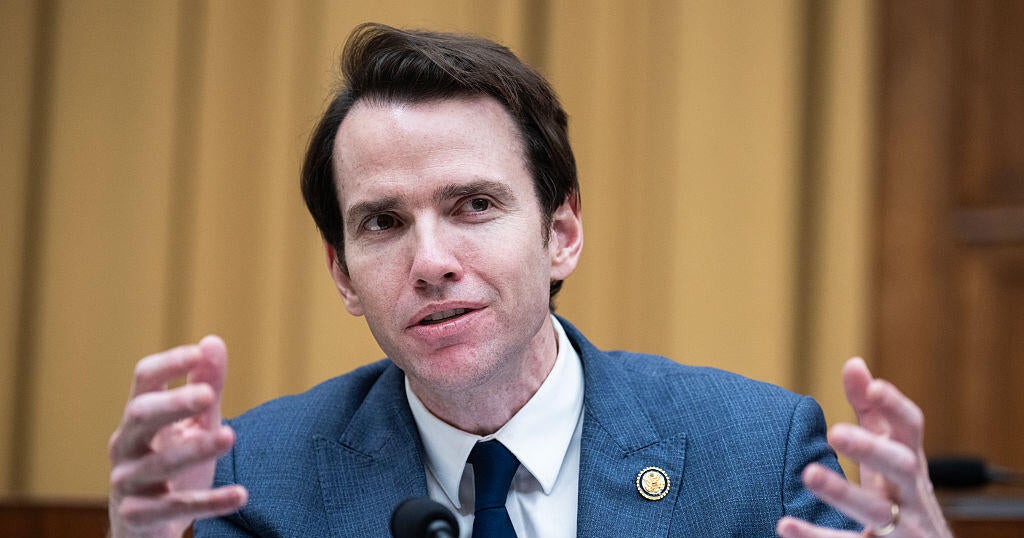

California Congressman Kevin Kiley Breaks from GOP, Becoming House’s Only Independent
A Surprising Political Shift in Washington
In a move that caught many political observers off guard, California Representative Kevin Kiley announced Monday that he is leaving the Republican Party to become an independent. During a call with reporters, the two-term congressman made his intentions clear, stating that he was immediately requesting the clerk of the U.S. House of Representatives to update the official roster to reflect his new independent status. This decision comes at a critical time for House Republicans, who are operating with an extremely narrow majority. While Kiley has assured party leadership that he will continue to caucus with Republicans “for the remainder of this term”—honoring the party affiliation under which he was elected—his switch creates uncertainty about the stability of Speaker Mike Johnson’s legislative agenda. The congressman notably declined to commit to being a reliable vote for Johnson during crucial procedural votes, leaving the door open for potential complications in the Republican leadership’s efforts to advance their priorities.
Impact on the Balance of Power in Congress
Kiley’s departure from the Republican Party has immediate mathematical consequences for the composition of the House of Representatives. With his switch, Republicans now hold 217 seats compared to the Democrats’ 214, with three vacancies currently existing. Kiley becomes the only independent member in the lower chamber, occupying a unique position that could prove pivotal on close votes. For Speaker Mike Johnson, a Louisiana Republican, the situation becomes even more precarious. Under the current numbers, Johnson can afford to lose only one vote when all members are present and voting. This razor-thin margin means that every procedural vote and piece of legislation requires careful negotiation and near-perfect party unity. Kiley’s independent status—even while caucusing with Republicans—introduces an element of unpredictability that could complicate Johnson’s ability to control the legislative calendar and advance the party’s agenda. The situation is made more delicate by Kiley’s refusal to guarantee his support on procedural matters, which are often the mechanisms through which the majority party maintains control of the House floor.
Frustration with Partisanship Drives the Decision
When asked about his motivations for leaving the Republican Party, Kiley was careful to frame his decision not as a personal falling out with party leadership or ideology, but rather as a broader statement about the state of American politics. “I would characterize it as my frustration with partisanship itself,” Kiley explained during the Monday call with reporters. This sentiment had been building for some time, as evidenced by his Friday announcement that he would run in California’s newly drawn 6th Congressional District as an independent candidate. In that announcement, Kiley declared that “political division has become a serious problem for our country,” signaling his belief that the current two-party system is failing to adequately serve the American people. His decision represents a rare instance of a sitting member of Congress voluntarily leaving one of the major parties while still in office, reflecting deep dissatisfaction with the partisan gridlock that has characterized recent congressional sessions. Kiley did have a brief discussion with Speaker Johnson over the weekend about his plans, though the details of that conversation remain private.
A Record of Breaking with Party Leadership
Kiley’s decision to leave the Republican Party doesn’t come entirely out of the blue for those who have been following his voting record and public statements. The congressman has increasingly demonstrated a willingness to break with party leadership on significant issues, particularly when he believes partisan considerations are overriding good governance. He was notably critical of Speaker Johnson’s handling of the 43-day government shutdown that stretched from October to November, which became the longest government shutdown in U.S. history. In his Friday statement, Kiley pointed to this shutdown, along with “a massive increase in healthcare costs, and of course, a pointless redistricting war” as examples of how hyper-partisanship has led to harmful outcomes for Americans. His independent streak was also visible at the end of last year when he broke with his party to help force a vote on the now-expired Affordable Care Act enhanced premium tax credits. More recently, he played a key role in helping to sink a procedural vote that would have barred lawmakers from overturning President Trump’s sweeping global tariffs, demonstrating his willingness to oppose his own party even on issues important to a Republican president.
The Gerrymandering Issue and Both-Sides Criticism
One of the specific issues that Kiley highlighted in his Friday announcement was the problem of gerrymandering, and he made a point of criticizing both political parties for their complicity in this practice. “The epidemic of gerrymandering has spread from Texas to California to states all across the country. Both parties are complicit,” he stated, suggesting that his frustration extends beyond just Republican Party politics to the entire system of partisan advantage-seeking. This criticism reflects a broader concern among some political reformers that the current redistricting process, which in many states is controlled by partisan legislatures, leads to the drawing of congressional districts that favor incumbents and create safe seats for one party or the other. These safe seats, in turn, are seen as contributing to increased polarization, as representatives in such districts need only appeal to their party’s base rather than building broad coalitions. Kiley’s decision to run in California’s newly drawn 6th Congressional District as an independent can be seen as an attempt to model a different approach to representation—one that prioritizes problem-solving and constituent service over partisan loyalty. Whether this approach will resonate with voters in his district remains to be seen, but it represents a significant gamble for a congressman who was elected as a Republican.
What This Means for the Future
As the only independent in the House of Representatives, Kevin Kiley now occupies a unique position that could provide him with outsize influence, particularly given the narrow margins in the chamber. While he has committed to caucusing with Republicans for the remainder of his current term, his refusal to guarantee support on procedural votes means that Speaker Johnson and the Republican leadership will need to take his concerns seriously if they want to maintain control of the legislative process. This situation also raises questions about the future of the two-party system and whether we might see more members of Congress choosing to identify as independents rather than aligning with either major party. Kiley’s move comes at a time when polling consistently shows that large numbers of Americans are dissatisfied with both major parties and express a desire for more options and less partisan conflict. However, the practical challenges of governing as an independent in a system designed around two parties are substantial, including committee assignments, fundraising, and the logistics of campaigning without party infrastructure. Kiley’s experience over the coming months will likely be watched closely by other members of Congress who may be contemplating similar moves, as well as by political analysts trying to understand whether this represents an isolated incident or the beginning of a broader trend toward political independence. Regardless of whether other members follow his lead, Kiley’s decision has already complicated the political calculus in the House and introduced a new element of uncertainty into what was already shaping up to be a contentious and difficult legislative session.