
The Epstein Files: Congressmen Challenge Justice Department’s Redactions of Wealthy Names
Lawmakers Expose Hidden Names in Epstein Documents
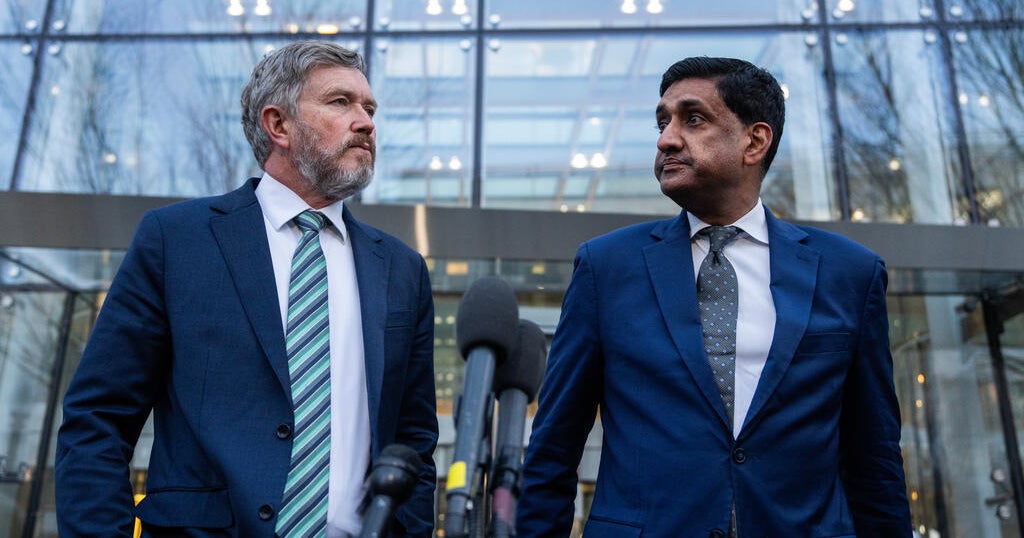
In a dramatic moment on the House floor Tuesday, California Representative Ro Khanna publicly revealed the names of six wealthy and influential men whose identities had been mysteriously blacked out in the Justice Department’s release of files related to convicted sex offender Jeffrey Epstein. The revelation came after Khanna and Kentucky Republican Rep. Thomas Massie spent an afternoon reviewing unredacted versions of the documents at a Justice Department office. While Khanna made clear that the files don’t directly implicate these men in criminal activity, he sharply criticized the Justice Department for concealing their identities “for no apparent reason” when releasing millions of pages of documents to the public. The names include billionaire Leslie Wexner, who formerly led Victoria’s Secret’s parent company and employed Epstein as his financial manager, along with Sultan Ahmed bin Sulayem, who heads the Dubai-based logistics giant DB World. Four additional, less prominent individuals were also named: Salvatore Nuara, Zurab Mikeladze, Leonic Leonov, and Nicola Caputo. This disclosure has reignited controversy over how government agencies handle transparency when powerful figures are involved, raising questions about whether the Justice Department applied redaction standards fairly across all individuals mentioned in the extensive Epstein investigation files.
The Discovery Process and Bipartisan Concerns
The discovery of these redacted names stemmed from legislation that Khanna and Massie co-sponsored last year, which mandated that the Justice Department release virtually all investigative files related to Jeffrey Epstein. The law allowed for limited redactions only to protect survivors’ identities and in specific other circumstances. After the two congressmen spent just a couple of hours reviewing documents on Monday, they emerged with concerns that extended far beyond the six names they found. Standing on the House floor, Khanna posed a troubling question to his colleagues and the public: “And if we found six men that they were hiding in two hours, imagine how many men they are covering up for in those 3 million files.” This statement encapsulated the lawmakers’ worry that the redaction process might have been used to shield powerful individuals from public scrutiny rather than to protect legitimate privacy interests. The bipartisan nature of this investigation is particularly noteworthy, with a progressive California Democrat and a libertarian-leaning Kentucky Republican joining forces to demand transparency. Their united front suggests that concerns about the Justice Department’s handling of these sensitive files transcend typical partisan divisions, pointing instead to a shared belief that the American public deserves to know the full scope of Epstein’s network of connections.
What the Documents Actually Reveal
After Massie pointed out the three specific documents where the six names appeared, the Justice Department responded by partially un-redacting those particular files late Monday night. The documents include various types of references that differ significantly in their implications. One particularly noteworthy file is a 2019 FBI document that refers to Leslie Wexner as a “co-conspirator,” though what this designation means in context remains unclear. Another document contains email correspondence between Epstein and Sultan bin Sulayem, though the content and nature of their communications haven’t been fully detailed. The third document is a list of twenty names that includes the four lesser-known men, but the purpose of this list and the context in which it was created remain murky. Importantly, this list doesn’t appear to include specific allegations against those named. This ambiguity highlights one of the central challenges in interpreting the Epstein files: being mentioned in investigative documents doesn’t necessarily indicate criminal wrongdoing or even awareness of Epstein’s crimes. However, the public’s right to know who associated with a convicted sex trafficker, and in what capacity, remains a legitimate concern. The documents raise more questions than they answer, which is precisely why transparency advocates argue that excessive redactions prevent the public from drawing informed conclusions about the extent of Epstein’s network and whether all appropriate investigative avenues were pursued.
Responses from Those Named and the Justice Department
Leslie Wexner’s legal team quickly responded to the disclosure with a statement emphasizing his cooperation with investigators and his status as a witness rather than a suspect. According to his representatives, a federal prosecutor informed Wexner’s legal counsel in 2019 that authorities viewed him as a source of information about Epstein rather than a target of investigation. The statement stressed that Wexner “cooperated fully by providing background information on Epstein and was never contacted again.” Wexner, who appears throughout the documents and has been publicly associated with Epstein in the past, has consistently maintained that he severed all ties with Epstein once the financier’s crimes became public knowledge. He has never been charged with any crime related to Epstein’s activities. CBS News has attempted to reach Sultan bin Sulayem and the four other named individuals for comment. Meanwhile, the Justice Department has mounted a robust defense of its document handling. Deputy Attorney General Todd Blanche took to social media Monday to accuse Representative Massie of “grandstanding” and insisted the Justice Department is “hiding nothing.” A department spokesperson further explained that with 3.5 million pages to review, “the teams may have inadvertently redacted individuals or left those unredacted who should have been.” The spokesperson also noted that four of the six names mentioned by Khanna appear in only a single document across all the files, while Wexner is referenced nearly two hundred times and Sultan bin Sulayem appears more than 4,700 times—suggesting these weren’t systematic cover-ups but potentially inconsistent application of redaction standards across an enormous document collection.
The Broader Context of the Epstein Files Release
The release of the Epstein files stems from the Epstein Files Transparency Act, which President Trump signed into law in November. Since then, the Justice Department has published a massive collection of records documenting the investigations into Epstein and his convicted associate Ghislaine Maxwell. These files have provided new details about the sex trafficking operations and offered revelations about the network of powerful individuals with whom the disgraced financier cultivated relationships over the years. However, officials and observers have repeatedly cautioned that mere inclusion in investigative files doesn’t constitute evidence of wrongdoing—investigators naturally document everyone connected to a case, regardless of their level of involvement or knowledge of criminal activity. The sheer scale of the document release has presented unprecedented challenges. Hundreds of lawyers have worked to review the documents and identify survivors’ names for redaction, a task made enormously difficult by the volume of material. The Justice Department maintains that it has temporarily removed some files from public access to redact names that were initially missed in the review process. This has created a delicate balancing act: protecting the privacy and dignity of Epstein’s victims while ensuring that powerful individuals don’t receive special treatment through excessive redactions. The tension between these two legitimate goals has fueled ongoing controversy, with some attorneys representing survivors claiming the department failed to adequately protect their clients’ identities, while transparency advocates argue that too many names of Epstein’s associates have been unnecessarily concealed.
Implications for Government Transparency and Accountability
The controversy surrounding the Epstein files redactions extends beyond this particular case to touch on fundamental questions about government transparency, especially when investigations involve wealthy and politically connected individuals. Democratic Representative Jamie Raskin of Maryland echoed Khanna’s concerns after reviewing the unredacted documents on Monday, telling reporters he saw “names of lots of people who were redacted for mysterious or baffling or inscrutable reasons.” These statements from lawmakers on both sides of the aisle suggest a pattern that troubles them: the possibility that power and influence may have affected which names were hidden from public view. The criticism doesn’t necessarily imply a coordinated cover-up; rather, it raises questions about whether unconscious bias or institutional deference to the wealthy and powerful influenced redaction decisions. As this controversy continues to unfold, it serves as a test case for how government handles sensitive information in the digital age, where massive document releases are technically possible but present enormous practical challenges. The public’s hunger for accountability in cases involving allegations against the rich and famous must be balanced against legitimate privacy concerns and the practical realities of reviewing millions of pages of investigative material. How the Justice Department responds to these congressional challenges, and whether additional names are un-redacted in the coming weeks, will likely influence public trust in government transparency efforts for years to come. The Epstein case, with its tangle of wealth, power, and horrific crimes, continues to raise uncomfortable questions about whether the American justice system applies the same standards to everyone, regardless of their social status or bank account.