
The Debate Over Immigration Detention: A Closer Look at the Dilley Facility and America’s Border Crisis
Controversial Comments Spark National Conversation About Detention Conditions
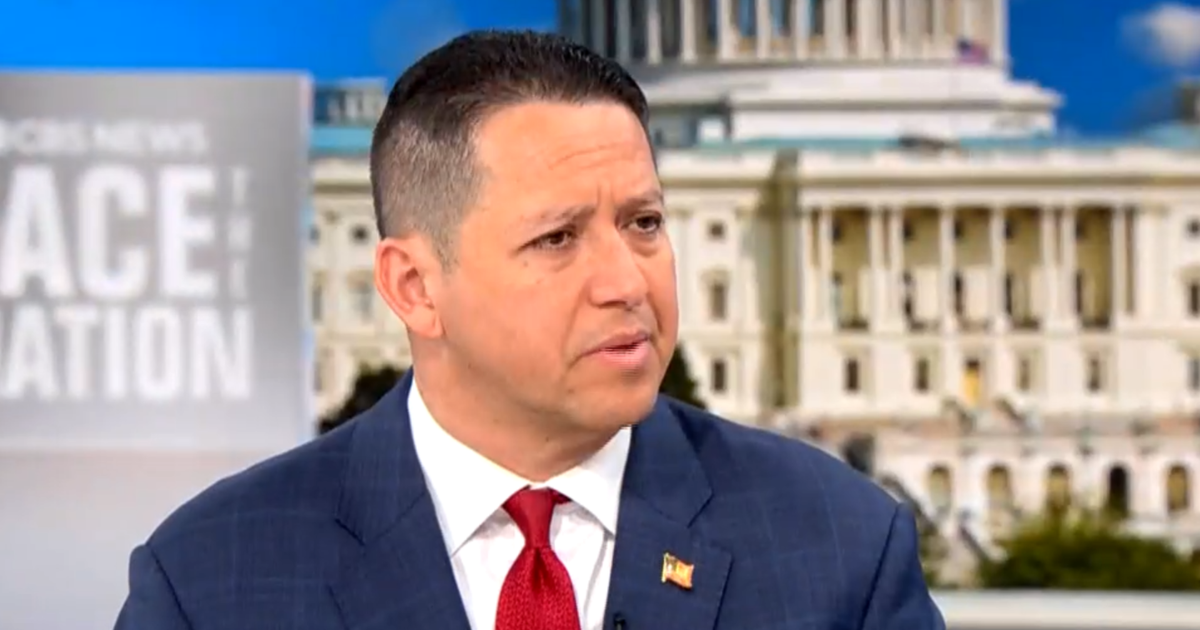
The immigration debate in America has reached another flashpoint, this time centered on a Texas detention facility and the controversial remarks of a Republican congressman. Representative Tony Gonzales from Texas found himself at the center of a media storm after making bold claims about the Dilley Immigration Processing Center, the only facility in the United States that houses both children and families awaiting deportation. During his appearance on CBS’s “Face the Nation,” Gonzales defended the facility’s conditions by stating it was “nicer than some elementary schools,” a comment that immediately drew both support and fierce criticism from across the political spectrum.
The controversy intensified following reports of a measles outbreak at the facility and the high-profile detention of five-year-old Liam Ramos, whose case has become emblematic of the human costs of aggressive immigration enforcement. Gonzales, while acknowledging the emotional weight of detaining young children, maintained that the facility provides adequate, even comfortable conditions for those awaiting deportation proceedings. He emphasized his personal familiarity with the center, noting he had visited “many times” and toured “dozens of facilities” throughout his tenure in Congress. However, his comparison to elementary schools struck many as tone-deaf, particularly given that immigration activists have consistently described conditions at Dilley as unsafe and inappropriate for housing vulnerable populations, especially children. The Department of Homeland Security had recently halted all movement at the facility after two detainees tested positive for active measles infections, raising serious questions about health and safety protocols that seem to contradict the congressman’s rosy assessment.
The Human Face of Immigration Policy: Young Liam’s Story
The detention of five-year-old Liam Ramos has become a rallying point for those concerned about the Trump administration’s aggressive immigration policies. Liam and his parents had entered the United States through what was then a legal pathway—the CBP One app, a government-authorized application system that allowed migrants to schedule appointments for asylum processing. Despite using this official channel, the family found themselves caught up in “Operation Metro Surge,” a targeted enforcement action in the Minneapolis area that represented one of many immigration crackdowns orchestrated by the administration across the country. The operation, led by Border Patrol Commander-at-large Gregory Bovino, resulted not only in the detention of families like Liam’s but also in the tragic deaths of two American citizens, Renee Good and Alex Pretti, highlighting the sometimes chaotic and dangerous nature of these enforcement sweeps.
Gonzales expressed sympathy for Liam’s situation, admitting “it breaks my heart” while noting he has a five-year-old at home himself, allowing him to understand the emotional dimensions of separating young children from their familiar environments. Yet he quickly pivoted to what he sees as the other side of the equation, asking, “What about that five-year-old U.S. citizen?” This rhetorical question reflected his belief that American children also deserve consideration when immigration policies are crafted and enforced. According to Gonzales, Liam and his family would not “qualify for asylum” under existing legal standards, making their detention and planned deportation legally justified regardless of the emotional toll. Eventually, Liam and his father, Adrian Conejo Arias, were released from custody and returned to Minneapolis, but their case had already sparked national attention and fueled the growing backlash against the administration’s immigration approach. The congressman’s position reflects a tension many Americans feel—the desire to enforce immigration laws while grappling with the human stories of those affected by those very same laws.
Finding the “Secret Sauce”: Enforcement with Humanity
Representative Gonzales believes there’s a middle path between open borders and heartless enforcement, what he calls the “secret sauce” that both the administration and Congress must discover. He insists that feeling “compassionate” should not be seen as incompatible with enforcing immigration laws, and that it’s entirely possible to maintain border security while treating people humanely. This philosophy represents what Gonzales sees as the political sweet spot—tough on illegal immigration but not cruel in its implementation. He argues that this balanced approach is not just morally right but politically necessary for Republicans who want to maintain electoral viability in an increasingly diverse America.
The congressman’s concerns about his party’s political future aren’t theoretical—they’re based on recent electoral defeats that have shaken Republican confidence. In special elections that should have been safe Republican victories, Democratic candidates have been making surprising gains, even in districts that President Trump won by double-digit margins. Texas Democrat Taylor Rehmet and Louisiana Democrat Chasity Verret Martinez both defeated Republican opponents in races that political analysts had expected to be easy holds for the GOP. These losses have been directly attributed to voter backlash against the administration’s immigration policies, particularly the methods used in deportation operations. Gonzales had warned his party early on that pursuing aggressive immigration enforcement without regard for public perception would backfire politically, and these special election results seem to be proving him right. The American public, according to recent CBS News polling, shows a complex attitude toward immigration: while 50% support President Trump’s immigration goals in principle, only 37% approve of the specific methods being used to conduct deportation operations. This gap between support for the objective and disapproval of the tactics represents the political tightrope Republicans must walk.
The Methods Matter: Public Perception and Political Consequences
The distinction between what Americans want accomplished and how they want it done has become crucial to understanding the current political landscape. Gonzales offered a vivid illustration of this principle when he explained that the public finds it much more acceptable when immigration enforcement targets detained criminals in jails, going “cell by cell,” rather than conducting neighborhood sweeps where agents go “house by house” asking residents to prove their citizenship. This difference in approach might seem subtle, but it represents a fundamental shift in how immigration enforcement is perceived—from targeted law enforcement to indiscriminate neighborhood raids that can sweep up citizens and legal residents alongside undocumented immigrants.
The congressman urged the Trump administration to “shift” how it communicates with the public about these operations, recognizing that messaging and methodology are nearly as important as the underlying policy objectives. The images and stories emerging from immigration raids—families separated, children detained, American citizens accidentally caught up in enforcement actions—have created a powerful counter-narrative to the administration’s law-and-order messaging. These optics have proven politically damaging even in conservative-leaning districts, suggesting that the American public’s tolerance for aggressive immigration enforcement has limits, particularly when it appears to lack discrimination or proportionality. Gonzales’s political instincts tell him that Republicans need to course-correct quickly if they want to avoid more electoral surprises in upcoming races.
The Congressional Battle Over Homeland Security Funding
As the deadline approaches for funding the Department of Homeland Security, Democrats in Congress have seized the opportunity to demand significant reforms to how Immigration and Customs Enforcement (ICE) and Customs and Border Protection (CBP) conduct their operations. The funding debate has become a proxy battle for larger questions about immigration enforcement, with Democrats pushing for measures they say will protect civil liberties and ensure accountability. Among their key demands are requirements that immigration agents obtain judicial warrants before entering homes, mandatory use of body cameras during enforcement operations, and strict requirements that agents properly display identification during encounters with the public.
Gonzales has taken a nuanced position on these proposed reforms, supporting some measures while strongly opposing others. He indicated that body cameras “make a lot of sense,” recognizing that video documentation could protect both agents and the public by providing objective records of enforcement encounters. This technology could help prevent both abuse by agents and false accusations against them, making it a rare point of potential bipartisan agreement. However, Gonzales draws a hard line at the requirement for judicial warrants, arguing that this would give judges who “all over the country go beyond their level of authority” the power to “roadblock” legitimate immigration enforcement operations and prevent communities from being kept safe. He maintains that “administrative warrants work” and provide sufficient legal oversight without creating unnecessary bureaucratic obstacles. The congressman frames this as a matter of giving “law enforcement every tool they need to go out and apprehend these convicted criminals that are loose in our community.” From his perspective, Democrats who want to impose the judicial warrant requirement are essentially trying to “shackle” law enforcement and prevent them from doing their jobs effectively. As the Friday funding deadline approaches, Congress must navigate these competing visions of immigration enforcement—balancing civil liberties concerns against security imperatives in a political environment where both parties see advantage in taking strong positions.
The Path Forward: Balancing Security, Humanity, and Politics
The current immigration debate reveals deep fault lines in American politics and society, with Representative Gonzales positioning himself as a voice for practical compromise in an increasingly polarized landscape. His defense of the Dilley detention facility, combined with his calls for more humane enforcement methods, reflects the complicated calculations Republicans must make as they try to satisfy both their base voters who want strict immigration enforcement and the broader electorate that recoils from images of children in detention. The measles outbreak at Dilley, the deaths during Operation Metro Surge, and the detention of young Liam Ramos have all contributed to a narrative that the current approach is both dangerous and cruel, even as supporters argue it’s necessary to restore order to the immigration system.
The coming months will test whether Gonzales’s vision of “compassionate enforcement” can become reality or whether it remains an aspirational talking point that satisfies neither side of the debate. The special election losses in solidly Republican districts suggest that the political costs of aggressive immigration enforcement may be higher than the Trump administration anticipated, potentially forcing a recalibration of tactics if not objectives. Meanwhile, the funding battle over Homeland Security will determine what tools and constraints immigration enforcement agencies operate under, with lasting implications for how America manages its borders and treats those who cross them. As Gonzales noted, Congress needs to “work it through,” finding solutions that protect American communities while respecting human dignity and constitutional rights—a balance that has eluded policymakers for generations but has never been more politically urgent than it is today.