

The Disappearance of Retired Air Force General Neil McCasland: A Community’s Growing Concern
A Highly Decorated Officer Vanishes Without a Trace
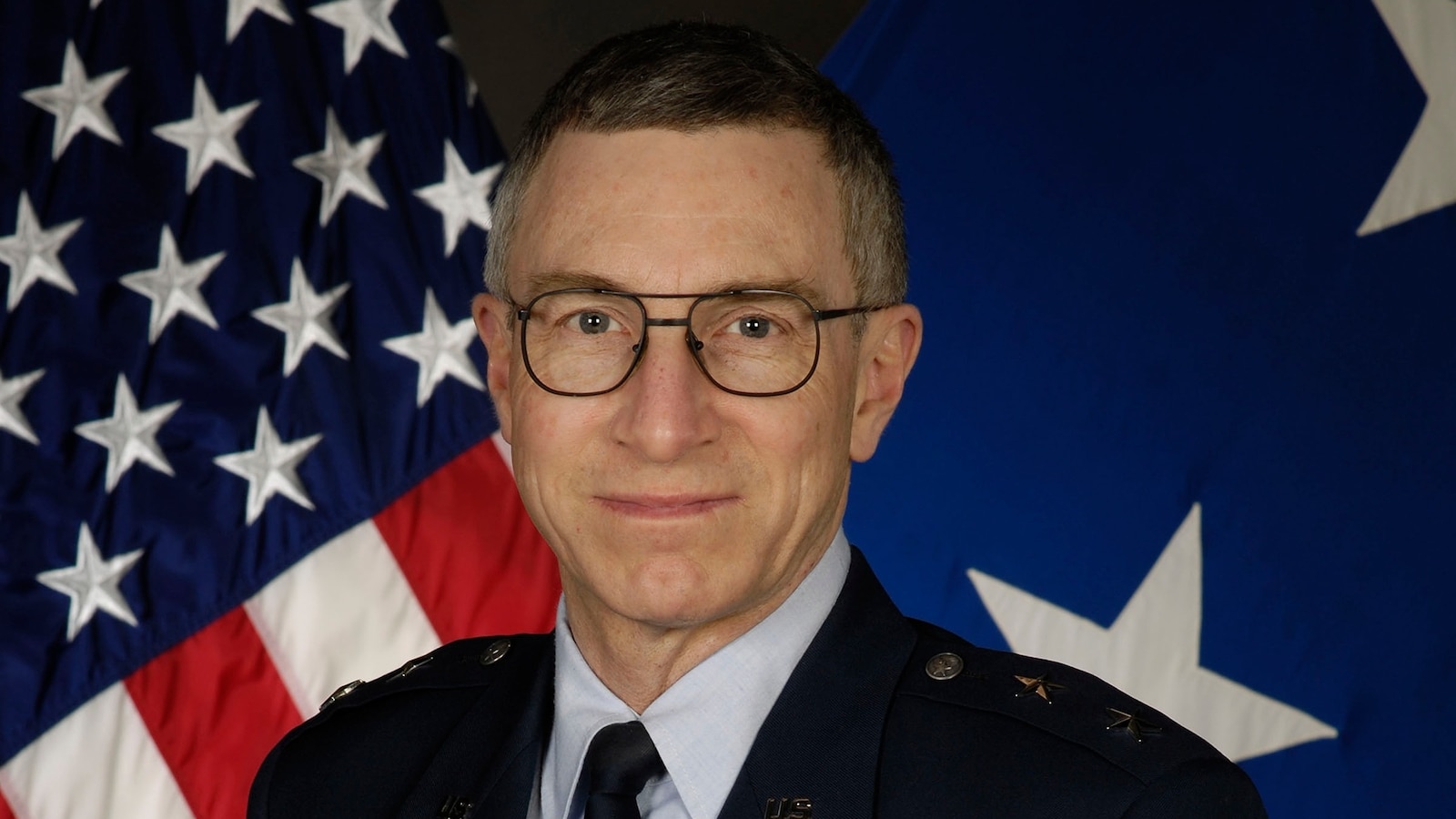
The quiet neighborhood of Albuquerque, New Mexico, has become the center of an intensive search operation following the mysterious disappearance of retired Major General William N. “Neil” McCasland. The 68-year-old former Air Force officer was last seen at his home on February 27, and despite extensive efforts by local authorities and the community, his whereabouts remain unknown. The Bernalillo County Sheriff’s Office has been leading the investigation, and as the weeks pass without answers, concern for McCasland’s safety continues to intensify. What makes this case particularly puzzling is the seemingly ordinary nature of the day he disappeared—nothing appeared out of the ordinary until suddenly, he was simply gone.
McCasland’s distinguished military career spanned decades of service in some of the most sensitive and critical areas of national defense. During his time in the Air Force and with the National Reconnaissance Office, he held numerous director-level positions at the Pentagon, demonstrating his value to the nation’s security apparatus. His expertise was particularly concentrated in space research, acquisition, and operations—fields that require exceptional intelligence and clearance levels. He commanded the Phillips Research Site of the Air Force Research Laboratory at Kirtland Air Force Base in New Mexico, and later led the Air Force Research Laboratory at Wright-Patterson Air Force Base in Ohio. These weren’t just ceremonial positions; they represented the pinnacle of technical military leadership, where decisions impacted national security and the future of space operations. His colleagues and those who served under him knew him as a brilliant strategist and leader, someone whose mind was always working through complex problems.
The Timeline of a Troubling Day
The events of February 27 have been carefully reconstructed by investigators, creating a narrow window during which McCasland disappeared. That morning began routinely enough—at 10 a.m., a repairman arrived at the McCasland residence and had a normal interaction with the retired general. According to Bernalillo County Sheriff John Allen, who addressed the media at a news conference on Monday, nothing about this encounter raised any red flags. About an hour later, at 11:10 a.m., McCasland’s wife left their home to attend a medical appointment, leaving her husband alone at the residence. When she returned home at 12:04 p.m.—less than an hour later—her husband was nowhere to be found. After searching the property and presumably trying to reach him, she reported him missing at 3:07 p.m. that afternoon.
What makes this timeline particularly concerning to investigators is the brief window of opportunity for McCasland to have left the property. In less than an hour, a man who had been interacting normally with a service professional and was presumably going about his day simply vanished. Adding to the mystery, McCasland left his cell phone behind at the house—a detail that authorities have noted is highly unusual. In today’s world, most people are virtually inseparable from their phones, using them for communication, navigation, and countless daily tasks. The fact that McCasland departed without this crucial device suggests either a sudden decision to leave or a state of mind that prevented him from thinking to take it. Lieutenant Kyle Woods of the Sheriff’s Office emphasized that despite the unexplained departure, there was “no indication that Mr. McCasland was disoriented or confused,” adding that “arguably, he would still be the most intelligent person in the room.”
The Mental Fog: A Clue or a Red Herring?
One piece of information that has drawn considerable attention from both investigators and the public is McCasland’s own acknowledgment that he had been experiencing what he described as a “mental fog.” According to Sheriff Allen, McCasland had mentioned this condition and indicated he was looking into it, trying to understand what was causing this uncharacteristic feeling. This mental fog had apparently been significant enough that McCasland had used it as a reason for stepping down from some groups and organizations he had been working with—a decision that speaks to both his self-awareness and his sense of responsibility. For someone whose career was built on mental acuity and clear decision-making, experiencing cognitive changes would have been deeply concerning.
However, law enforcement officials have been careful not to overstate the significance of this “mental fog” as it relates to his disappearance. While it indicates McCasland was experiencing some form of cognitive difficulty, those who interacted with him didn’t report behavior that would suggest severe disorientation or confusion. This creates a complex picture: a man who was self-aware enough to recognize and act upon changes in his mental state, yet who disappeared without his phone, wallet, or any apparent plan. The question remains whether this mental fog represented early signs of a medical condition such as dementia, whether it was related to stress or other factors, or whether it played any role in his disappearance at all. Medical experts know that cognitive changes can sometimes precede wandering behavior, particularly in individuals who may be developing neurological conditions, but they can also be caused by treatable conditions like vitamin deficiencies, medication interactions, or depression.
An Extensive Search Yields Few Answers
The Bernalillo County Sheriff’s Office has mounted a comprehensive search operation, utilizing every resource at their disposal. Hundreds of homes in the surrounding area have been canvassed, with investigators interviewing residents and requesting surveillance footage that might show McCasland’s movements on the day he disappeared. The search has incorporated modern technology including drones equipped with cameras to survey areas difficult to access on foot, helicopters providing aerial perspectives of the terrain, and specially trained canines capable of following scent trails. Despite these extensive efforts covering the area around McCasland’s home, authorities have found frustratingly little evidence of where he might have gone.
Perhaps the most intriguing piece of physical evidence discovered so far is a gray U.S. Air Force sweatshirt found approximately 1.25 miles east of McCasland’s residence. This discovery initially seemed promising, but Sheriff Allen noted that family members and friends have not been able to confirm whether the sweatshirt actually belonged to McCasland. Forensic examination of the garment found no blood during initial processing, which at least suggested that if it was related to the case, there was no immediate indication of violence or injury. Still unaccounted for are several items that McCasland apparently had with him when he left: his wallet, a .38 caliber revolver with a leather holster, and a red backpack. The presence of a firearm among the missing items adds another layer of concern to an already worrying situation, though authorities have been careful not to speculate about why he might have taken it or what it might indicate about his state of mind or intentions.
Community Involvement and the Search for Answers
Recognizing that solving this mystery will likely require help from the broader community, Sheriff Allen has made a direct appeal to Albuquerque residents, particularly those living in the area around McCasland’s home. He specifically asked people to review their home surveillance systems, with priority focus on footage from February 27 between 9 a.m. and 2 p.m.—the window that encompasses when McCasland was last seen and when he was reported missing. Many modern homes have doorbell cameras, security systems, and other recording devices that might have inadvertently captured McCasland walking past, possibly providing crucial information about his direction of travel or state of mind.
Lieutenant Woods emphasized that their investigation has turned up “absolutely nothing that would suggest anything nefarious has occurred.” This statement is significant because it appears to rule out—at least based on current evidence—scenarios involving foul play, abduction, or violence at the home. The investigation seems to be proceeding on the assumption that McCasland left his home of his own accord, though the reasons remain unclear. The Sheriff’s Office has established a tip line at 505-468-7070, encouraging anyone with information, no matter how seemingly insignificant, to come forward. Sometimes in missing person cases, the smallest detail—a brief sighting, a moment captured on video, an interaction at a store or gas station—can provide the break investigators need.
Hope and Concern as the Search Continues
As the days stretch into weeks since Neil McCasland’s disappearance, his family, friends, former military colleagues, and the Albuquerque community continue to hope for his safe return while grappling with the uncertainty of not knowing what happened. For someone who spent his career in positions of high responsibility, someone whose life was defined by structure, planning, and purpose, this sudden and unexplained absence is completely out of character. The investigation continues, with authorities following up on every lead, analyzing every piece of potential evidence, and working tirelessly to bring answers to those who care about the retired general. Anyone with information about McCasland’s whereabouts or who might have seen him on or after February 27 is strongly encouraged to contact the Bernalillo County Sheriff’s Office immediately. In cases like these, time is critical, and the hope remains that McCasland will be found safe and returned to his family.