
Secretary Rubio’s Munich Address: Bridging the Atlantic Divide
A Message of Reassurance Amid Uncertainty
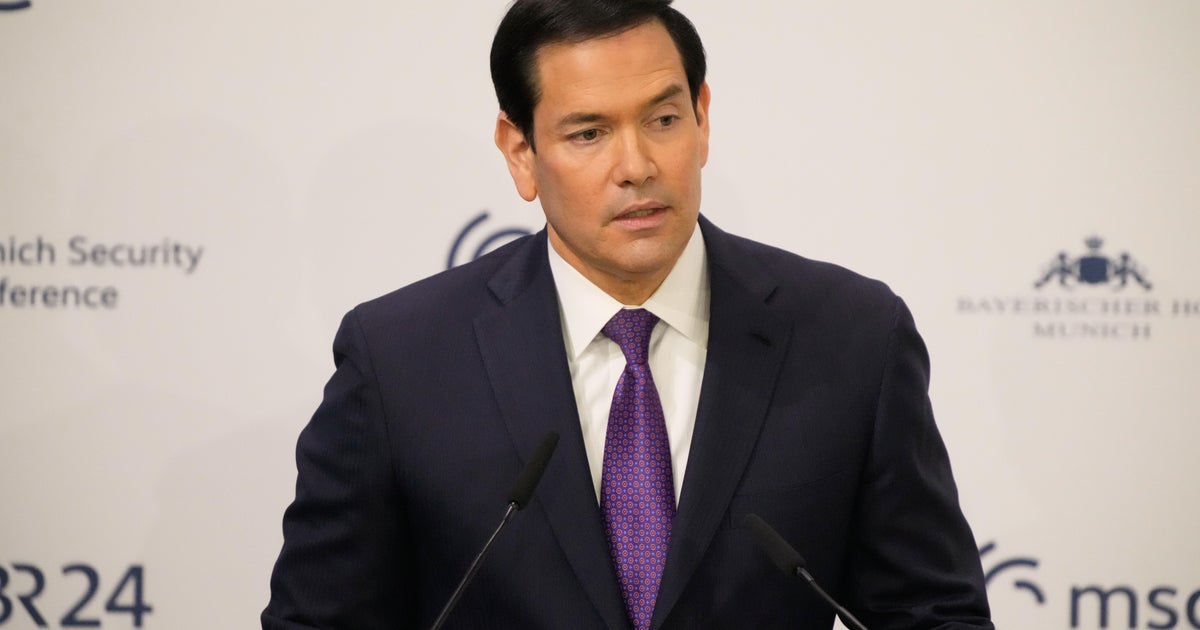
When Secretary of State Marco Rubio stepped to the podium at the Munich Security Conference, the atmosphere was thick with anticipation. After months of heated rhetoric and policy disagreements that had European allies questioning America’s commitment, Rubio delivered what many desperately wanted to hear: a message of unity and renewal. “We do not seek to separate, but to revitalize an old friendship and renew the greatest civilization in human history,” he declared, setting a tone that marked a stark departure from previous American messaging. The secretary’s speech walked a careful line between honest criticism and heartfelt reassurance, acknowledging the shared mistakes of the post-Cold War era while insisting on the enduring bond between America and Europe. His words resonated deeply with an audience that had grown accustomed to more combative American stances, particularly after Vice President JD Vance’s confrontational address at the previous year’s conference had left European capitals rattled and anxious about the future of transatlantic relations.
Confronting Uncomfortable Truths Together
Rubio didn’t shy away from delivering some hard truths that many Europeans found uncomfortable but necessary. He challenged European nations for what he saw as misplaced priorities—investing heavily in welfare programs while neglecting their own defense capabilities, and embracing migration policies that he suggested threatened the social fabric of their societies. Yet what made his criticism palatable was the framework he constructed around it: these weren’t uniquely European failures, but shared Western mistakes born from what he called postwar “euphoria.” This euphoria, Rubio argued, had led the entire Western world into a “dangerous delusion” of borderless globalization and excessive faith in international institutions. “This was a foolish idea that ignored both human nature and the lessons of 5,000 years of recorded human history. It has cost us dearly,” he said, his words striking at the heart of assumptions that had guided Western policy for decades. By framing these failures as collective rather than pointing fingers solely at Europe, Rubio transformed what could have been a scolding into an invitation for shared reflection. “We made these mistakes together, and now together, we owe it to our people to face those facts and to move forward — to rebuild,” he explained, offering a path forward rooted in partnership rather than division.
The Civilizational Bond That Endures
Perhaps the most powerful element of Rubio’s address was his eloquent affirmation of the deep historical and cultural ties that bind America to Europe. In an era when headlines regularly proclaimed the death of the transatlantic partnership, the Secretary of State wanted to make one thing absolutely clear: America has no intention of turning its back on Europe. “In a time of headlines heralding the end of the transatlantic era, let it be known and clear to all that it is neither our goal nor our wish,” Rubio stated firmly. Then, in what became one of the most quoted lines from his speech, he added a touch of poetry that spoke to something deeper than mere strategic alliance: “For us Americans, our home may be in the Western Hemisphere, but we will always be a child of Europe.” This wasn’t just diplomatic flattery; it was an acknowledgment of the shared civilization, values, and heritage that no temporary political disagreement could erase. The response was immediate and visceral—the audience rose in a standing ovation, a powerful demonstration of relief and appreciation. Conference chair Wolfgang Ischinger captured the mood perfectly when he told Rubio afterward, “Mr. Secretary, I’m not sure you heard the sigh of relief through this hall.” That collective exhale represented months, perhaps years, of accumulated anxiety about American commitment finally finding some release.
Navigating the Complex Path to Peace
Beyond the reassuring rhetoric, Rubio also addressed the pressing geopolitical challenges that continue to test Western unity, particularly the ongoing war in Ukraine. During a question-and-answer session following his main address, the Secretary provided an update on diplomatic efforts to broker an end to Russia’s invasion, revealing that another round of talks was expected soon. His tone was cautiously optimistic but appropriately skeptical: “We don’t know if the Russians are serious about ending the war; they say they are. We’re going to continue to test it.” This measured approach acknowledged both the necessity of diplomatic engagement and the very real possibility that Moscow might not be negotiating in good faith. On China, Rubio struck a similar balance, insisting that despite “fundamental challenges” in the relationship, Washington has “an obligation to communicate” with Beijing, while simultaneously stressing that any engagement must zealously protect U.S. national interests. Throughout his time in Munich, Rubio conducted a whirlwind of diplomatic meetings, sitting down with German Chancellor Friedrich Merz and officials from Denmark, Greenland, Poland, Croatia, and Moldova. He also met with senior Syrian officials to discuss ceasefire preservation and the protection of minority communities. Though he missed one meeting on Ukraine support due to scheduling conflicts, he planned to meet briefly with Ukrainian President Volodymyr Zelenskyy before departing for Bratislava and Budapest, where a meeting with Hungarian Prime Minister Viktor Orban awaited.
European Responses: Reassured but Vigilant
While Rubio’s speech was generally well-received, European leaders made clear they weren’t ready to completely let down their guard. Ursula von der Leyen, president of the European Union’s executive commission, called the speech “very reassuring” but immediately added a cautionary note: “in the administration, some have a harsher tone on these topics.” Her observation highlighted the reality that Rubio’s conciliatory approach, while welcome, might not represent the views of the entire Trump administration. In her own address to the conference, von der Leyen emphasized that “Europe must become more independent,” particularly on defense matters, and insisted upon “digital sovereignty” in how the continent handles issues like hate speech on social media. British Prime Minister Keir Starmer was even more direct in his assessment that complacency would be dangerous. “We shouldn’t get in the warm bath of complacency,” he warned, arguing that the United Kingdom must work to re-forge closer ties with Europe to help the continent “stand on our own two feet” in defense. He called for investment “that moves us from overdependence to interdependence,” a formulation that suggested Europe should be a more equal partner rather than a dependent. To underscore Britain’s commitment to this vision, the UK announced shortly after Rubio’s remarks that it would deploy its Carrier Strike Group across the North Atlantic and Arctic, led by the HMS Prince of Wales, the largest warship in the Royal Navy. The deployment would include visits to U.S. ports and joint operations with American jets, with Defense Secretary John Healey explaining it would “help make Britain warfighting ready, boost our contribution to NATO, and strengthen our operations with key allies.”
Broader Tensions and the China Factor
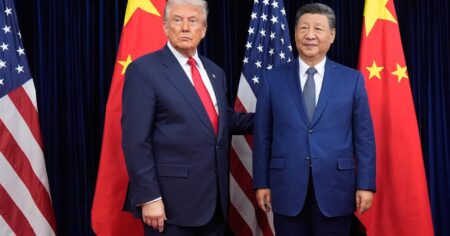
The Munich Security Conference also highlighted that trans-Atlantic tensions, while significant, were not the only fault lines running through the international order. Speaking after Rubio, Chinese Foreign Minister Wang Yi offered his own perspective on the state of global affairs, expressing gratification that President Trump respects President Xi Jinping and China, but also voicing concerns about anti-China sentiment in America. “We see that some forces and some people are still trying their best to suppress and contain China, and are still attacking and slandering China by any means,” Wang said, his words revealing Beijing’s sense of being under siege. He warned that “law of the jungle and unilateralism have taken hold” in international relations, and criticized unnamed countries for reviving “the Cold War mentality.” The Chinese minister’s remarks served as a reminder that while the West was working through its internal disagreements, larger global rivalries continued to shape the international landscape. The contrast between Rubio’s emphasis on Western civilization and shared values with Europe, and Wang’s critique of Western approaches to China, underscored the fundamental divide between democratic and authoritarian systems that increasingly defines global politics. As the Munich Security Conference concluded, the general assessment was that Rubio had successfully steadied the ship of trans-Atlantic relations, at least temporarily. His skillful blend of criticism and reassurance, his acknowledgment of shared responsibility for past mistakes, and his eloquent affirmation of enduring civilizational bonds had given European allies reason to hope that American commitment to the partnership remained strong despite recent turbulence. Yet European leaders’ insistence on greater independence and self-reliance suggested that the old assumptions about American leadership could never be fully restored, and that a new, more balanced partnership might be emerging from the current period of uncertainty.