


America Reassures Europe: A Softer Tone on Trans-Atlantic Relations
A More Measured Approach to Alliance Building
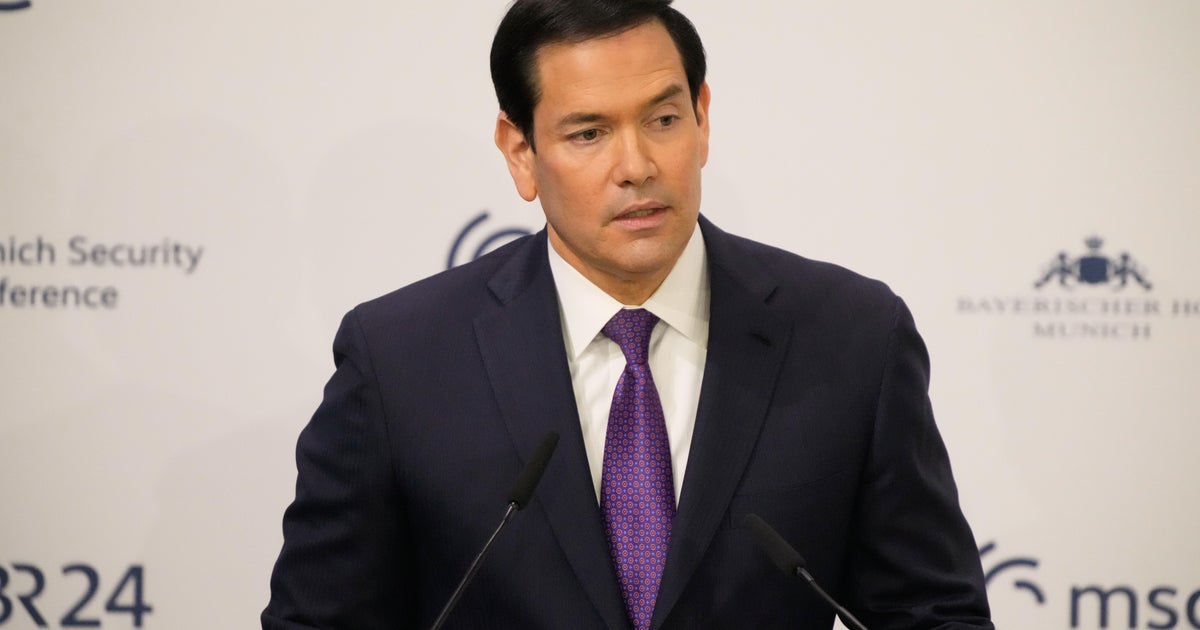
Secretary of State Marco Rubio delivered a carefully calibrated message to America’s European allies at the Munich Security Conference on Saturday, marking a notable shift in diplomatic tone from the Trump administration’s previous approach. While maintaining the administration’s core policy positions, Rubio’s speech represented a conscious effort to repair relationships strained by over a year of confrontational rhetoric. His appearance came at a critical juncture, exactly one year after Vice President JD Vance had shocked the same audience with sharp criticism of European values. The timing was significant, as recent months had seen escalating tensions, including President Trump’s controversial threats to impose tariffs on European nations in an attempt to secure control of Greenland, a semi-autonomous Danish territory. Rubio’s mission was clear: reassure America’s oldest allies that the trans-Atlantic partnership remains vital while simultaneously pushing for the changes the administration believes are necessary. His message struck a delicate balance between firmness and friendship, acknowledging the deep historical bonds between America and Europe while insisting that the relationship must evolve to meet contemporary challenges.
Deep Roots and Enduring Connections
Rubio opened his remarks by emphasizing America’s inextricable ties to Europe, using language designed to comfort an anxious audience. “Our home may be in the Western hemisphere, but we will always be a child of Europe,” he declared, a statement that Estonian Defense Minister Hanno Pevkur later described as “quite a bold statement.” This framing was intentional, reminding listeners of the cultural, historical, and familial bonds that have connected the two continents for centuries. Rubio went further, acknowledging the shared sacrifices that have defined the alliance, noting that American and European forces “have bled and died side-by-side on battlefields from Kapyong to Kandahar.” This reference was particularly significant as it stood in stark contrast to previous disparaging remarks by President Trump about NATO allies’ military contributions in Afghanistan, comments that had drawn widespread criticism and damaged trust. The Secretary of State was explicit in his assurance that ending the trans-Atlantic era “is neither our goal nor our wish,” and positioned America as wanting to chart “a path for a new century of prosperity” alongside its “cherished allies and oldest friends.” These warm words represented a diplomatic recalibration, with U.S. officials accompanying Rubio acknowledging that the message was fundamentally similar to Vance’s previous year but was specifically designed to land more gently on European ears.
Firm Policy Positions Beneath the Diplomatic Veneer
Despite the softer tone, Rubio made abundantly clear that the Trump administration has no intention of backing away from its core policy positions or its critique of the post-Cold War international order. He launched pointed attacks on what he termed “a climate cult” and warned of “an unprecedented wave of mass migration that threatens the cohesion of our societies,” language that signals no retreat from the administration’s controversial stances on climate policy and immigration. Rubio argued that the West had fallen victim to a “dangerous delusion” following the Cold War, believing it had reached “the end of history” where liberal democracy would inevitably spread globally. He criticized the assumption that trade and commerce alone could replace nationalism and create a borderless world of global citizens. “We made these mistakes together and now together we owe it to our people to face those facts and to move forward to rebuild,” Rubio told the assembled leaders. This critique represents the administration’s broader worldview that the international institutions and assumptions of the post-World War II order are no longer fit for purpose. Rubio justified what he acknowledged might seem like an overly direct American approach by explaining that “this is why President Trump demands seriousness and reciprocity from our friends here in Europe,” framing the administration’s blunt style as urgency rather than hostility.
European Leaders Chart Their Own Course
The response from European leaders demonstrated both appreciation for Rubio’s reassurances and determination to maintain their own values and strategic autonomy. German Chancellor Friedrich Merz had set the tone on Friday by calling for the United States and Europe to “repair and revive trans-Atlantic trust together,” while pointedly noting that even America isn’t powerful enough to navigate today’s complex world alone. European Commission President Ursula von der Leyen described Rubio’s speech as “very reassuring” but couldn’t help noting that “in the administration, some have a harsher tone on these topics,” a diplomatic acknowledgment that mixed messages continue to emanate from Washington. In her own address, von der Leyen stressed that “Europe must become more independent,” particularly on defense matters, and insisted on Europe’s “digital sovereignty,” a reference to the continent’s different approach to regulating hate speech on social media platforms. British Prime Minister Keir Starmer warned against getting “in the warm bath of complacency” and called for re-forging closer ties within Europe to help the continent “stand on our own two feet” in defense matters. He emphasized the need for investment that “moves us from overdependence to interdependence,” articulating a vision of partnership based on mutual strength rather than one-sided reliance on American power.
Concrete Actions Reinforce Commitment
Words were backed by action as the United Kingdom announced a significant military deployment shortly after Rubio’s remarks, demonstrating that European nations are taking seriously both the need to reassure American partners of their commitment and to develop greater self-reliance. The British Carrier Strike Group, led by the HMS Prince of Wales—the largest warship in the Royal Navy—will sail across the North Atlantic and Arctic, complete with fighter jets and with plans for American aircraft to operate from its deck. Defense Secretary John Healey explained that the deployment “will help make Britain warfighting ready, boost our contribution to NATO, and strengthen our operations with key allies, keeping the UK secure at home and strong abroad.” This announcement served multiple purposes: it demonstrated British capability and commitment, showed practical trans-Atlantic military cooperation, and signaled that European nations are prepared to invest in their own defense infrastructure. Yet European leaders remained cautious about reading too much into improved rhetoric. Estonian Defense Minister Hanno Pevkur, representing a nation on NATO’s eastern flank that feels particularly vulnerable to Russian aggression, acknowledged Rubio’s speech was “good” and “needed here today, but that doesn’t mean that we can rest on pillows now.” His comment reflected the widespread European sentiment that while diplomatic niceties are welcome, they must be accompanied by sustained commitment and concrete action.
Beyond the Trans-Atlantic: Global Tensions on Display
The Munich Security Conference also highlighted that trans-Atlantic tensions exist within a broader context of global competition and mistrust. Chinese Foreign Minister Wang Yi’s remarks following Rubio’s speech revealed Beijing’s careful calibration of its response to the Trump administration. While expressing gratification that President Trump “respects President Xi Jinping and China,” Wang couldn’t resist warning that “some forces and some people are still trying their best to suppress and contain China, and are still attacking and slandering China by any means.” His comments reflected China’s dual strategy of seeking stable relations with the United States while positioning itself as a victim of American containment policies. Wang cautioned that “law of the jungle and unilateralism have taken hold” in international relations and accused unnamed countries of reviving “the Cold War mentality,” language clearly directed at American policies. This exchange underscored that while repairing trans-Atlantic relationships remains urgent, it’s only one dimension of a rapidly evolving global order where traditional alliances are being tested, new powers are asserting themselves, and the rules-based international system faces unprecedented challenges. The overall atmosphere in Munich suggested that while Rubio’s softer tone was welcomed, allies on both sides of the Atlantic and beyond recognize that words alone cannot resolve the fundamental questions about burden-sharing, values, and strategic priorities that continue to strain relationships forged in the aftermath of World War II and sustained through the Cold War but now facing their most uncertain future in generations.