


Russia Pledges to Maintain Nuclear Arms Limits, But Only If US Does the Same
A Conditional Commitment to Nuclear Restraint
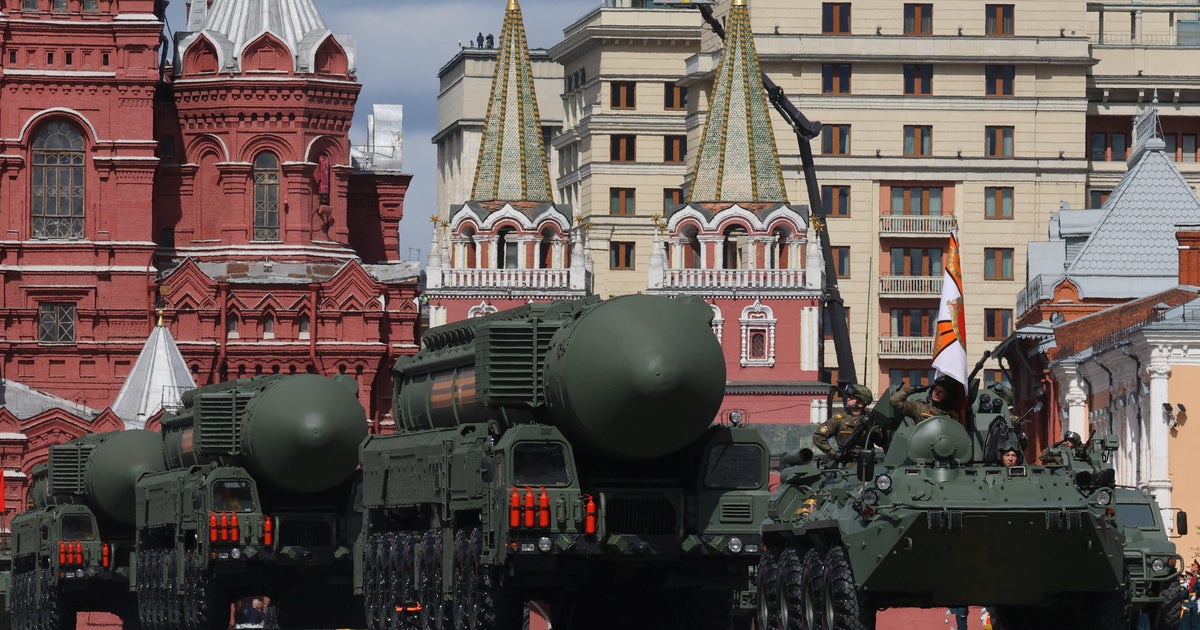
In a carefully worded statement to Russia’s parliament on Wednesday, Foreign Minister Sergey Lavrov outlined his country’s position on nuclear weapons limitations following the expiration of a landmark arms control agreement. Lavrov made it clear that Russia is willing to continue respecting the boundaries established under the recently-expired New START treaty, but with one significant condition: the United States must demonstrate the same restraint. “We proceed from the fact that this moratorium, on our part, which was announced by our president, will remain in effect, but only as long as the United States does not exceed the aforementioned limits,” Lavrov told Russian lawmakers. This statement reflects a delicate moment in international relations, where the world’s two largest nuclear powers are navigating the uncertain waters of arms control without the formal framework that has governed their arsenals for more than a decade. The conditional nature of Russia’s commitment underscores the fragile state of nuclear diplomacy in an era marked by geopolitical tensions and shifting global power dynamics.
Understanding the New START Treaty and Its Significance
The New Strategic Arms Reduction Treaty, commonly known as New START, was signed in 2010 during a period when the United States and Russia sought to reduce the threat posed by their massive nuclear arsenals. The agreement established clear limits, capping the number of strategic nuclear warheads each country could deploy at 1,550. Beyond simply setting numerical limits, the treaty included comprehensive verification mechanisms designed to ensure both parties were honoring their commitments. These safeguards included on-site inspections and regular exchanges of data about each nation’s nuclear capabilities. Originally scheduled to expire in February 2021, the treaty received a five-year extension under former President Joe Biden, extending its life until February 2026. However, despite this extension on paper, the practical implementation and future of the agreement have become increasingly uncertain. President Vladimir Putin indicated last year that Russia was prepared to continue following the treaty’s core restrictions, provided the United States reciprocated. Lavrov’s recent remarks essentially reaffirm this position even as the formal treaty framework has lapsed, creating a situation where informal understandings and mutual restraint have replaced legally binding commitments.
The Current State of Russian Nuclear Policy
Russian officials have been walking a careful line when it comes to nuclear weapons policy, balancing national security interests with concerns about global stability. Kremlin spokesman Dmitry Peskov reinforced this approach last week when he stated that Russia would “retain its responsible, thorough approach to stability when it comes to nuclear weapons.” He added that the country would “be guided primarily by its national interests,” a phrase that carries both reassurance and warning. The Russian leadership appears to be signaling that while they’re willing to maintain certain limits voluntarily, they won’t allow themselves to be constrained if they perceive the United States is gaining an advantage. This position reflects the deep-seated distrust that has characterized U.S.-Russian relations in recent years, particularly since Russia’s full-scale invasion of Ukraine in 2022. The suspension of formal military communications between the two countries in late 2021, just before the invasion, illustrated how severely relations had deteriorated. While those communications channels were recently reestablished, the broader relationship remains strained, and progress toward a new formal arms control agreement appears distant at best.
American Debates and the China Factor
Within the United States, there’s ongoing debate about what the future of nuclear arms control should look like. President Trump has introduced a new dimension to these discussions by arguing that any future nuclear agreement should include China, not just Russia. This position acknowledges the reality that China has been significantly expanding its nuclear arsenal in recent years, transforming from a relatively minor nuclear power to one with increasingly sophisticated capabilities. From Trump’s perspective, an agreement that only constrains the U.S. and Russia while allowing China to continue expanding its arsenal unchecked makes little strategic sense. However, Beijing has consistently and firmly rejected calls to join trilateral nuclear arms control negotiations. Chinese officials point out that their nuclear stockpile remains substantially smaller than those maintained by the United States and Russia, making it unreasonable, in their view, to be bound by the same restrictions. This fundamental disagreement has created a deadlock, with no clear path forward. A White House official told reporters in January that the president would eventually clarify his chosen approach to nuclear arms control, but would do so “on his own timeline,” suggesting that no immediate decisions are forthcoming.
The Specter of Resumed Nuclear Testing
Perhaps the most concerning development in recent months has been the discussion around resuming active nuclear weapons testing, a practice that the major nuclear powers have largely abandoned since the end of the Cold War. In October, President Trump directed the Pentagon to resume testing nuclear weapons “on an equal basis” with other countries’ tests. In a post on Truth Social, Trump wrote, “Because of other countries’ testing programs, I have instructed the Department of War to start testing our Nuclear Weapons on an equal basis. That process will begin immediately.” His use of “Department of War” instead of “Department of Defense” reflects the administration’s preference for more assertive terminology. This announcement sent shockwaves through the international arms control community, as it threatened to end decades of restraint. Russia’s response was swift and predictable. Just days after Trump’s announcement, President Putin instructed his government to develop proposals for potentially resuming nuclear weapons testing in Russia. During a Security Council meeting, Putin noted that Russia had been adhering to the Comprehensive Nuclear-Test-Ban Treaty, which prohibits nuclear test explosions, but added a critical caveat: “if the United States or any other state party to the Treaty was to conduct such tests, Russia would be under obligation to take reciprocal measures.” This exchange illustrates the dangerous dynamic of nuclear brinkmanship, where actions by one side can trigger responses from the other, potentially launching a new arms race.
The Uncertain Road Ahead for Nuclear Arms Control
The current situation leaves the world in a precarious position regarding nuclear weapons regulation. The formal structure that governed the arsenals of the world’s two largest nuclear powers for more than a decade has effectively lapsed, replaced by informal commitments that could be abandoned at any time if either side believes the other is not honoring them. There has been no indication of significant progress toward negotiating a replacement agreement that would put arms control on firmer footing. The reestablishment of high-level military communications between the U.S. and Russia, while positive, represents only a small step toward rebuilding the trust necessary for comprehensive arms control agreements. The broader context makes progress even more challenging: the ongoing war in Ukraine, deep ideological divisions between Russia and the West, China’s growing assertiveness and nuclear expansion, and shifting attitudes within the United States about the value of arms control all create obstacles to meaningful negotiation. For ordinary people around the world, these developments matter profoundly because they affect the risk of nuclear catastrophe. When the superpowers maintained formal agreements with verification mechanisms, there was at least some transparency and predictability. Now, as both sides make conditional commitments based on their perceptions of what the other is doing, the potential for miscalculation increases. The prospect of resumed nuclear testing is particularly worrying, as it could normalize practices that the international community worked for decades to curtail. As this situation continues to evolve, the fundamental question remains: can the major nuclear powers find a way to regulate their arsenals that serves everyone’s security interests, or are we entering a new era of unconstrained nuclear competition?