



Russian Border Regions Face Major Blackouts as Ukraine Conflict Escalates
Power Crisis Grips Russia’s Western Territories
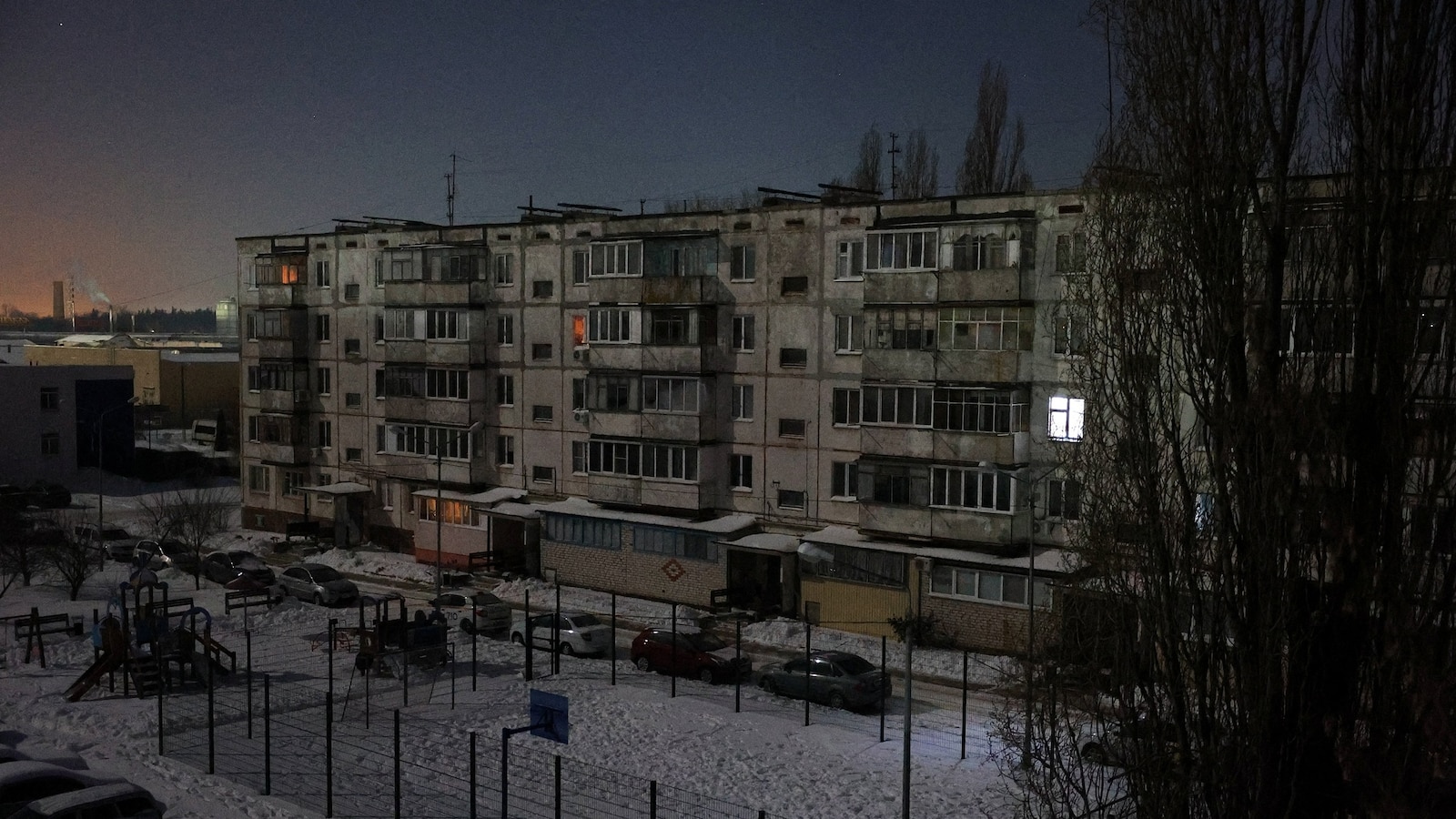
Residents in two Russian regions sharing a border with Ukraine are experiencing severe electricity and heating disruptions following what local authorities describe as sustained Ukrainian attacks on critical infrastructure. As the conflict approaches its fourth anniversary since Russia’s comprehensive invasion began, both nations continue exchanging devastating long-range strikes that increasingly target civilian infrastructure. Vyacheslav Gladkov, who governs the Belgorod region in western Russia, informed citizens through social media that the deteriorating situation has forced hundreds of people to seek warmth at emergency heating centers scattered throughout the area. The governor acknowledged the grim reality facing residents, stating that unpredictable rolling blackouts are now unavoidable, with even the regional capital of Belgorod city expected to experience irregular power cuts. Meanwhile, Alexander Khinshtein, the governor of the adjacent Kursk region, reported that approximately 28,000 customers were left in darkness following what he characterized as another wave of cowardly assaults on Russian territory. Both of these border regions have endured nearly four years of relentless attacks involving Ukrainian drones, missile strikes, and artillery bombardments, and have even witnessed ground incursions by Ukrainian forces attempting to seize Russian territory during the prolonged conflict.
The Strategy of Targeting Energy Infrastructure
The deliberate targeting of energy facilities has become a defining characteristic of the war’s recent phase, with both Moscow and Kyiv pursuing campaigns designed to cripple their adversary’s power generation and distribution capabilities. Throughout Ukraine, millions of ordinary citizens have suffered through rotating power outages as Russian forces systematically destroyed energy infrastructure across the entire country with waves of missiles and drones. Ukrainian officials have consistently argued that Moscow’s strategy amounts to weaponizing winter itself, attempting to force the Ukrainian population into submission by creating unbearable living conditions during the coldest months of the year. The Kremlin has countered by characterizing Ukraine’s retaliatory strikes deep inside Russian territory as acts of terrorism, refusing to acknowledge these attacks as legitimate military operations. This framing serves Russia’s propaganda purposes by portraying itself as a victim rather than an aggressor, despite having initiated the full-scale invasion nearly four years ago. The humanitarian consequences have been severe on both sides, with vulnerable populations including the elderly, children, and those with medical conditions facing life-threatening conditions when heating and electricity vanish during freezing winter temperatures.
Zelenskyy Defends Ukraine’s Targeting Decisions
Ukrainian President Volodymyr Zelenskyy offered a robust defense of his country’s decision to strike targets within Russian borders, particularly those connected to the energy sector that fuels Moscow’s war machine. Speaking to students at the National Aviation University in Kyiv over the weekend, Zelenskyy presented what he described as a straightforward strategic calculation that justifies targeting Russia’s oil and gas infrastructure. He explained that Ukraine faces a fundamental choice: either build weapons and use them to destroy Russian military assets directly, or strike at the economic foundation that enables Russia to purchase and manufacture those weapons in the first place. According to Zelenskyy’s reasoning, Russia’s energy sector represents a completely legitimate military target because the revenue generated from oil and gas sales directly finances the Kremlin’s war effort. The Ukrainian president argued there’s essentially no distinction between attacking a military installation and attacking the energy infrastructure that generates the funds to build that installation, since both ultimately serve the same purpose of sustaining Russia’s capacity to wage war. This explanation represents Ukraine’s most explicit public justification for expanding its targeting parameters to include economic infrastructure, signaling that Kyiv views Russia’s entire petroleum industry as fair game in a conflict where Moscow has shown no restraint in attacking Ukrainian civilian areas.
Nightly Drone Warfare Continues Unabated
The war’s evolution into a sustained campaign of drone strikes has created a terrifying new normal for civilians on both sides of the border, with Monday night’s exchanges offering a typical example of the violence residents now endure regularly. Ukraine’s air force reported that Russian forces dispatched 125 drones into Ukrainian airspace during the overnight hours, with Ukrainian air defense systems managing to shoot down or electronically suppress 110 of these unmanned aircraft. However, thirteen drones successfully struck their intended targets across six different locations throughout the country, causing casualties and destruction. In the eastern Donetsk region, which has been partially occupied by Russian forces and their proxies since 2014, regional governor Vadym Filashkin confirmed that a Russian strike on the city of Slovyansk killed two people and injured seven others in areas close to the active front lines. Further south in Zaporizhzhia, Ukrainian Interior Ministry officials reported that at least four people, including a one-year-old child, were injured when a Russian drone struck a residential house in what appears to be either a targeting error or a deliberate attack on civilian infrastructure. Meanwhile, in the southern Odesa region, Governor Oleh Kiper reported that Russian drones specifically targeted energy infrastructure during the night, leaving at least three communities partially without electrical power. Russia’s Defense Ministry issued its own statement claiming that Russian air defense forces successfully intercepted and destroyed at least six Ukrainian drones overnight, while the federal aviation authority temporarily restricted flights at airports in Gelendzhik on the Black Sea and in Kaluga west of Moscow, suggesting Ukrainian drones had penetrated deep into Russian territory.
Humanitarian Impact Deepens on Both Sides
The sustained attacks on energy infrastructure have created a humanitarian catastrophe that extends far beyond the immediate casualties from drone and missile strikes, affecting millions of ordinary people whose daily lives have been upended by the destruction of basic services. Photographs from affected areas show residents queuing for hot meals provided by military veterans in neighborhoods where repeated Russian attacks have left people without power, heating, and running water during what has been described as one of the harshest winters in decades. The elderly and infirm face particular dangers when temperatures plunge and heating systems fail, creating conditions that can prove fatal even without direct military action. In Russian border regions like Belgorod, where residential buildings sit in darkness during blackouts, citizens who never asked for this war find themselves paying the price for their government’s decision to invade a neighboring country. The establishment of emergency heating points in both Russian and Ukrainian communities represents an admission that normal civilian infrastructure can no longer reliably provide basic services, forcing authorities to implement emergency measures more commonly associated with natural disasters than modern warfare. International humanitarian organizations have expressed increasing alarm about the deteriorating conditions, particularly as both sides show little inclination to limit attacks on infrastructure that primarily serves civilian populations.
Peace Negotiations Continue Amid Ongoing Warfare
Despite the relentless exchange of strikes and Russia’s grinding offensive operations in eastern Ukraine, diplomatic efforts toward some form of peace settlement continue in parallel with the violence, creating a surreal situation where negotiations proceed while bombs still fall. President Zelenskyy announced through social media that proposed Western security guarantees designed to protect Ukraine from future Russian aggression are now complete and ready for implementation. These guarantees represent a crucial element of any potential peace agreement, as Ukraine understandably fears that without concrete, enforceable commitments from Western allies, Russia might simply use any ceasefire to rearm before launching another invasion. Zelenskyy emphasized that there exists no alternative to achieving genuine security, establishing lasting peace, and rebuilding the devastated country, suggesting that Ukraine will not accept a settlement that leaves it vulnerable to renewed attack. The Ukrainian president also indicated that significant international events focused on defense and security issues would take place during the current week, hinting at potential breakthroughs in negotiations. He confirmed that Ukrainian negotiating teams are working daily on the documents and proposals that might produce tangible results at upcoming high-level meetings with international partners. However, Zelenskyy also stressed the critical importance of ensuring that Ukraine’s Western partners maintain the same level of commitment and alignment as Ukraine itself, recognizing that peace requires not just agreements on paper but reliable security guarantees that would actually prevent Russia from violating those agreements through military strikes or hybrid operations designed to destabilize Ukraine without triggering a full military response from guarantor nations.