


Tragedy Strikes Ukrainian Family as Russian Drone Attack Claims Four Lives
A Family Destroyed in an Instant
In a heartbreaking incident that underscores the devastating human cost of the ongoing conflict in Ukraine, a Russian drone strike obliterated a family home in the northeastern Kharkiv region, leaving a trail of unimaginable grief and destruction. The attack claimed the lives of 34-year-old Grygoriy Shykula, a former Ukrainian soldier, along with his three precious young children—2-year-old twin boys and their 1-year-old sister. The only survivor was their mother, who at 35 weeks pregnant, now faces an uncertain future both physically and emotionally. According to Oleh Syniehubov, the head of the regional government in Kharkiv, the drone strike completely demolished the family’s house in the city of Bohodukhiv, burying the victims under rubble. Emergency services worked frantically to pull the mother from the debris, but despite their heroic efforts, she was left in critical condition with severe blast injuries, burns, and a traumatic brain injury. The sheer brutality of this attack—targeting a residential home where a young family was simply trying to live their lives—serves as a stark reminder of how the war continues to shatter innocent lives nearly four years after Russia’s full-scale invasion began.
The Grim Reality of Life Near the Russian Border
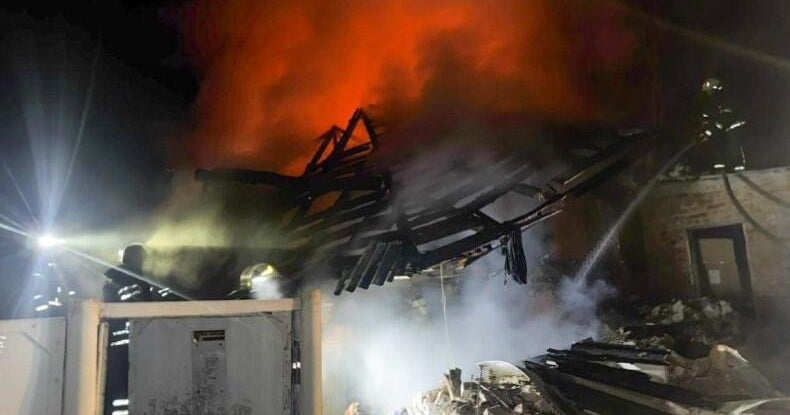
The tragic incident occurred in Bohodukhiv, a city located merely 13 miles from the Russian border, making it particularly vulnerable to aerial attacks. Before the war, this community was home to approximately 15,000 residents who lived peaceful, ordinary lives. Now, the city has become a frequent target of Russian aggression, facing constant aerial bombardments in recent weeks. The Zolochiv village council, representing the area where the family had recently relocated, confirmed that Grygoriy Shykula had served in the Ukrainian military before settling down with his young family in what they hoped would be a safe haven. The family’s decision to move to Bohodukhiv was likely motivated by a desire for a quieter life, but instead, they found themselves on the frontlines of Russia’s relentless campaign against civilian targets. The State Emergency Service of Ukraine documented the aftermath of the attack through photographs showing firefighters battling flames and working through the wreckage of what was once a home filled with the laughter of children and the hopes of young parents. These images, shared on the Telegram messaging app, reveal the complete destruction of the residential building, leaving nothing but rubble where a family once dreamed of their future together. For the surviving mother, the physical wounds may eventually heal, but the psychological trauma of losing her husband and all three of her children while carrying her unborn baby will last a lifetime.
A Pattern of Attacks on Civilian Infrastructure
This devastating drone strike is far from an isolated incident but rather part of a systematic pattern of Russian attacks on Ukrainian civilian infrastructure that has persisted throughout the nearly four-year conflict that began on February 24, 2022. Russia has deliberately targeted homes, schools, hospitals, and energy facilities, causing widespread suffering among the civilian population and creating a humanitarian crisis of enormous proportions. On the same night that the Shykula family was attacked, Russia launched a staggering 129 drones at various targets across Ukraine, resulting in at least five deaths and significant damage to critical energy infrastructure around the southeastern city of Zaporizhzhia. These attacks serve no legitimate military purpose but instead appear designed to terrorize the population, break the will of the Ukrainian people, and make daily life unbearable. President Volodymyr Zelenskyy has repeatedly pleaded with Ukraine’s international partners to provide more sophisticated air defense systems to help protect civilians from these relentless aerial assaults. However, according to analysis by the Kiel Institute in Germany, total foreign military aid for Ukraine actually decreased by 15% in 2025, leaving the country increasingly vulnerable at a time when it desperately needs more support, not less. The reduction in aid comes at a particularly critical juncture, as diplomatic efforts to end the war have intensified but shown limited progress in addressing the fundamental issues that could lead to a lasting peace.
Diplomatic Efforts Undermined by Continued Violence
The timing of this attack is particularly significant as it occurred during a period when diplomatic negotiations were supposedly underway to find a peaceful resolution to the conflict. In late January, President Trump announced a brief “energy truce” as his administration prepared to facilitate a second round of trilateral negotiations between Ukraine and Russia. These talks, held in Abu Dhabi, did produce one tangible result—the first prisoner exchange between the two nations in five months—and both sides agreed to continue negotiating. However, the major obstacles to achieving a comprehensive peace deal remain firmly in place, and the continued strikes against civilian targets demonstrate Russia’s lack of genuine commitment to ending the violence. President Zelenskyy expressed his frustration with this situation in a social media post on Wednesday morning, stating that “each such Russian strike undermines the credibility of everything being done in diplomacy to end this war, and proves again and again that tough pressure on Russia and clear security guarantees for Ukraine are the real key to ending the killings.” He emphasized that as long as international pressure on Russia remains insufficient and security guarantees for Ukraine are not firmly established, diplomatic efforts alone will not succeed in stopping the killing. This sentiment reflects the harsh reality that words and negotiations mean little when they are not backed by concrete actions and meaningful consequences for those who continue to commit atrocities against innocent civilians.
The Race Against Time for Peace
Adding urgency to the diplomatic situation, Zelenskyy revealed to reporters last week that the Trump administration has set a June deadline for Ukraine and Russia to reach an agreement to end the war. According to the Ukrainian president, Trump has warned that U.S. pressure on both sides will increase significantly if they fail to meet this timeline. “The Americans are proposing the parties end the war by the beginning of this summer and will probably put pressure on the parties precisely according to this schedule,” Zelenskyy explained. This deadline creates a complex dynamic, as it simultaneously offers hope for a resolution while also raising concerns about whether the pressure for a quick deal might force Ukraine into accepting unfavorable terms that compromise its sovereignty and security. The question remains whether Russia will use this time to negotiate in good faith or simply continue its military campaign while engaging in diplomatic theater. The continued drone strikes and attacks on civilian targets suggest the latter, as Russia shows no signs of scaling back its aggression despite the ongoing talks. Meanwhile, the war is not one-sided, as Russian officials reported that a Ukrainian drone attack caused a fire at an industrial plant in the Russian city of Volgograd on Wednesday, forcing eight Russian airports to temporarily suspend flights. This demonstrates that Ukraine is also conducting offensive operations, though the scale and nature of attacks on civilian versus military targets differ significantly between the two sides.
The Human Cost That Must Not Be Forgotten
As diplomatic negotiations continue and military strategies evolve, it is crucial that the international community does not lose sight of the human cost represented by the Shykula family and countless others like them. Behind every statistic and casualty number is a story—a family with dreams, children with futures that will never be realized, and loved ones left to grieve unimaginable losses. The pregnant mother who survived this attack now faces the prospect of giving birth while recovering from severe injuries and processing the trauma of losing her entire family in an instant. What kind of life awaits her and her unborn child? How does one move forward from such devastation? These are questions that thousands of Ukrainians are grappling with every day as the war grinds on. The international response to this crisis will define our collective humanity and determine whether we truly stand for the principles of protecting civilian life and holding aggressors accountable for their actions. The 15% reduction in foreign military aid to Ukraine sends a troubling message that the world’s attention and commitment may be waning even as the suffering continues unabated. For the sake of the Shykula family and all those who have perished in this senseless conflict, the international community must recommit itself to supporting Ukraine’s defense and working toward a just peace that holds Russia accountable for its actions and ensures that such tragedies do not continue. Only through sustained pressure, meaningful security guarantees, and unwavering support for the victims of this aggression can we hope to prevent more families from experiencing the horror that has befallen the Shykulas and honor the memory of those innocent lives lost.