


Ukraine Faces Relentless Russian Attacks as Peace Talks Continue
Deadly Night of Drone Strikes Across Ukraine
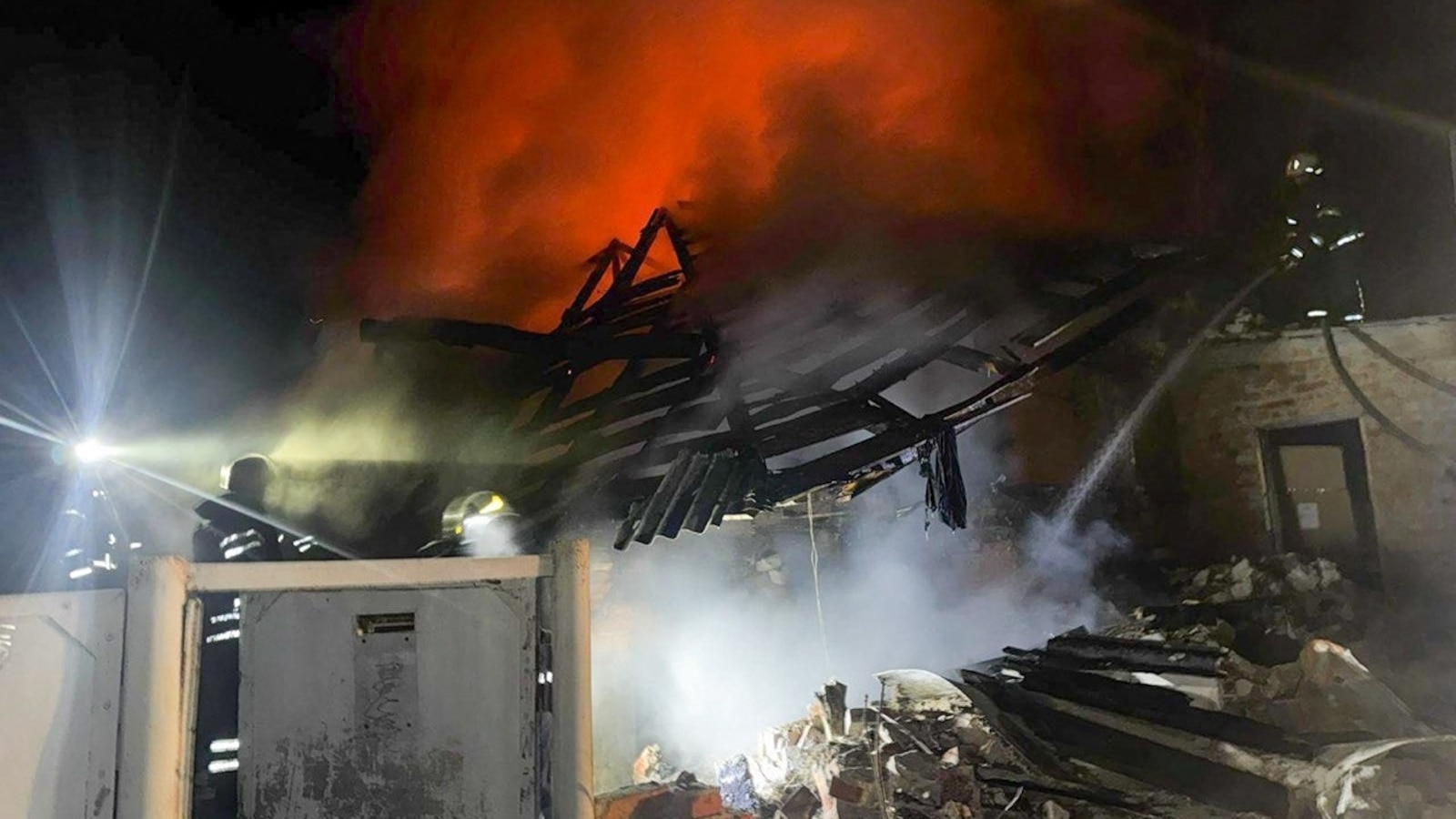
The people of Ukraine endured yet another harrowing night as Russian forces unleashed a massive wave of drone attacks across the country, killing innocent civilians and further straining hopes for a peaceful resolution to the conflict. According to Ukraine’s air force, Russia sent 129 drones into Ukrainian territory overnight on Wednesday morning. Ukrainian defense forces managed to intercept or suppress 112 of these drones, demonstrating the skill and dedication of their air defense teams, but 15 drones still managed to strike targets across eight different locations throughout the country.
The human cost of these attacks was devastating and heartbreaking. In the northeastern city of Kharkiv, a Russian drone struck a residential building, killing four people, including three children. The loss of young lives underscores the indiscriminate nature of these attacks on civilian areas. Two additional people were injured in this attack, according to Ukraine’s State Emergency Service. In the Sumy region, also in the northeast, another two people lost their lives and nine others were wounded by Russian strikes. Meanwhile, in the southern city of Zaporizhzhia, at least five people were injured when a drone hit a residential property, and the attack also damaged a hospital. In the Kherson region, six more people were injured from Russian shelling. These attacks affected multiple regions including Kharkiv, Zaporizhzhia, Sumy, Dnipro, and Poltava, demonstrating the widespread nature of Russia’s assault.
Zelenskyy’s Response and Call for Support
Ukrainian President Volodymyr Zelenskyy was quick to condemn these attacks, expressing deep frustration that each new wave of strikes undermines trust in the diplomatic process currently underway. In posts to social media and Telegram, Zelenskyy emphasized that these nighttime attacks prove that only “tough pressure on Russia and clear security guarantees for Ukraine” can bring an end to the killing. He made it clear that insufficient pressure on the aggressor and lack of security guarantees for Ukraine mean that diplomatic efforts alone won’t succeed in stopping the violence.
The Ukrainian president painted a sobering picture of the situation, stating bluntly that “the Russian army is not preparing to stop — they are preparing to continue fighting.” This assessment suggests that despite ongoing peace negotiations led by the United States, Russia remains committed to its military campaign. Zelenskyy once again appealed to Ukraine’s Western partners for more air defense systems to help protect Ukrainian civilians from these relentless attacks. His call for help reflects the desperate need to shield innocent people from the destruction raining down on residential areas, hospitals, and other civilian infrastructure night after night.
Russian Territory Also Affected
The conflict isn’t one-sided when it comes to long-range strikes. Russia’s Defense Ministry reported that its forces shot down 118 Ukrainian drones over 15 different regions overnight, indicating that Ukraine continues its own campaign of striking targets within Russian territory. Russia’s federal air transport agency implemented temporary flight restrictions at seven airports across the country, including those in Cheboksary, Kaluga, Kazan, Saratov, Volgograd, Ulyanovsk, and Nizhnekamsk, demonstrating the extent to which Ukrainian strikes affected Russian airspace.
The Belgorod region, which borders Ukraine, saw two people injured in a drone attack, according to regional Governor Vyacheslav Gladkov. In the Volgograd region in southern Russia, Governor Andrey Bocharov reported a fire at an industrial site, along with damage to an apartment building and a kindergarten from drone strikes. Ukrainian officials suggested that a major oil refinery in the Volgograd area was among the targets hit, though this wasn’t officially confirmed. These strikes on Russian territory represent Ukraine’s strategy of bringing the war home to Russia and targeting infrastructure that supports the Russian military effort.
Peace Talks Face Serious Challenges
Despite the continuing violence on both sides, diplomatic efforts to end the war have been ongoing, with the United States playing a leading role in facilitating negotiations. The second round of trilateral talks took place last week in Abu Dhabi, bringing together representatives from Russia, Ukraine, and the United States. While all participants described these meetings as “constructive,” the diplomatic language couldn’t hide the fact that no major breakthrough was achieved. Several contentious points remain unresolved, and the continuing exchange of drone and missile strikes while talks proceed highlights how far apart the sides remain.
The ongoing attacks from both Russia and Ukraine during the negotiation period raise serious questions about the sincerity of the peace process. Zelenskyy specifically noted that the continued Russian strikes undermine trust in diplomatic efforts to end the war. It’s difficult to build confidence and find common ground when civilian buildings are being destroyed and innocent people, including children, are being killed. The fact that both sides continue their military operations suggests that each is trying to strengthen its position at the negotiating table through force, rather than genuinely working toward an immediate end to hostilities.
Russia’s Hardline Position
Russian Foreign Minister Sergey Lavrov provided insight into Moscow’s thinking this week, and his comments reveal just how difficult the path to peace will be. In an interview published Wednesday, Lavrov criticized the ongoing peace negotiations, alleging that Kyiv and its European partners are sabotaging what he characterized as a “balance of vital interests” supposedly agreed upon between Russia and the United States. He repeatedly referenced a summit between Presidents Donald Trump and Vladimir Putin that took place in Anchorage, Alaska, suggesting that understandings reached at that meeting should form the basis for any final peace agreement.
Lavrov claimed that the Alaska summit made it “entirely possible to quickly agree on a final agreement,” but accused Ukraine and its European allies of trying to twist these understandings to their advantage. The Russian foreign minister’s comments suggest that Moscow believes it already secured favorable terms through its direct dealings with the United States, and views Ukraine’s resistance to these terms as the main obstacle to peace. This perspective ignores Ukraine’s right to determine its own future and security arrangements. Lavrov made clear that Russia would take steps to “ensure our own security,” which in Russian diplomatic language typically means continuing military operations.
The Central Dispute Over Territory
At the heart of the disagreement lies Russia’s territorial demands. Moscow insists that Ukrainian forces must withdraw completely from the Donetsk and Luhansk regions—which together form the Donbas area in eastern Ukraine—as a precondition for any peace deal. These regions are currently only partially occupied by Russian forces, meaning Russia is demanding that Ukraine surrender territory it still controls. Unsurprisingly, Kyiv has firmly rejected this demand, viewing it as rewarding Russian aggression and setting a dangerous precedent.
Lavrov’s comments on this issue were particularly ominous. He stated that Ukrainian troops “will eventually be driven out” of the Donbas regardless of negotiations, suggesting Russia will continue its military campaign until it achieves its territorial objectives through force if not through diplomacy. This threat of continued warfare contradicts the notion of good-faith peace negotiations and reveals that Russia may view the talks primarily as a means to buy time or divide Ukraine from its Western supporters rather than as a genuine path to ending the conflict. For Ukraine and its people, the prospect of more grinding warfare, more nighttime drone attacks, and more civilian casualties remains very real as long as Russia maintains these maximalist demands and continues to pursue them through military force. The coming weeks will reveal whether diplomacy can overcome these fundamental disagreements or whether the suffering will continue indefinitely.