



Rwanda’s Fight to Save Farmland: Innovation Meets Tradition in Africa’s Most Crowded Nation
When Development Threatens the Fields That Feed a Nation
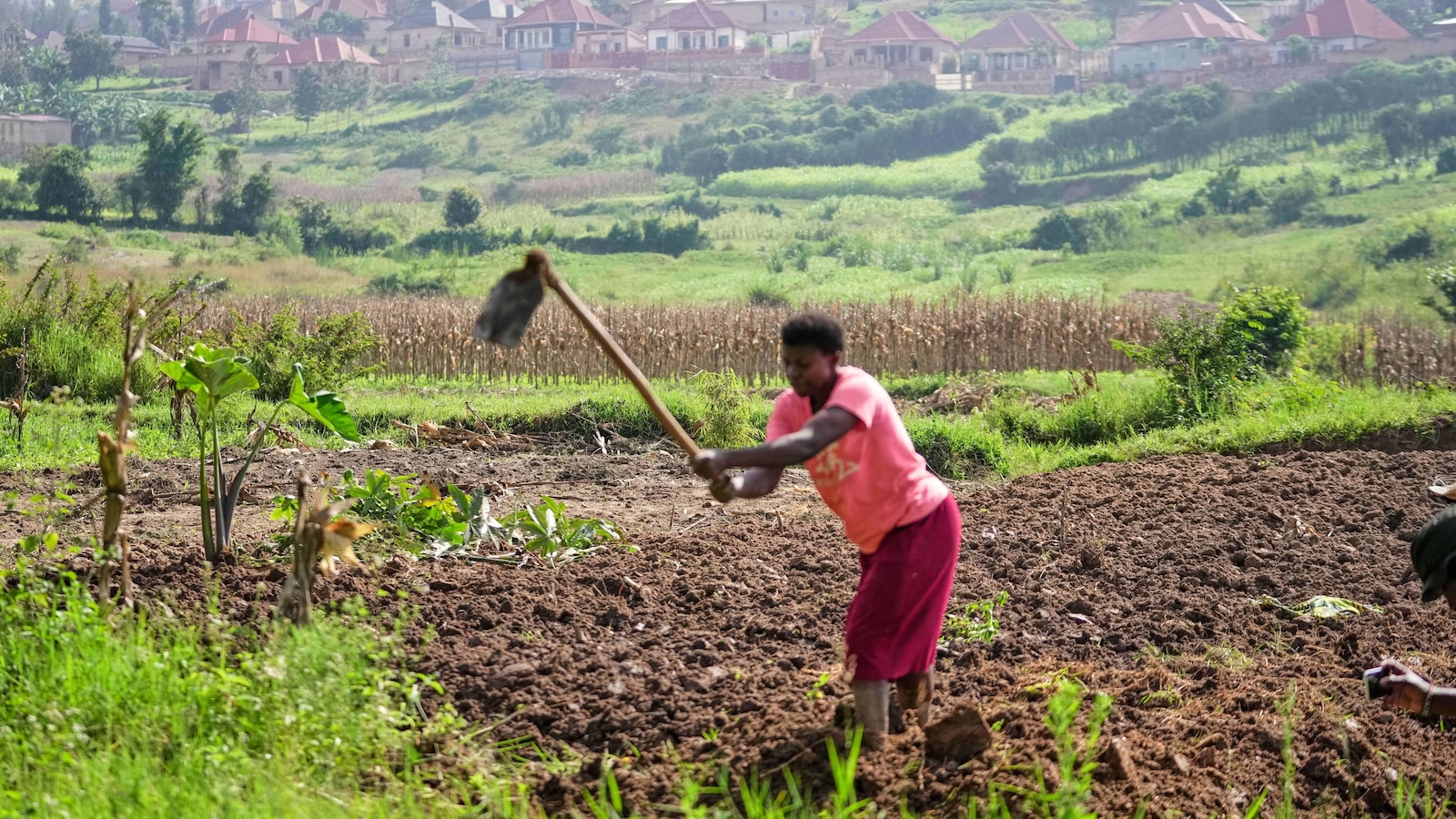
In the heart of Kigali, Rwanda’s bustling capital, the sounds of hammers and construction machinery compete with the ancient rhythm of farmers tilling soil. This clash of sounds tells the story of a nation wrestling with a critical challenge: how to house a rapidly growing population without sacrificing the agricultural land needed to feed it. For 84-year-old Mukarusini Purisikira, this tension is deeply personal. Before fleeing to Congo during the devastating 1994 genocide, she and her family farmed expansive hills that stretched across the landscape. When she returned home after the violence subsided, those hills had been transformed. Where crops once grew, high-rise buildings now tower over the city. Today, Purisikira’s entire farming operation fits into a space no larger than a small cottage, where she coaxes maize and sweet potatoes from the earth—barely enough to sustain her. As construction equipment rumbles on a nearby ridge, she watches with understandable anxiety, knowing that what little land remains might also disappear. Her story represents the experience of countless Rwandan farmers caught between progress and survival in Africa’s most densely populated country, where 22 million people will soon call home.
Government Takes Action with Technology and Tough Enforcement
Recognizing that the country’s food security hangs in the balance, Rwanda’s government has launched an ambitious program to protect what remains of its agricultural land. Since September, authorities have been systematically mapping farmland throughout the country and employing satellite imagery to monitor any construction that encroaches on designated agricultural zones and forests. This technological approach represents a significant escalation in the government’s commitment to preserving farmland at a time when global pressures threaten food supplies. The conflict in Ukraine has sent fertilizer prices soaring, making food security even more precarious for countries like Rwanda that depend on imports. To give these protections teeth, the government has instituted serious penalties for violators—developers caught building on protected agricultural land face fines of up to $3,000 and potential jail sentences of six months. Some buildings in Kigali have already been demolished for violating these restrictions, though those associated with the projects declined to speak publicly, fearing government reprisals. Looking ahead, authorities plan to incorporate drones into their monitoring system, allowing for better real-time surveillance of land use across the country. The Kigali master plan now dedicates nearly a quarter of the city’s land—22 percent—specifically for agricultural purposes, a remarkable allocation in a rapidly urbanizing capital.
Balancing Housing Demand with Food Production Needs
City officials find themselves walking a tightrope between competing pressures. They acknowledge that housing construction remains attractive due to enormous demand from Rwanda’s growing urban population, but they’re betting on a different vision for the future. According to their projections, farming will become even more economically productive in the years ahead, and they believe innovation can enable food production on smaller parcels of land. Emma-Claudine Ntirenganya, a spokeswoman for the mayor’s office, pointed out to The Associated Press that while most food consumed in Kigali currently comes from other districts throughout Rwanda, farmland in those rural areas is shrinking as well, making urban agriculture increasingly essential. To address this reality, the government has printed and distributed maps throughout districts across Rwanda, clearly marking which areas are designated for construction and which must be reserved for agriculture. This transparency helps prevent confusion and makes enforcement more straightforward. Ntirenganya spoke enthusiastically about adopting agriculture “in an urban way,” expressing confidence that city planners can demonstrate to Kigali residents that productive farming is possible even in densely populated areas. The city administration is putting its money where its mouth is—they’re installing a greenhouse on the roof of their own building. Additionally, developers seeking building permits must now incorporate green spaces and gardens into their architectural designs, ensuring that even new construction contributes to food production rather than merely consuming space.
Vertical Farms: Growing Up When You Can’t Grow Out
When horizontal space becomes scarce, innovative thinkers look vertical. Christian Irakoze co-founded a local company called Eza Neza, which translates to “grow well,” that specializes in setting up vertical farms throughout Kigali. These ingenious operations grow vegetables and fruits—including strawberries—in stackable plastic containers that make efficient use of limited space. When The Associated Press visited several of these installations, they found vertical farms at private homes and one supplying produce to a grocery store. One particularly impressive operation grows 600 plants in vertical rows that stretch approximately 50 meters along a perimeter wall, transforming what would otherwise be unused vertical space into productive farmland. Irakoze describes his work as promoting “a different way of thinking about farming, from traditional large-scale upcountry farming to something smaller, modular, and that anyone can really do.” His company emphasizes using locally available inputs such as manure and volcanic sediment in place of traditional soil, reducing dependence on imported materials. This approach addresses not only space constraints but also Rwanda’s vulnerability to global supply chain disruptions. Irakoze believes deeply in developing homegrown solutions: “We really have to find ways to find our own solutions, whether through inputs like fertilizers or seeds. Some of these global events are always a reminder that we should definitely have some alternatives.” His philosophy reflects a growing recognition across Africa that self-sufficiency in food production isn’t just desirable—it’s essential for national security.
Young Agronomists Champion Hydroponics and Modern Methods
Across Kigali, another group of innovators is working to transform Rwandan agriculture through education and technology transfer. A team of young agronomists has taken on the mission of training farmers in advanced techniques like hydroponics, which grows plants using nutrient-rich water instead of soil. Richard Bucyana, one of these agronomists, frames the challenge succinctly: “The population is increasing, yet our land is not increasing. We make sure that we find solutions that can help farmers to overcome that, and then they produce more.” This maximization of productivity per square foot represents a fundamental shift in agricultural thinking—from extensive farming that requires large land areas to intensive farming that extracts more from less space. Bucyana sees Rwanda’s innovations as providing a buffer against global disruptions that can devastate countries dependent on international markets for food and agricultural inputs. His perspective extends beyond Rwanda’s borders: “African governments should start thinking how they can be self-sustainable,” he said. This vision of African self-sufficiency in food production challenges the continent’s historical dependence on imported food and farming inputs, which leaves nations vulnerable to price shocks, supply disruptions, and political pressures from supplier countries. The work of Bucyana and his colleagues represents more than just technical training—it’s part of a broader movement toward agricultural independence.
A Model for Africa’s Urban Future
Rwanda’s comprehensive approach to protecting agricultural land while accommodating urban growth offers potential lessons for other African nations facing similar pressures. The combination of strict enforcement backed by technology, urban planning that prioritizes food production, and innovative farming techniques adapted to space constraints creates a multifaceted strategy rather than relying on any single solution. The satellite monitoring and drone surveillance provide the enforcement mechanism, while the master planning ensures that agricultural protection is built into development from the start rather than treated as an afterthought. Meanwhile, vertical farms and hydroponics offer practical alternatives that allow food production to continue even in densely populated areas. What makes Rwanda’s approach particularly noteworthy is its recognition that food security is national security, especially for a country still rebuilding from the trauma of genocide and navigating an uncertain global landscape. The rising fertilizer prices triggered by international conflicts serve as a stark reminder that dependence on global supply chains carries risks. For Mukarusini Purisikira, tending her small plot in the shadow of Kigali’s skyscrapers, these policy changes may mean the difference between keeping her land and losing it to developers. For Rwanda as a whole, they may determine whether the country can feed its growing population without surrendering its sovereignty to international food markets. As African nations increasingly grapple with rapid urbanization, climate change, and food insecurity, Rwanda’s experiment in balancing development with agricultural preservation deserves close attention. The country’s innovations—born of necessity in Africa’s most densely populated nation—may light the way for others facing similar challenges across the continent.