

Senator Warner Speaks Out on Iran War Funding and White House Accountability
Demanding Congressional Consultation Before Military Action
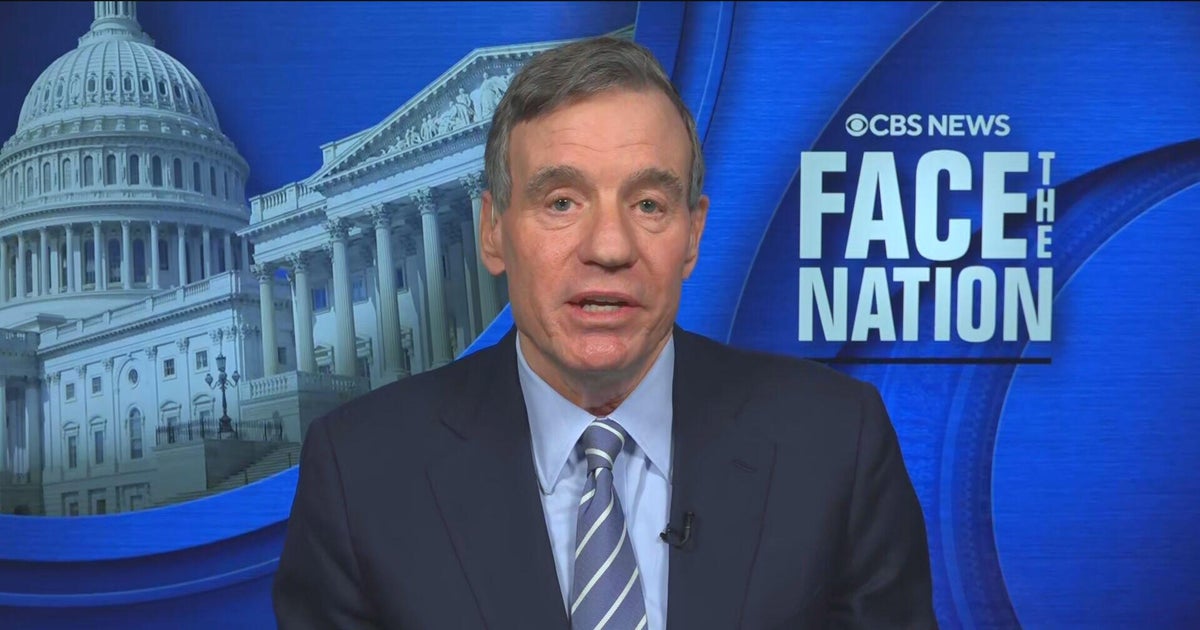
As Washington prepares for lawmakers to return from their two-week recess, Senator Mark Warner of Virginia has made it clear that while he’s willing to consider any funding request that comes across his desk, he believes President Trump made a critical mistake by not consulting Congress before launching military operations against Iran. Speaking on CBS’s “Face the Nation with Margaret Brennan,” the Democratic senator emphasized a fundamental principle of American democracy: when a president decides to take the nation to war, he should first come before the American people and their elected representatives in Congress to explain his intentions and objectives. Warner’s comments reflect growing frustration among Democrats about what they see as the administration’s hasty approach to a conflict that could have far-reaching consequences for American security and prosperity. The senator’s willingness to “take a look at anything” regarding funding might seem generous, but it comes with strings attached—he wants transparency, clear goals, and evidence that the administration has a coherent strategy rather than a reactive approach to Middle Eastern conflict.
The Staggering Financial Cost of Another Middle East War
The financial implications of this new conflict are already proving to be astronomical, even by Washington’s standards. Military officials have privately informed members of Congress that just the first week of operations against Iran cost American taxpayers approximately $11.3 billion—a figure that would make most Americans’ heads spin when they consider what that money could accomplish at home. According to reporting from the Washington Post, the White House is preparing to request somewhere between $80 billion and $100 billion in supplemental funding to continue operations, though this represents a significant scaling back from the eye-watering $200 billion that Pentagon officials apparently floated as a possibility last month. Defense Secretary Pete Hegseth hasn’t denied these figures when pressed by reporters, though he’s been careful to note that “that number could move”—which in Washington-speak typically means it could move upward rather than down. For context, the Defense Department already received more than $150 billion as part of last year’s One Big Beautiful Bill Act, and Congress approved an additional $839 billion in annual Pentagon spending earlier this year. Trump’s budget proposal for fiscal year 2027 asks for a staggering $1.5 trillion in defense spending, which would be handled separately from any supplemental war funding request. These numbers raise serious questions about priorities and sustainability in a nation still struggling with infrastructure needs, healthcare costs, and educational challenges.
Unclear Objectives and Moving Goalposts
One of Senator Warner’s most pointed criticisms centers on the administration’s apparent inability to clearly articulate what it’s trying to accomplish in Iran. As vice chairman of the Senate Intelligence Committee, Warner has access to classified briefings that most Americans never see, and his assessment is damning: the administration didn’t present clear goals at the outset of military operations. According to Warner, it took about 10 days into the conflict before the White House finally articulated four specific objectives: regime change in Iran, eliminating the country’s uranium enrichment capabilities, destroying its missile programs, and securing freedom of navigation through the strategically vital Strait of Hormuz. These are enormously ambitious goals that would represent a complete transformation of the Middle Eastern security landscape, yet they were apparently developed or at least communicated only after American forces were already engaged in combat operations. Even more troubling, Warner offered his assessment that on any honest evaluation of the situation, the United States hasn’t accomplished any of these four goals so far. This kind of criticism from a senior member of the Senate Intelligence Committee carries particular weight because it’s not based on partisan talking points or cable news speculation—it’s coming from someone with direct access to classified intelligence assessments about how the war is actually progressing behind the scenes.
Congressional Battle Lines Form Over War Powers
The supplemental funding request is shaping up to be one of the most contentious political battles in Washington this year, with fault lines forming both between and within the two major parties. Democrats have maintained a consistent drumbeat of criticism against President Trump for his handling of the Iran situation, questioning everything from the initial decision to launch strikes to the evolving rationale for continued operations. Their concerns echo the skepticism many Americans felt during the early stages of the Iraq War, when initial justifications proved unreliable and mission objectives kept shifting. Meanwhile, the Republican coalition that typically rallies around military operations is showing unusual signs of fracture. Some GOP lawmakers have indicated that their support for the president’s Iran policy isn’t unlimited—they’ve specifically warned that if the conflict extends beyond 60 days without congressional authorization, they may withdraw their backing. This 60-day threshold isn’t arbitrary; it’s embedded in the 1973 War Powers Resolution, legislation passed in the aftermath of Vietnam to restrict a president’s ability to commit American forces to extended conflicts without explicit congressional approval. The fact that Republicans are publicly citing this limit suggests genuine concern about mission creep and the potential for another multi-decade Middle Eastern entanglement that consumes American lives, resources, and political capital while failing to deliver meaningful improvements in national security.
The War Powers Resolution Returns to Relevance
The War Powers Resolution, passed nearly half a century ago over President Nixon’s veto, was designed to reassert congressional authority over decisions about war and peace—powers that the Constitution explicitly grants to the legislative branch. Under this law, a president can commit forces to combat situations in response to immediate threats, but those operations are supposed to end within 60 days unless Congress specifically authorizes their continuation. In practice, this law has been controversial and imperfectly enforced throughout its history, with presidents of both parties finding ways to work around its restrictions and Congress often proving reluctant to force direct confrontations over war powers. However, the Iran situation appears to be reviving serious discussion about these constitutional boundaries. The bipartisan nature of concerns about the war—with Democrats questioning the entire premise and some Republicans worried about duration and costs—suggests that this might be one of those rare moments when Congress actually asserts its authority rather than deferring to executive decisions. If lawmakers from both parties refuse to authorize supplemental funding or explicitly approve continued operations beyond the 60-day window, it could represent a significant check on presidential war-making powers and potentially force a change in how future administrations approach decisions about military intervention.
What This Means for America’s Future
The debate over Iran funding represents much more than a single appropriations fight—it’s fundamentally about what kind of country America wants to be in the 21st century and how it makes decisions about using military force. Senator Warner’s insistence that presidents should consult Congress before taking the nation to war reflects a broader public exhaustion with endless Middle Eastern conflicts that seem to multiply problems rather than solve them. After two decades in Afghanistan, years of involvement in Iraq and Syria, and various other military operations across the region, Americans across the political spectrum are questioning whether these interventions serve national interests or simply drain resources while creating new enemies. The staggering price tag for this new conflict—potentially $100 billion or more—comes at a time when Americans face real challenges at home that go unaddressed due to claimed budget constraints. The fact that the Pentagon’s initial request was apparently for $200 billion, enough to transform American infrastructure or make college affordable for millions of students, highlights the opportunity costs of these military operations. As lawmakers return to Washington this week, they face a choice that will echo far beyond this single funding bill: Will they rubber-stamp another expensive, open-ended Middle Eastern war, or will they finally exercise meaningful oversight over how America uses military force? Senator Warner’s comments suggest at least some members of Congress are ready to ask hard questions, but whether that translates into actual accountability remains to be seen. The American people, who ultimately bear the costs of these decisions in blood and treasure, deserve leaders who approach questions of war and peace with the seriousness and transparency they demand.