
Republican Senator Criticizes Trump Administration’s Immigration Handling
Tillis Breaks Ranks With Pointed Criticism of Key Advisers
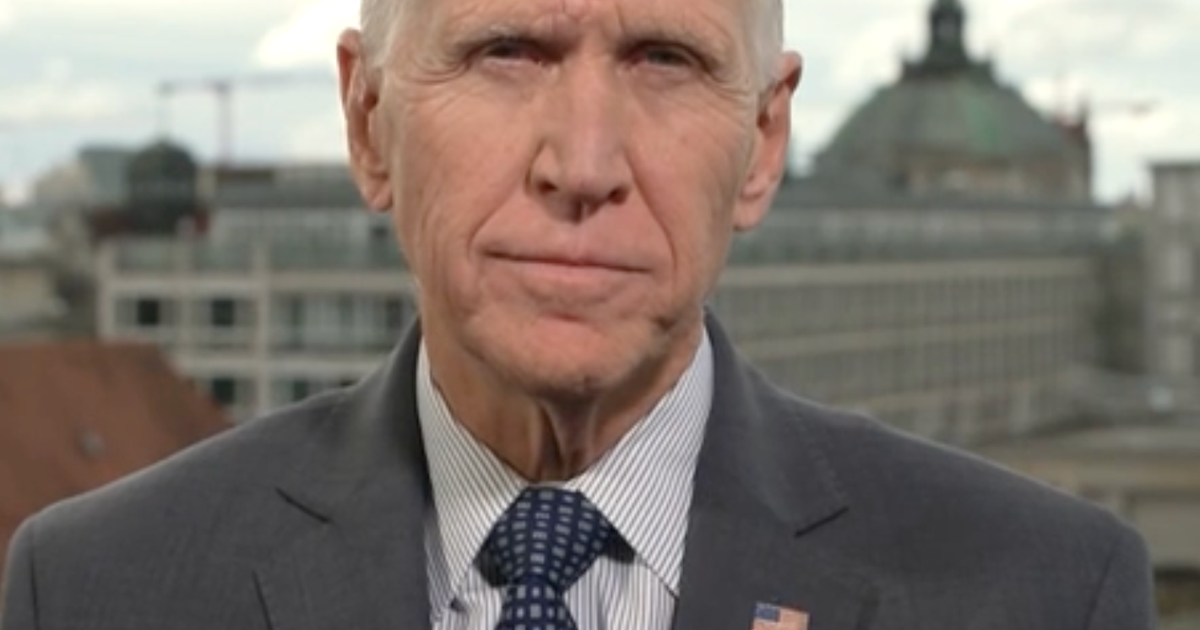
North Carolina Republican Senator Thom Tillis has emerged as an unlikely but vocal critic from within his own party, taking aim at two of President Trump’s most influential advisers on immigration policy. In a candid appearance on CBS’s “Face the Nation,” Tillis didn’t mince words when discussing White House deputy chief of staff Stephen Miller and Homeland Security Secretary Kristi Noem, suggesting they’re failing to protect what should be one of Trump’s signature achievements. For a Republican senator to publicly challenge the president’s inner circle on such a politically sensitive issue speaks volumes about the internal tensions brewing within the GOP over how immigration enforcement is being handled. Tillis, who has announced he won’t seek reelection in 2026, appears to be using his remaining time in office to speak more freely about what he sees as serious missteps that could damage both the party’s electoral prospects and the president’s historical standing on border security.
The Core of Tillis’s Concerns About Trump’s Legacy
When Tillis says that Miller and Noem “are not taking care of this president’s legacy,” he’s pointing to what he considers a fundamental failure in execution rather than intent. Immigration and border security were central themes of Trump’s political rise and have remained priorities throughout his administration, making them particularly important to his overall legacy. Tillis’s frustration seems to stem from what he describes as a lack of foresight—people who “don’t look around corners”—suggesting that these advisers are so focused on immediate enforcement actions that they’re not considering the longer-term political and practical consequences of their decisions. For Republicans, immigration has historically been a winning issue, one that energizes their base and attracts independent voters concerned about border security and law enforcement. Tillis’s concern is that through what he characterizes as incompetence and amateur handling, Miller and Noem have taken an issue that “should own” for Republicans and “destroyed it,” potentially turning a political advantage into a liability heading into crucial midterm elections and beyond.
The Tragic Minneapolis Incident That Sparked Intensified Scrutiny
The criticism of Miller and Noem intensified dramatically following a tragic incident in Minneapolis that brought the Trump administration’s immigration enforcement tactics under harsh spotlight. Last month, two American citizens—Renee Good and Alex Pretti—were shot and killed by immigration agents during operations connected to what was called “Operation Metro Surge,” a concentrated effort to apprehend undocumented immigrants in the Minneapolis area. The deaths of these citizens during immigration enforcement operations raised serious questions about the planning, oversight, and execution of these raids, particularly whether adequate safeguards were in place to protect innocent people. White House border czar Tom Homan announced that the controversial Minneapolis operation would conclude by the following week, a tacit acknowledgment that something had gone seriously wrong. For Tillis and other critics, this incident crystallized concerns that the administration’s approach to immigration enforcement, while perhaps well-intentioned, lacked the careful planning and professional execution necessary to avoid catastrophic outcomes that would undermine public support for border security measures.
Tillis’s Unprecedented Call for Resignation and “Amateur” Label
Tillis didn’t limit himself to gentle criticism or private conversations with White House officials—he went public in the strongest possible terms. He became the first Republican senator to publicly demand Noem’s resignation, an extraordinary step that signals just how serious he believes the situation has become. Using unusually blunt language for intra-party criticism, Tillis labeled both Miller and Noem as “amateurs,” suggesting they lack the professional competence necessary for their positions. In comments to reporters on Capitol Hill, he accused Noem specifically of taking the administration “into the ground” on immigration, an issue that he believes was instrumental in getting Trump elected in the first place. This kind of public rebuke from a member of the president’s own party carries significant weight and provides political cover for other Republicans who may share Tillis’s concerns but have been reluctant to speak out. However, Tillis has stopped short of committing to vote for impeachment of Noem, a process that would require a two-thirds majority in the Senate—a threshold that makes removal virtually impossible given the chamber’s composition.
The Political Landscape and Midterm Election Concerns
Tillis’s criticism isn’t happening in a vacuum; it’s intertwined with his concerns about the Republican Party’s prospects in the upcoming midterm elections. While he expressed confidence that Republicans could maintain their majority in the Senate, he was notably less optimistic about the House, pointing to what he called “overreach with respect to redistricting.” The Republican-led effort in Texas to redraw congressional maps mid-decade, done at President Trump’s urging with the goal of netting up to five additional Republican seats, backfired when Democrats in other states responded with their own redistricting efforts that may ultimately benefit them more than the GOP gains in Texas. This redistricting saga illustrates a broader point that Tillis seems to be making: short-term tactical thinking without consideration of the broader strategic picture and potential counter-moves can leave Republicans worse off than if they’d taken a more measured approach. His concerns about the House majority are compounded by his belief that mishandling of immigration—traditionally a Republican strength—could cost the party votes in competitive districts where candidates need every advantage they can get.
Looking Forward: Tillis’s Commitment to Protecting Trump’s Legacy
Despite his harsh criticism of Miller and Noem, Tillis has made clear that his motivation is actually to protect President Trump’s legacy, particularly on national security and immigration issues. He praised Trump’s policy approach toward NATO and suggested that the problem isn’t with the president’s vision but with the execution by his subordinates. Having announced he won’t seek reelection in 2026, Tillis appears liberated to speak more candidly about what he sees as problems within the administration without worrying about potential political backlash in a future primary. “If I have to speak bluntly, that’s what I’m going to do in my remaining time in the Senate,” he declared, suggesting that more forthright criticism may be forthcoming on other issues as well. The question now is whether other Republicans will join Tillis in publicly expressing concerns about the administration’s immigration enforcement approach, or whether he’ll remain a relatively lone voice within the party. Meanwhile, the impeachment resolution against Noem, which has been cosponsored by 187 House Democrats, faces long odds of passage given Republican control of the chamber, and an even more insurmountable barrier in the Senate where conviction would require 67 votes. Regardless of whether formal accountability measures succeed, Tillis’s public criticism has already succeeded in forcing a broader conversation about whether the Trump administration’s approach to immigration enforcement is sustainable and politically wise.