
Senate Republicans Push Forward with Border Security Funding Plan
Breaking the Deadlock: A New Approach to Immigration Enforcement
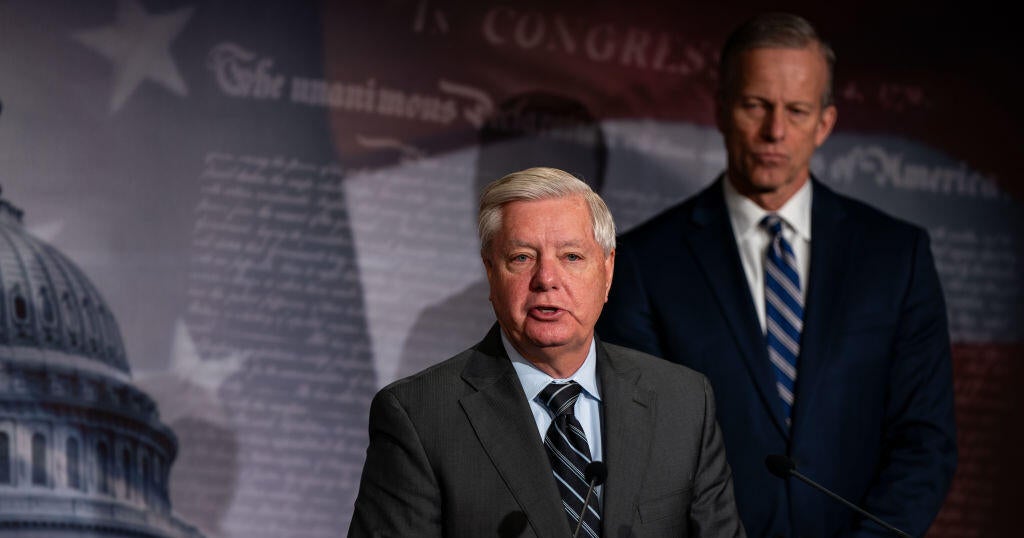
In a significant move that highlights the deep partisan divide over immigration policy, Senate Republicans took matters into their own hands this week by unveiling a comprehensive budget resolution aimed at funding key immigration enforcement agencies. Senator Lindsey Graham of South Carolina, who chairs the Senate Budget Committee, released the 58-page document on Tuesday, marking the beginning of what Republicans hope will be a swift process to secure funding for border operations without requiring Democratic support. Graham’s statement emphasized that Republicans are “moving forward — not backward — on rational immigration policies that secure our border,” framing the initiative as both urgent and necessary for national security. The resolution represents a dramatic shift in strategy, as Republicans have decided to bypass traditional bipartisan negotiations and instead use a special legislative tool called budget reconciliation to achieve their goals. This approach underscores the frustration felt by many Republicans who believe that Democratic opposition has prevented essential security agencies from receiving the resources they need to function effectively during what they describe as a critical time for American homeland security.
Understanding the Financial Framework and Timeline
The budget resolution authorizes two key Senate committees—Judiciary and Homeland Security—to draft legislation that would increase spending by up to $70 billion each, though the final bill is expected to cost around $70 billion total rather than the combined $140 billion maximum. This funding would specifically support Immigration and Customs Enforcement (ICE) and portions of Customs and Border Protection (CBP), the two agencies most directly involved in immigration enforcement activities. What makes this approach particularly significant is the timeline: Republicans are planning to fund these agencies for 3.5 years, which would guarantee resources for immigration enforcement throughout the remainder of President Trump’s current term in office. Senate Majority Leader John Thune has made it clear that Republicans are working against the clock, aiming to begin voting on the budget resolution as early as midweek, with an ambitious goal of delivering the final bill to the president’s desk by his June 1 deadline. Thune revealed that Republicans have been preparing for this moment “for some time” and have already completed much of the necessary groundwork, including multiple consultations with the Senate parliamentarian—the chamber’s official rulekeeper who will determine whether any provisions violate Senate procedural rules.
The Reconciliation Process: An Unconventional Path
Budget reconciliation is a special legislative process that allows certain budget-related bills to pass the Senate with a simple majority rather than the 60 votes typically required to overcome a filibuster. This procedural tool has become increasingly popular in recent years as both parties have struggled to find common ground on contentious issues. However, using reconciliation for this purpose is not without controversy or limitations. The Senate parliamentarian must review every provision to ensure it has direct budgetary consequences, as only such measures can be included in reconciliation bills. Senator Thune has acknowledged that this reconciliation approach isn’t the “ideal way to do this,” expressing genuine regret that circumstances have forced Republicans down this path. He lamented that the appropriations process—the traditional method of funding government agencies—is one of the few areas where bipartisan cooperation should still be possible in today’s polarized political environment. Despite these reservations, Republicans feel they have been left with no alternative given what they perceive as Democratic obstruction on an issue of vital national importance.
Democratic Opposition and the Broader Context
For months, Democrats have steadfastly opposed funding ICE and CBP at current or increased levels, seeking significant reforms to these agencies following two deadly shootings involving federal agents in Minneapolis this past January. These tragic incidents intensified long-standing concerns among Democrats and civil rights advocates about accountability, transparency, and the use of force by immigration enforcement personnel. Democrats have argued that simply increasing funding without accompanying reforms would be irresponsible and could potentially lead to further abuses. After extended negotiations failed to produce an agreement that would satisfy both parties’ concerns, Senate Republicans made the strategic decision to split the Department of Homeland Security funding into two separate tracks. They planned to fund the bulk of DHS through the regular appropriations process, which could potentially garner bipartisan support, while moving funding for the more controversial immigration enforcement agencies separately through reconciliation. This divide-and-conquer strategy reflects the reality that while there may be some consensus on funding certain DHS functions, immigration enforcement remains deeply divisive along partisan lines.
The Government Shutdown and Inter-Chamber Coordination Challenges
The urgency of this budget resolution is heightened by the fact that the Department of Homeland Security has been shut down since February 14, leaving thousands of employees without pay and potentially compromising national security operations. While the president has implemented temporary measures to ensure DHS employees continue receiving paychecks, this stopgap solution cannot continue indefinitely. The Senate unanimously approved a plan to fund most of DHS operations excluding ICE and CBP, demonstrating that bipartisan agreement is possible on at least some aspects of homeland security funding. However, House Republicans have proven unwilling to follow suit, creating a complicated coordination problem between the two chambers of Congress. Earlier this month, Senator Thune and House Speaker Mike Johnson announced an agreement in principle to fund most of DHS through regular appropriations while handling ICE and CBP through reconciliation. Yet some House Republicans have resisted moving forward with any DHS funding until the reconciliation process for immigration enforcement agencies is completely finished, effectively holding the rest of the department hostage to their priorities.
Looking Ahead: Complications and Uncertain Outcomes
The path forward remains fraught with potential obstacles and uncertainties. House Republicans are currently embroiled in a contentious fight over reauthorizing a key national security surveillance law, which has diverted attention and energy away from the DHS funding issue. Speaker Johnson indicated last week that once the Senate acts, House Republicans will “do our part and fund those essential functions of the government, and then we’ll do the rest of Homeland Security,” but the timeline for this remains unclear. Senator Thune has expressed hope that if the Senate can demonstrate tangible progress by moving forward with the bill this week, it will prompt the House to advance funding for the rest of DHS. He has emphasized that he maintains regular communication with Speaker Johnson and that the White House has been actively involved in coordinating strategy between the two chambers. However, additional complications may arise from within Republican ranks, as numerous members have called for their own priorities to be added to the reconciliation package. When asked about the possibility of House Republicans requesting additional provisions, Thune acknowledged that “they could” and noted that many members—including himself—have other items they would like to see included. Nevertheless, he stressed the importance of maintaining focus on the “specific mission and purpose” of ensuring that vital homeland and national security agencies receive the funding they need to operate effectively. The coming weeks will reveal whether Republicans can maintain the unity and momentum necessary to push this ambitious plan across the finish line, or whether internal disagreements and procedural hurdles will derail yet another attempt to resolve the ongoing immigration funding crisis.