


Senate Takes Critical Step to End Homeland Security Funding Standoff
A Last-Minute Reversal Breaks the Impasse
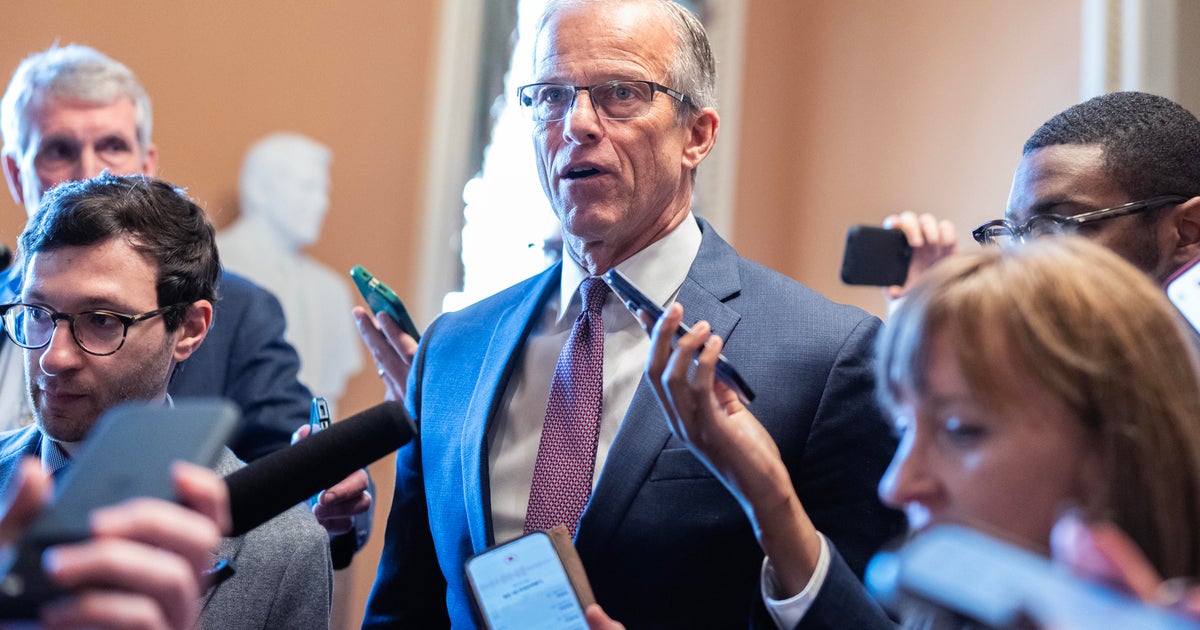
In a dramatic turn of events early Thursday morning, the United States Senate initiated the process to fund the majority of the Department of Homeland Security, following an unexpected about-face by House Republican leaders. The move came after days of intense political maneuvering and represents a significant breakthrough in what had become a contentious government funding crisis. Senate Majority Leader John Thune appeared on the Senate floor to advance legislation that would reopen most of the department’s operations, though notably excluding certain immigration enforcement agencies. This compromise measure, which had been hammered out between Senate Democrats and Republicans the previous week, represents a practical solution to a complex political puzzle that had threatened to leave a critical government department without funding. The agreement marks an important step forward in ending the uncertainty that has plagued the Department of Homeland Security and its employees, though it leaves some unfinished business regarding immigration enforcement agencies that will need to be addressed through alternative legislative channels.
The Immigration Enforcement Controversy at the Heart of the Dispute
The current funding crisis stems from a deep political divide over immigration enforcement operations, specifically regarding Immigration and Customs Enforcement (ICE) and portions of Customs and Border Protection (CBP). Democratic lawmakers have steadfastly refused to approve funding for the Department of Homeland Security’s immigration enforcement operations following two tragic shootings involving federal agents that occurred in Minneapolis earlier this year. These incidents created a political flashpoint that transformed what might have been routine appropriations legislation into a high-stakes standoff over the future of immigration enforcement in America. The Senate’s compromise approach attempts to thread the needle by funding the vast majority of DHS operations while carving out the controversial immigration enforcement agencies for separate consideration. This strategy reflects the political reality that Democrats hold significant leverage in the Senate, where their votes are necessary to overcome procedural hurdles, while Republicans maintain control of the House and have President Trump’s ear on immigration matters.
House Republicans’ Initial Resistance and Strategic Retreat
When the Senate first unveiled its compromise plan to fund most of DHS while leaving ICE and parts of CBP for later consideration, House Republican leaders initially rejected the approach outright. Speaker Mike Johnson, facing pressure from conservative members of his caucus who view robust immigration enforcement as non-negotiable, chose to abandon the Senate’s carefully crafted compromise. Instead, Johnson pushed forward with a temporary measure that would have funded all of DHS, including the immigration enforcement agencies that Democrats had explicitly said they wouldn’t support. This strategy quickly proved unworkable, as it lacked any realistic path to becoming law given Democratic opposition in the Senate. Making matters worse, both chambers then left Washington for their scheduled recess, creating an uncomfortable situation where a major government department remained unfunded with no clear timeline for resolution. The House’s departure from the capital just one day after the Senate had already left town underscored the dysfunction and lack of coordination that had characterized the funding negotiations up to that point.
Presidential Intervention Provides a Path Forward
The logjam finally began to break on Wednesday when President Trump personally intervened in the dispute, demanding that Congress fund ICE and Border Patrol through an alternative legislative mechanism known as budget reconciliation. This process represents a powerful tool that allows the majority party in Congress to pass certain budget-related legislation without needing to overcome a filibuster in the Senate, meaning Republicans could theoretically fund these agencies without any Democratic votes. The president’s directive provided political cover for Speaker Johnson and gave Republican leaders a face-saving way to accept the Senate’s compromise approach while still promising their conservative base that immigration enforcement would receive robust funding. Within hours of Trump’s statement, both Senate Majority Leader Thune and Speaker Johnson announced they would pursue three years of funding for the immigration enforcement agencies through the reconciliation process, while simultaneously working to approve funding for the rest of DHS through the regular appropriations process. This dual-track strategy essentially mirrors what the Senate had proposed the previous week, but with the added commitment to pursue long-term funding for immigration enforcement through reconciliation, addressing conservative concerns about maintaining robust border security operations.
The Complicated Timeline and Procedural Hurdles Ahead
Despite the breakthrough agreement on strategy, significant uncertainty remains about when the Department of Homeland Security will actually receive its funding. The timing of the House’s next substantive action remains unclear, as both chambers are currently away from Washington on recess and won’t return to full session until the week of April 13th. Senate Majority Leader Thune moved the measure forward during what’s called a pro forma session on Thursday morning—essentially a brief, largely ceremonial meeting that allows the Senate to technically remain in session without conducting significant business. The House is scheduled to hold its own pro forma session later the same morning, but House GOP leaders face a strategic decision about whether to hold an actual vote on the funding measure during this brief gathering or wait until the full chamber returns from recess in mid-April. Holding a vote during the pro forma session would expedite the funding process, but might prove logistically challenging given that most members are not in Washington. Waiting for the full chamber to return would allow for more normal legislative procedures but would extend the funding uncertainty for another two weeks. Beyond the immediate question of funding most of DHS, Republicans will then need to turn their attention to the complex and often unpredictable reconciliation process, with an ambitious deadline of getting legislation to President Trump’s desk by June 1st.
Broader Implications for Governance and Immigration Policy
This funding standoff and its resolution reveal much about the current state of American governance and the enduring political battles over immigration policy. The crisis demonstrates how even essential government functions can become hostage to broader ideological disputes, with both parties willing to use their leverage to advance their policy priorities. For Democrats, the Minneapolis shootings provided both a moral imperative and political justification to demand accountability and reform in immigration enforcement before agreeing to fund these operations. For Republicans, maintaining robust immigration enforcement capabilities represents a core commitment to their political base and a central element of President Trump’s policy agenda. The compromise solution—funding most of DHS while addressing immigration enforcement through a separate track—represents the kind of creative legislative problem-solving that has become increasingly rare in today’s polarized political environment. However, it also highlights the challenges of governing with narrow majorities and deep philosophical divides between the parties. The decision to pursue immigration enforcement funding through reconciliation may resolve the immediate crisis, but it’s likely to create new tensions, as this process typically involves difficult negotiations within the Republican caucus about spending levels, policy riders, and budget priorities. Moreover, the success of this approach depends on Republicans maintaining unity within their own ranks, which has proven challenging throughout the current Congress. As lawmakers eventually return to Washington after their recess, they’ll face the dual challenge of quickly passing the compromise funding measure while simultaneously navigating the intricate and demanding reconciliation process, all under the watchful eye of a president who has made immigration enforcement a top priority and shown little patience for legislative delays.