
Trump Administration Considers New Diplomatic Push with Iran Amid Escalating Tensions
High-Stakes Diplomacy Returns to the Table
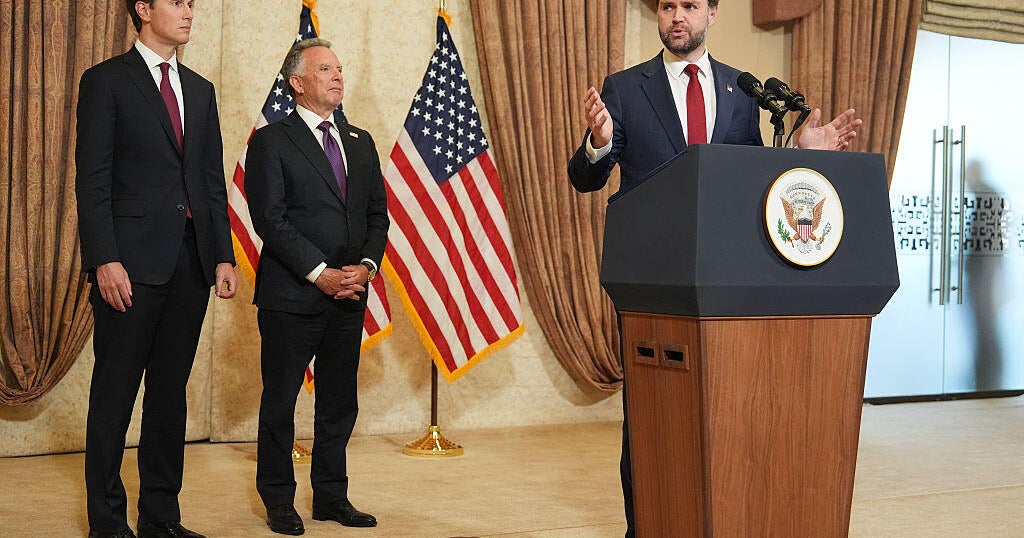
The Trump administration is contemplating a significant diplomatic initiative that could see high-level American officials traveling to Pakistan within days to restart negotiations with Iranian representatives. This potential breakthrough comes at a critical moment, as the United States continues to tighten its naval blockade around Iran’s ports and coastline, particularly in the strategically vital Strait of Hormuz. The tentative plans, which could materialize as early as Monday, represent a delicate balancing act between maintaining military pressure and pursuing diplomatic solutions. Vice President JD Vance stands at the center of this proposed outreach, with serious consideration being given to sending him back to Islamabad, where secret back-channel communications with Iran have been quietly unfolding. He wouldn’t be going alone—Steve Witkoff, President Trump’s special envoy to the Middle East, would likely accompany him. Witkoff has emerged as an increasingly prominent figure in the administration’s regional diplomatic efforts, working to broker various agreements across the volatile Middle East landscape. The fluid nature of these discussions reflects both the urgency of the situation and the complexity of finding common ground between two nations that have been at odds for decades.
Mixed Messages and Diplomatic Signals
President Trump himself added layers of complexity to the situation on Friday, fielding phone calls from various reporters and making several claims about the negotiations. The president’s comments painted an optimistic picture, though details remained somewhat contradictory. When speaking with Bloomberg’s Kate Sullivan, Trump acknowledged he hadn’t yet decided who would lead the next round of face-to-face talks, mentioning that it could be a team effort including Vance, Witkoff, and even his son-in-law Jared Kushner. In a conversation with NewsNation’s Kellie Meyer, the president claimed Iran had already agreed to halt its uranium enrichment program—a significant concession if true. Speaking with Axios reporter Barak Ravid, Trump expressed confidence that a comprehensive deal with Iran could be finalized “in a day or two.” These varied statements suggest either genuine momentum in the negotiations or perhaps an attempt to project confidence and apply public pressure on Iranian negotiators. The proposed visit would follow last week’s marathon negotiation session in Islamabad, where Vice President Vance spent hours in discussions with Iranian intermediaries. Those talks, while extensive, concluded without achieving a breakthrough, leaving fundamental disagreements unresolved. The most contentious issues remain the scope and limitations of Iran’s nuclear program and the specific conditions that would be necessary to end the conflict that erupted in February. Despite the lack of concrete progress, officials from both nations have been notably restrained in their public statements, suggesting that while diplomatic channels are strained, they haven’t completely collapsed. American officials have indicated their willingness to keep talking even as military operations continue in the region, while Iranian representatives have shown cautious interest in further dialogue, though they’ve made clear that meaningful advancement would require concessions that Washington has so far been unwilling to make.
European Leaders Rally to Protect Vital Shipping Routes
While American diplomats work behind the scenes, European leaders are taking matters into their own hands, gathering in Paris on Friday for emergency discussions focused on protecting freedom of navigation through the Strait of Hormuz. This narrow waterway has become the epicenter of global energy security concerns, and the meeting’s attendance list reflects just how serious the situation has become. French President Emmanuel Macron is hosting the in-person gathering, joined by U.K. Prime Minister Keir Starmer, German Chancellor Friedrich Merz, and Italian Prime Minister Giorgia Meloni. The presence of these major European leaders at the same table demonstrates the profound level of anxiety among Western powers about the escalating regional tensions. The meeting extends far beyond Europe, with more than thirty additional representatives from countries across Europe, Asia, and Latin America expected to participate virtually. This broad international participation underscores the truly global stakes involved—the Strait of Hormuz handles approximately 20 percent of the world’s oil shipments, making it one of the most economically critical waterways on the planet. Any prolonged disruption to shipping through this narrow passage would send shockwaves through global energy markets and likely trigger economic consequences felt in countries around the world. According to a French official familiar with the agenda, discussions will cover a comprehensive range of potential protective measures, including coordinated naval escorts for commercial vessels passing through dangerous waters, expanded operations to clear underwater mines, and enhanced intelligence-sharing mechanisms between participating nations. The official emphasized that organizers remain in constant communication with both the United States and Iran, despite neither country participating directly in Friday’s talks. Israel, another key regional player, is also not attending the Paris meeting.
The Hidden Danger Beneath the Waves
Beyond the geopolitical maneuvering and diplomatic negotiations, commercial shipping vessels navigating the Strait of Hormuz face an immediate and potentially deadly threat lurking beneath the surface: naval mines. U.S. officials revealed to CBS News in March that at least a dozen Iranian underwater mines had been detected in this vital passageway. The mine threat represents just a fraction of Iran’s extensive arsenal—Tehran has historically maintained stockpiles containing thousands of naval mines, manufactured domestically or acquired from China and Russia. These weapons are particularly insidious because they’re difficult to detect, can remain active for extended periods, and pose risks to both military and civilian vessels without discrimination. The mine situation has created confusion and mixed messages about the actual safety of the waterway. On Friday, Iran’s Minister of Foreign Affairs Abbas Araghchi attempted to provide reassurance through a post on X (formerly Twitter), declaring that “in line with the ceasefire in Lebanon, the passage for all commercial vessels through Strait of Hormuz is completely open for the remaining period of ceasefire, on the coordinated route as already announced by Ports and Maritime Organisation of the Islamic Rep. of Iran.” However, the U.S. Navy painted a considerably more cautious picture in an advisory issued to ship captains, warning that mine threats in parts of the Strait of Hormuz “are not fully understood and avoidance of [the] area should be considered.” This stark contradiction between Iranian assurances and American warnings leaves commercial shipping companies and ship captains in a difficult position, forced to weigh economic necessities against potential dangers to their vessels and crews.
Clearing the Path Forward
President Trump weighed in on the mine situation through his preferred communication channel, Truth Social, announcing that Iran would remove all mines from the strait with assistance from the United States. This statement, if it reflects actual agreements reached through back-channel negotiations, would represent a significant practical step forward regardless of whether broader diplomatic agreements are achieved. The technical challenge of mine clearance shouldn’t be underestimated—it’s dangerous, time-consuming work that requires specialized equipment and expertise. Cooperation between American and Iranian forces on such an operation would itself be remarkable given the decades of hostility between the two nations. The mine removal announcement may indicate that despite the public tensions and military posturing, practical cooperation on specific issues is possible and perhaps already occurring behind the scenes. Such cooperation could serve as a confidence-building measure that might create momentum for addressing larger, more complex disagreements about nuclear programs, regional influence, and long-term security arrangements.
The Road Ahead Remains Uncertain
As the situation continues to evolve hour by hour, the international community watches anxiously to see whether diplomacy can prevail over escalation. The tentative plans for renewed negotiations represent hope that a peaceful resolution remains possible, but the continuation of military operations and the very real dangers facing commercial shipping demonstrate how fragile the situation remains. The involvement of multiple parties—American diplomats, European leaders, Iranian officials, and Pakistani intermediaries—reflects both the complexity of the challenges and the recognition that no single nation can resolve this crisis alone. The contrast between President Trump’s optimistic timeline of reaching a deal within days and the unresolved fundamental disagreements from last week’s negotiations suggests that significant obstacles remain. The world’s dependence on energy flowing through the Strait of Hormuz means that the stakes couldn’t be higher—disruptions would affect not just the nations directly involved in the conflict, but economies and ordinary people around the globe through higher energy prices and potential shortages. Whether the diplomatic push currently being contemplated will succeed in de-escalating tensions and establishing a framework for longer-term peace remains to be seen. What is clear is that the coming days will be crucial in determining whether the region moves toward accommodation and stability or faces continued confrontation with all its attendant risks. The international response, from the Paris meeting of concerned nations to the back-channel negotiations in Islamabad, demonstrates a collective recognition that the current trajectory is unsustainable and that creative diplomacy, despite its difficulties and uncertainties, offers the best hope for avoiding a broader conflict that could have catastrophic consequences far beyond the Middle East.