

The Shifting Sentiment: How Iranians’ Hope for Liberation Turned to Fear After U.S.-Israeli Strikes
From Optimism to Despair: A Nation’s Changing Perspective
When the United States and Israel launched their coordinated military campaign against Iran just over three weeks ago, the mood among many Iranians was surprisingly hopeful, even welcoming. After enduring 47 years under the Islamic Republic’s iron grip, and having just witnessed the brutal suppression of massive anti-government protests that President Trump claimed resulted in over 30,000 deaths, numerous Iranians expressed a willingness to accept foreign intervention if it promised an end to their suffering. Trump’s public pledge to support the protesters and rescue them from their oppressive government fueled hopes that meaningful change might finally be within reach. However, as the dust settles and the reality of prolonged military conflict becomes clear, that initial optimism has transformed into something far darker—a creeping realization that the intervention may have made their situation considerably worse rather than better.
The dramatic shift in public sentiment reveals a sobering truth about the complexities of regime change and foreign intervention. What seemed like a potential pathway to freedom now appears to many as a poorly planned military adventure that has left ordinary Iranians caught between escalating violence, economic collapse, and an entrenched government that shows no signs of relinquishing power. Two Iranians—one living abroad in the United Kingdom and another still residing within Iran’s borders—have provided CBS News with candid assessments of how their countrymen’s perspectives have evolved over these tumultuous 25 days. Their accounts paint a picture of a population that once dared to hope for liberation but now finds itself pleading simply for the violence to stop, regardless of who remains in charge.
The Critique from Abroad: A Strategy Without Planning
Reza, a British-Iranian whose real name has been changed to protect his identity and any family members still in Iran, articulated the fundamental problem as he sees it from his vantage point in the United Kingdom. His critique centers on the absence of a comprehensive, internationally coordinated strategy to address the Iranian regime. In his view, effective intervention would have required a carefully orchestrated approach involving multiple nations, particularly European allies working in concert with the United States. Such an approach would need to combine various tools—military pressure, yes, but also diplomatic engagement, targeted sanctions, negotiations, and a clearly defined long-term plan for what comes after any military action succeeds in weakening or toppling the current government.
Instead, what Iranians are witnessing is what Reza describes as a unilateral action by just “one or two countries” operating without the benefit of such comprehensive planning. This approach, he argues, was doomed from the start and could never realistically succeed in bringing about the positive change that many Iranians had hoped for. The “rude awakening” that Reza describes is spreading throughout the Iranian diaspora, the millions of Iranians living abroad who maintain close connections with family and friends back home. Through his conversations with other expatriate Iranians, Reza has found that this disillusionment is widespread—people are coming to the grim conclusion that they are “doomed, basically,” caught in a deteriorating situation with no clear path forward.
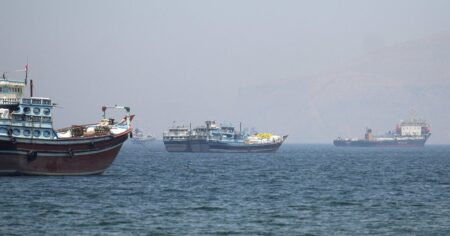
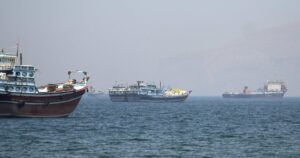
Perhaps even more troubling is Reza’s assessment of the strategic dynamics at play. Rather than being caught off-guard or weakened by the attacks, the Iranian regime appears to have quickly sized up President Trump’s approach and identified its fundamental weakness: the absence of a coherent long-term strategy. According to Reza, Iranian leadership is now exploiting this lack of planning to their advantage, strengthening their position and making forward-looking plans of their own. Their focus has turned to the Strait of Hormuz, the narrow waterway through which roughly a fifth of the world’s petroleum passes. By threatening to close or disrupt this critical chokepoint, Iran has identified what Reza calls “the weakness of the whole entire world,” giving them leverage that may ultimately prove more powerful than any military advantage the United States and Israel possess. The regime is essentially playing a game of economic brinkmanship, and in Reza’s estimation, they currently hold the upper hand.
The Voice from Within: Desperation Replaces Revolutionary Spirit
The perspective from inside Iran, as shared by Amir—another pseudonym used to protect identity—echoes and amplifies these concerns while adding the immediacy of someone living through the crisis firsthand. Amir reports a striking reversal among his fellow Iranians, particularly those who had previously supported military intervention as a path to liberation from what he describes as Iran’s “theocratic despotic regime.” These individuals, who once viewed war as potentially freeing them from decades of oppression, are now fundamentally reconsidering their position. The reality of life under bombardment, the mounting civilian casualties, the destruction of homes and infrastructure, and the economic devastation have caused a dramatic shift in priorities.
What Amir is hearing from people around him is no longer hope for regime change or dreams of a democratic future—it’s simply a desperate plea for the violence to end. People are “reaching for any moment ceasefire,” he explains, and crucially, they no longer care about the political details of who remains in power. “No matter who is the boss. No matter who is the king,” Amir states, capturing the exhausted resignation that has replaced revolutionary fervor. The only thing that matters now is survival, and that requires an immediate cessation of hostilities. This sentiment represents a profound defeat for the objectives of both the Trump administration and Israeli Prime Minister Benjamin Netanyahu, who have repeatedly called upon Iranians to seize this moment to rise up and overthrow their government from within. Instead of inspiring rebellion, the military campaign appears to have driven people into a defensive crouch, focused solely on making it through each day alive.
Amir’s outlook for the immediate future is bleak. He anticipates “hellish weeks to come” as both the Iranian government and the Trump administration engage in what he characterizes as “brinkmanship”—each side raising the stakes and refusing to back down, seemingly willing to push the confrontation to increasingly dangerous levels. Meanwhile, the organized opposition groups within Iran that might theoretically coordinate a popular uprising against the regime are, in Amir’s assessment, completely ineffective. These groups “do not have [a] viable and functional coalition to move even a finger,” he states, undermining the notion promoted by American and Israeli leaders that the Iranian people are poised to take advantage of the current chaos to effect change from within. Without organized leadership, clear objectives, or the ability to coordinate action, any potential uprising remains purely theoretical, while the very real suffering of ordinary Iranians continues to mount.
The Question of Exit Strategy: A Leader Trapped by His Own Actions
Perhaps most damning is Amir’s observation about President Trump’s current predicament. From his perspective inside Iran, it appears that the American president “cannot find an exit door from the mess” he has created. This assessment raises troubling questions about how this conflict might end and at what cost. Military interventions are notoriously easier to begin than to conclude, and history is littered with examples of powerful nations finding themselves trapped in conflicts that offer no clear victory condition and no politically acceptable way to withdraw. The 2003 invasion of Iraq, the decades-long involvement in Afghanistan, and numerous other examples demonstrate how quickly initial military success can devolve into prolonged occupation or stalemate, with mounting casualties and costs that eventually erode public support both domestically and internationally.
The absence of an exit strategy is particularly concerning given the nature of the Iranian regime and the country’s regional position. Unlike some other Middle Eastern nations, Iran has a large, educated population, a long history of statehood, significant natural resources, and strategic importance that draws in multiple competing interests from around the world. Any attempt to fundamentally reshape Iranian governance would require not just military victory but also a comprehensive plan for political reconstruction, economic stabilization, and regional diplomatic accommodation—none of which appears to be in place. The longer the current military campaign continues without producing decisive results or transitioning to a political process, the more both the United States and Iran risk becoming locked into an escalating cycle of violence that serves neither nation’s interests and causes tremendous suffering for ordinary Iranians.
The Human Cost: Civilian Casualties and Destroyed Lives
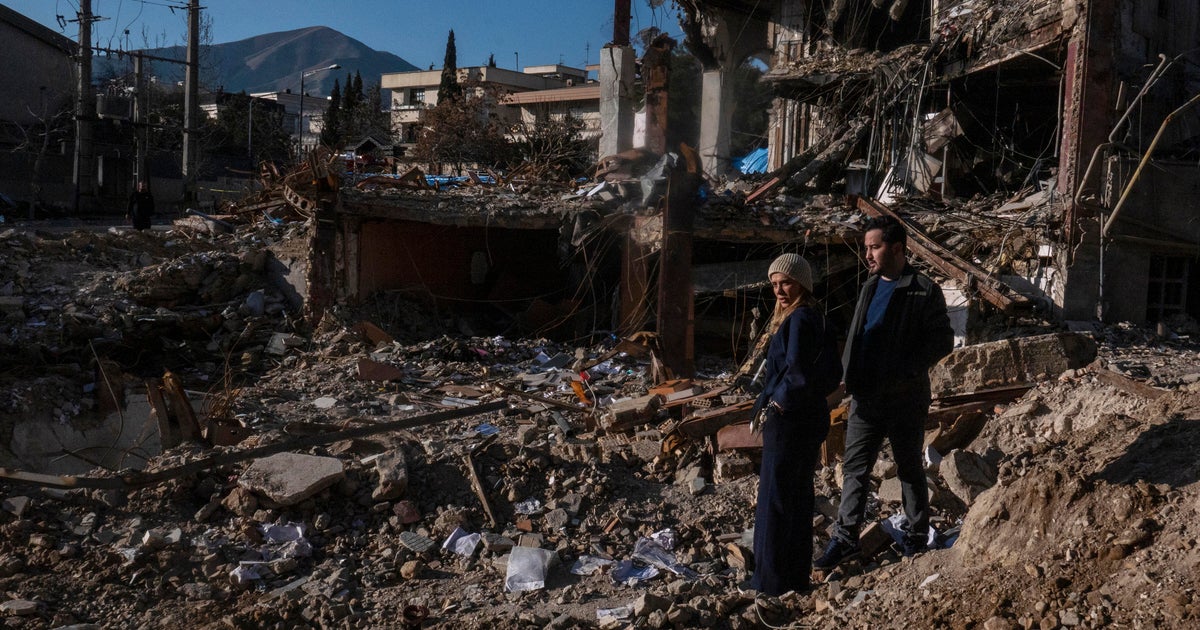
Behind all the strategic analysis and political maneuvering lies the most important reality of this conflict: the human cost being paid by Iranian civilians who have no control over their government’s actions and limited ability to influence American policy. Images emerging from Tehran and other Iranian cities show the devastating impact of the airstrikes on residential neighborhoods. In the Shahrak-e Gharb district of Tehran, for instance, residential and commercial buildings have been reduced to rubble, resulting in what Iranian officials describe as numerous civilian deaths and missing persons. Families who had no involvement in their government’s nuclear program or regional military activities are losing their homes, their livelihoods, and their loved ones.
The humanitarian crisis extends beyond those directly killed or injured in the strikes. Economic sanctions combined with military action are collapsing Iran’s economy, driving up prices for basic goods, disrupting supply chains, and pushing millions toward poverty. Medical supplies are becoming scarce, infrastructure is being damaged, and the normal functioning of civil society is breaking down. These conditions create suffering that will persist long after any military campaign ends, and they raise serious moral questions about the methods being employed and whether they can be justified by the stated objectives. For Iranians like Amir and Reza, and the millions they represent, these aren’t abstract policy questions—they’re immediate, personal realities that are reshaping their lives and their futures in profound and painful ways. The initial hope that foreign intervention might bring freedom has been replaced by a much simpler wish: just let it stop.