
Supreme Court Justice Sotomayor Issues Rare Apology After Personal Criticism of Colleague
An Unprecedented Apology from the Bench
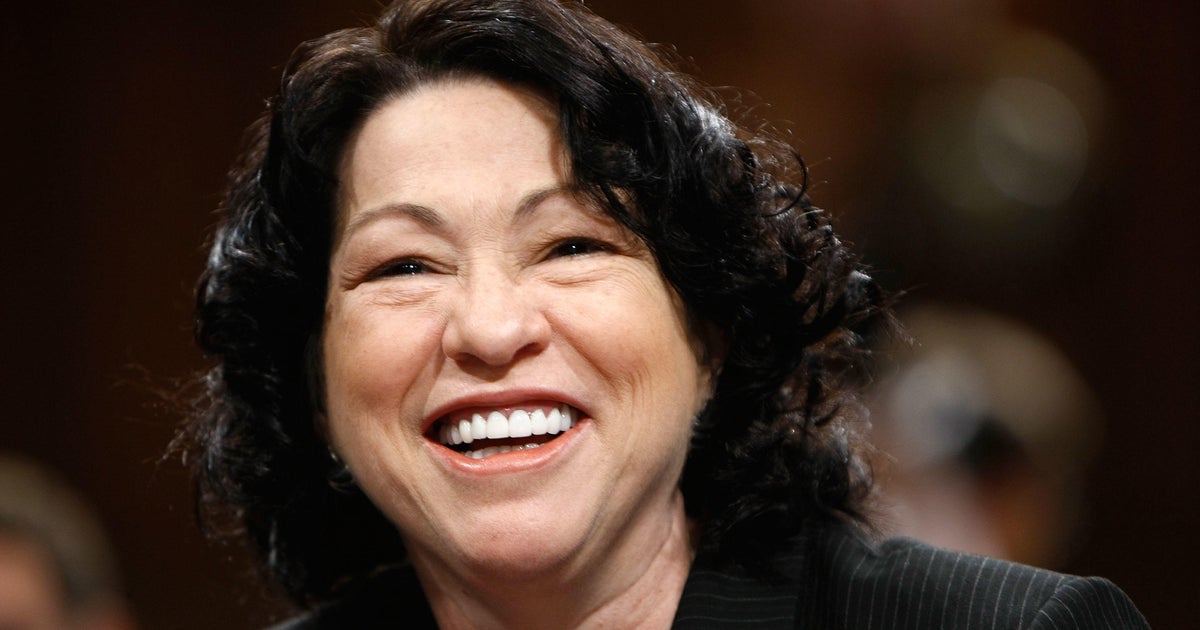
In a remarkable moment that has captured the attention of legal observers and the public alike, Supreme Court Justice Sonia Sotomayor issued a formal apology on Wednesday for comments she made about fellow Justice Brett Kavanaugh during a public appearance at the University of Kansas School of Law. The apology, delivered through an official Supreme Court statement, addressed remarks that crossed the typically respectful boundaries maintained among the nine justices, even when they sharply disagree on legal matters. “At a recent appearance at the University of Kansas School of Law, I referred to a disagreement with one of my colleagues in a prior case, but I made remarks that were inappropriate,” Sotomayor acknowledged. “I regret my hurtful comments. I have apologized to my colleague.” While she didn’t name Kavanaugh directly in her statement, it was clear to those familiar with her Kansas appearance that her words were directed at her conservative colleague. This incident represents a rare breach in the traditionally cordial public relations among Supreme Court justices, who often emphasize their mutual respect despite profound legal disagreements.
The Immigration Case at the Heart of the Controversy
The controversy stems from a September 2025 Supreme Court order regarding Immigration and Customs Enforcement operations in Los Angeles, a case that touched on sensitive issues of immigration enforcement, civil liberties, and racial profiling. The order effectively allowed ICE to resume what critics called “broad sweeps” in the Los Angeles area, overturning a lower court decision that had placed significant restrictions on the agency’s detention practices. The lower court had found that ICE had been unlawfully detaining people and ruled that the agency could not rely solely on factors such as race, occupation, or the use of Spanish when determining whether they had reasonable suspicion that someone was in the United States illegally. Justice Kavanaugh was the only member of the majority to write a separate concurrence explaining his reasoning, and it was this opinion that became the focus of Sotomayor’s criticism. In his concurrence, Kavanaugh argued that while ethnicity alone cannot be the sole reason for stopping someone, it could serve as a relevant factor in the totality of circumstances. He also characterized the immigration stops in question as typically being “brief encounters,” noting that detainees would be free to go once they demonstrated they were in the country legally. This perspective would ultimately become the flashpoint for Sotomayor’s unusually personal public critique.
The Personal Nature of Sotomayor’s Original Remarks
During her appearance at the University of Kansas law school, Justice Sotomayor departed from the typically measured public discourse among Supreme Court colleagues by making what many viewed as a personal attack on Justice Kavanaugh’s background and life experience. Referring to Kavanaugh’s characterization of immigration stops as “temporary,” she said, “This is from a man whose parents were professionals. And probably doesn’t really know any person who works by the hour,” according to Bloomberg’s reporting of the event. These comments suggested that Kavanaugh’s privileged upbringing had left him out of touch with the realities faced by working-class immigrants and others who might be subject to ICE detention. The implicit criticism was that his judicial perspective was shaped by a lack of personal understanding of what such encounters might mean for vulnerable populations. This type of ad hominem argument—attacking a colleague’s background rather than focusing solely on the legal reasoning—represents a significant departure from the norms of Supreme Court discourse, where justices typically confine their disagreements to legal philosophy and constitutional interpretation.
A Tale of Two Backgrounds
The contrast between the two justices’ backgrounds is indeed stark and represents the diversity of experiences now represented on the nation’s highest court. Brett Kavanaugh grew up in the Washington, D.C., area in an environment of relative privilege and professional success. His father worked as a lobbyist, navigating the corridors of power in the nation’s capital, while his mother served as both a prosecutor and later as a judge, giving young Brett early exposure to the legal profession from the inside. Justice Sotomayor’s upbringing could hardly have been more different. She was raised in a Bronx public housing complex, the daughter of Puerto Rican immigrants working to establish themselves in a new country. Her mother worked as a nurse, and after Sotomayor’s father died when she was only nine years old, her mother essentially raised her and her brother as a single parent. Despite these vastly different starting points, both justices eventually made their way to Yale Law School—though separated by 11 years—and ultimately to seats on the Supreme Court. Their divergent paths to the bench represent the American ideal of opportunity and merit, yet Sotomayor’s comments suggested that these different backgrounds might lead to fundamentally different understandings of how the law affects ordinary Americans, particularly those from marginalized communities.
Sotomayor’s Passionate Dissent and Constitutional Concerns
Justice Sotomayor’s frustration with the majority’s decision in the ICE case was evident not just in her Kansas comments but also in her formal written dissent from the Supreme Court’s order. Writing for herself and the court’s two other liberal justices, she painted a dire picture of the implications of the majority’s decision. “We should not have to live in a country where the Government can seize anyone who looks Latino, speaks Spanish, and appears to work a low wage job,” she wrote in her dissent. She argued that the federal government had “all but declared that all Latinos, U.S. citizens or not, who work low wage jobs are fair game to be seized at any time.” Her concluding words were particularly forceful: “Rather than stand idly by while our constitutional freedoms are lost, I dissent.” This passionate language reflects Sotomayor’s deep concern about the real-world impact of the Court’s decision on vulnerable communities, particularly Latino Americans who might be subject to stops based on their appearance or language. Her dissent reflected not just legal disagreement but a fundamental concern about civil liberties and equal protection under the law. However, while such strong language is perfectly appropriate—even expected—in formal dissents, her decision to make the disagreement personal during a public appearance crossed a line that justices typically respect.
The Importance of Collegiality on the High Court
The swift apology from Justice Sotomayor underscores the importance of maintaining collegiality among the nine justices, even in an era of intense ideological division and high-stakes cases. Supreme Court justices have long emphasized that their relationships transcend their legal disagreements, recognizing that they must work together as an institution for life. This tradition of mutual respect serves important purposes: it helps maintain the Court’s legitimacy, facilitates productive deliberations, and models civil discourse for the nation. In a 2018 CNN interview conducted shortly after Kavanaugh’s contentious confirmation hearings, Justice Sotomayor herself referred to the nine justices as a “family,” emphasizing the personal bonds that connect them despite their differences. This familial metaphor captures the unique nature of the Supreme Court, where justices appointed by different presidents and holding vastly different judicial philosophies must nevertheless collaborate closely, often for decades. The rarity of public personal criticisms among justices reflects this institutional culture. While the justices regularly issue sharp dissents criticizing each other’s legal reasoning—sometimes in pointed and memorable language—they typically avoid suggesting that a colleague’s views stem from personal failings or limited life experience. Sotomayor’s apology, therefore, represents not just a personal gesture but a reaffirmation of these important institutional norms. As the Court continues to grapple with divisive issues including immigration, abortion, gun rights, and religious freedom, maintaining these bonds of mutual respect becomes ever more critical to the Court’s functioning and its standing with the American people.