


South Africa Deploys Military Forces to Combat Organized Crime and Violence
Army Takes to the Streets of Johannesburg
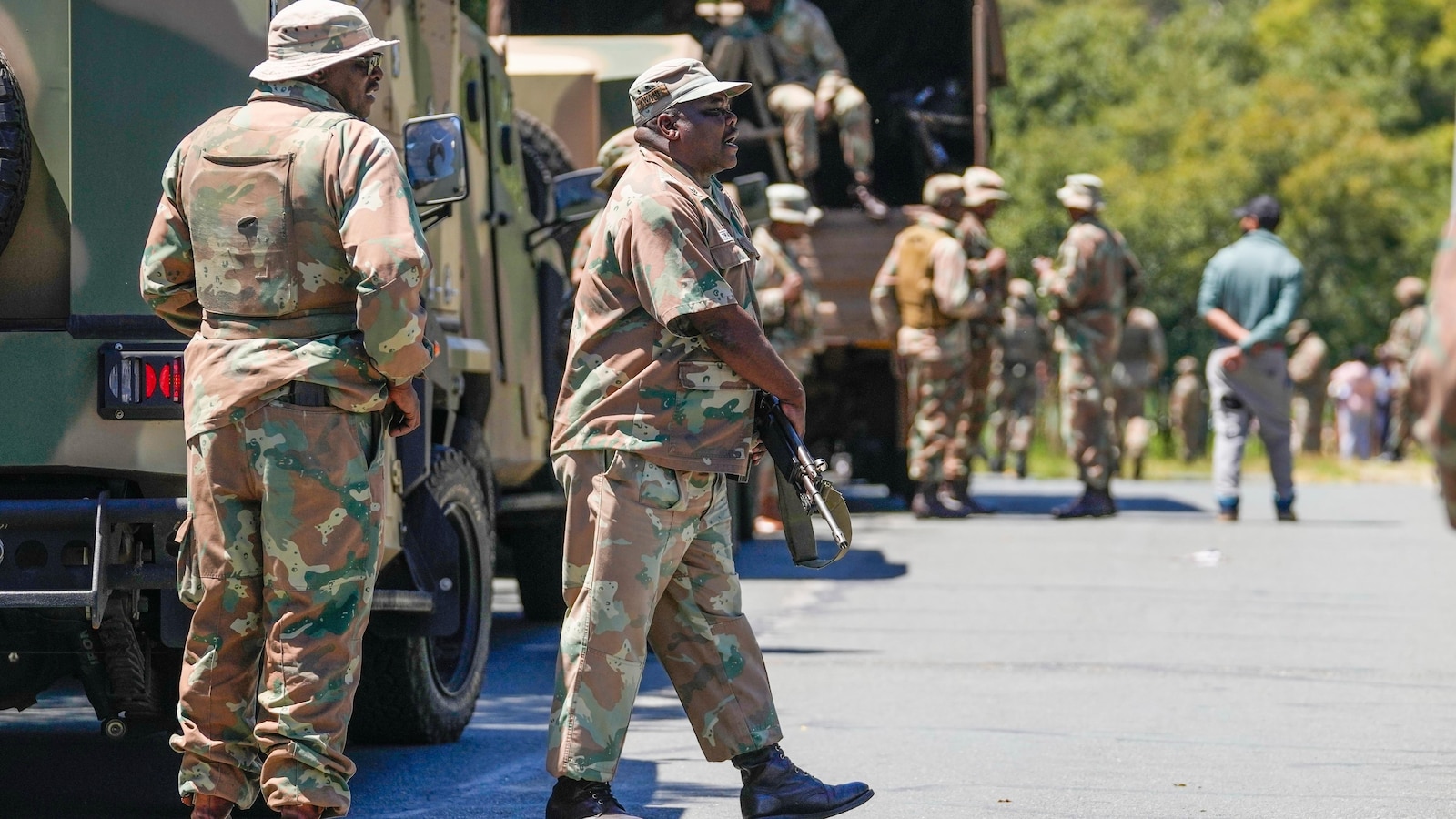
In a significant move to address the country’s escalating crime crisis, South African soldiers began appearing on the streets of Johannesburg this Wednesday, marking the first major military deployment since President Cyril Ramaphosa announced his plan to use armed forces to combat organized crime. The deployment, which the president described as necessary to counter “the greatest threat to democracy and economic development,” saw more than a dozen military vehicles rolling through the Riverlea suburb, a neighborhood that has been plagued by both gang violence and illegal mining operations. Residents watched as soldiers disembarked from their vehicles and entered apartment buildings, bringing a military presence to civilian streets in scenes that carry particular weight in a nation still grappling with memories of its apartheid past. This intervention represents a clear acknowledgment by the government that traditional law enforcement measures have proven insufficient against the sophisticated networks of organized crime that have taken root across Africa’s most advanced economy.
A Nationwide Response to Organized Criminal Networks
The deployment in Johannesburg is just the beginning of a much broader national strategy. President Ramaphosa has outlined plans to deploy military personnel across five of South Africa’s nine provinces, with operations potentially lasting more than a year in some areas. The initial phase includes 550 soldiers in Gauteng province, which encompasses Johannesburg, with their mission set to continue through the end of April. However, the scope extends far beyond this industrial heartland. The government has identified specific threats requiring military intervention: illegal mining operations plaguing the Gauteng, North West, and Free State provinces, and entrenched gang violence terrorizing communities in the Western Cape and Eastern Cape provinces. This includes neighborhoods in and around Cape Town, the nation’s premier tourist destination, where gang-related violence has created no-go zones and shattered the lives of countless residents for years. The military forces will operate under police command, having received specialized training in law enforcement protocols before their deployment—a delay that pushed the originally scheduled March 1 start date back by several weeks.
The Human Cost of Violence
The statistics paint a grim picture of daily life for many South Africans. Between October and December 2025 alone, police recorded 6,351 homicides—an average of nearly 70 people murdered every single day in a nation of approximately 62 million people. Beyond these deaths, the country experiences alarmingly high rates of attempted murders and violent assaults that disrupt communities and create an atmosphere of fear. These aren’t just numbers on a spreadsheet; they represent families torn apart, children growing up without parents, communities living in constant fear, and economic opportunities lost as businesses hesitate to invest in areas where violence is endemic. President Ramaphosa has specifically identified gang violence and illegal mining as particularly destructive forces, linking both to sophisticated organized crime networks that operate with apparent impunity. These criminal enterprises don’t just threaten individual safety—they undermine the authority of the state itself, creating parallel power structures that control neighborhoods, exploit natural resources, and corrupt institutions that should serve the public good.
Historical Context and Controversial Precedent
The decision to deploy military forces on South African streets carries profound historical and emotional weight. During the apartheid era, when a white minority government enforced brutal racial segregation, the military was regularly used to crush pro-democracy protests and maintain the oppressive system. Those memories remain fresh for many South Africans, making any domestic military deployment a sensitive issue that requires careful justification. President Ramaphosa has acknowledged this painful history, stating that the decision to use soldiers was “carefully considered” and has “become necessary due to a surge in violent organized crime that threatens the safety of our people and the authority of the state.” This isn’t the first time in recent years that South Africa has turned to its military for domestic security. In 2021, riots and widespread looting erupted in two provinces, triggered by the imprisonment of former President Jacob Zuma and fueled by frustrations over COVID-19 lockdown restrictions. That outbreak of violence claimed more than 350 lives before order was restored, demonstrating the speed at which civil unrest can spiral out of control in communities already stressed by economic inequality and social tensions.
Mixed Reception and Political Implications
While many South Africans have welcomed the military deployment as a necessary step to restore order and safety to their communities, the move has also sparked criticism and raised uncomfortable questions about the state of the nation’s law enforcement capabilities. Several political parties have characterized the deployment as an implicit admission of failure—proof that the South African Police Service has been unable to fulfill its fundamental mandate of protecting citizens and maintaining law and order. This criticism strikes at a deeper issue: if the police cannot handle crime without military assistance, what does that say about the effectiveness of governance and the strength of civilian institutions? The debate reflects broader frustrations about corruption within police ranks, inadequate training and resources, and the challenges of policing a society still marked by deep economic inequality. For residents of affected areas, however, such political debates may seem secondary to the immediate question of whether soldiers on their streets will actually make them safer or simply add another layer of armed presence to already tense situations.
Looking Ahead: Challenges and Uncertainties
As soldiers settle into their new role supporting police operations, many questions remain unanswered about how this deployment will unfold and what it will ultimately accomplish. The authorities have been notably tight-lipped about operational details, with neither the South African Police Service nor the Department of Defense providing comprehensive information about the scope, rules of engagement, or specific objectives beyond general statements about combating crime and preserving law and order. There was no immediate confirmation on Wednesday whether deployments had begun in other targeted areas beyond Johannesburg, leaving residents in gang-affected Cape Town neighborhoods and illegal mining zones in other provinces uncertain about when—or if—military assistance would arrive. The success of this intervention will depend on numerous factors: whether soldiers receive adequate training in civilian law enforcement to avoid human rights violations, whether their presence actually deters organized criminal networks or merely displaces them, whether police can use this breathing room to rebuild their own capabilities, and whether the government addresses the underlying economic conditions that make illegal mining and gang membership attractive to desperate people. As South Africa embarks on this significant deployment of military force in civilian areas, the nation watches and waits to see whether this controversial measure will mark a turning point in the fight against organized crime or simply represent another temporary response to problems that require deeper, more sustained solutions.