

Major U.S. Military Buildup in the Middle East: What’s Really Happening
Massive Troop Deployment Signals Escalating Tensions
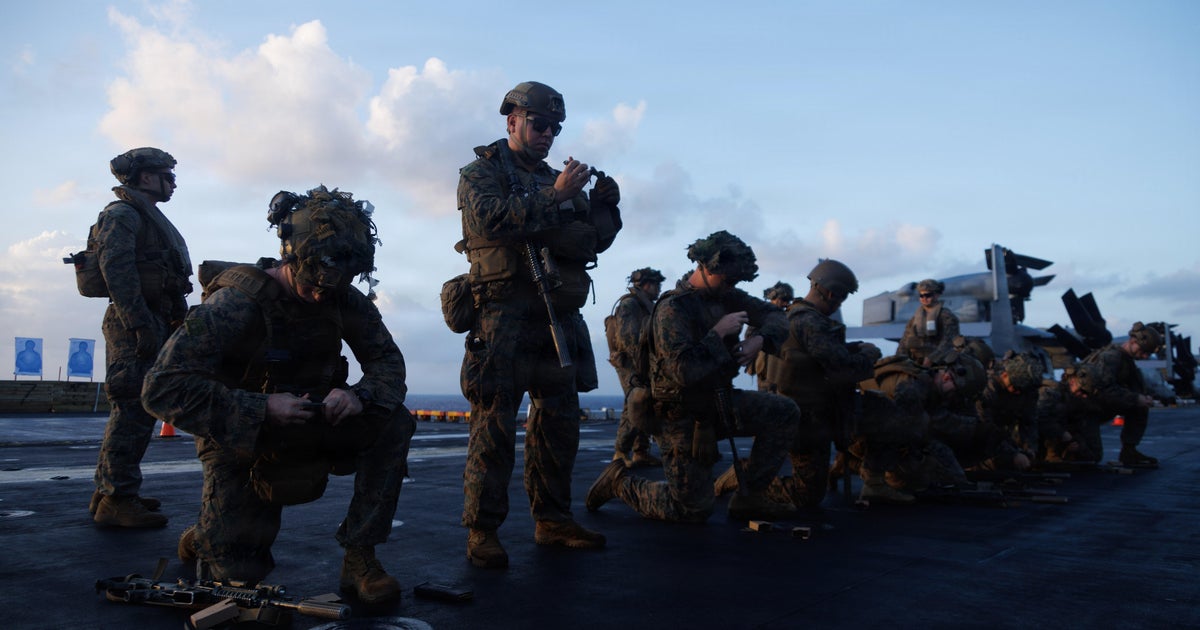
The situation in the Middle East has reached a critical turning point as the United States rapidly deploys a substantial military force to the region. According to sources with direct knowledge of these deployments, hundreds of America’s most elite warriors—including the legendary Navy SEALs and the highly trained Army Rangers—have quietly moved into position across the Middle East. But that’s just the tip of the iceberg. Alongside these special operations forces, thousands of U.S. Marines and Army paratroopers have also been dispatched to the region, representing one of the most significant American military buildups in recent memory. The sheer scale of this deployment is staggering, with more than 3,500 U.S. troops confirmed to have arrived just this past Saturday, including approximately 2,500 Marines aboard the USS Tripoli. And the reinforcements keep coming—a second Marine Expeditionary Unit is currently making its way to the region, along with elements of the 82nd Airborne Division, adding another contingent of under 1,500 service members to an already formidable presence. While U.S. Central Command has declined to comment on the specific details of these movements, the message being sent is unmistakably clear: America is positioning itself for potential military action, and the world is watching nervously.
The Strategic Options on the Table
What exactly is the purpose of assembling such an impressive military force in the Middle East? Sources familiar with the situation have revealed that these deployments are designed to provide President Trump with a range of military options regarding Iran, should diplomatic efforts fail. Among the potential operations being considered are missions that could forcibly reopen the strategically vital Strait of Hormuz—the narrow waterway through which roughly one-fifth of the world’s oil supply passes. Additionally, military planners have apparently prepared options that could involve seizing oil from Iran’s Kharg Island, the country’s primary oil export terminal and a critical economic lifeline for the Iranian regime. Perhaps most dramatically, there are reportedly plans in place that could target Iran’s stockpile of enriched uranium, the material necessary for both nuclear energy and, potentially, nuclear weapons. These aren’t just theoretical possibilities being discussed in Washington conference rooms—these are actionable military plans backed by the forces now positioned in the region, ready to execute if given the order. The presence of Navy SEALs and Army Rangers in particular suggests that any operations would likely involve precision strikes and special operations tactics rather than conventional warfare, though the thousands of Marines and paratroopers indicate the capability for larger-scale operations if necessary.
Trump’s Public Warnings and the Diplomatic Dance
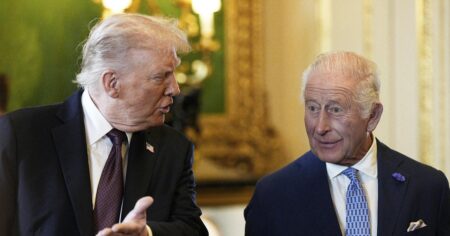
President Trump took to his Truth Social platform Monday morning to address the escalating situation, offering what appeared to be a mix of diplomatic optimism and stark military threats. In his characteristic style, the President expressed confidence that his administration was making progress in negotiations with Iran and suggested that an agreement might soon be reached to end what he described as a war now entering its fifth week, which began with joint U.S.-Israeli operations on February 28. His words seemed designed to project both strength and reasonableness, suggesting America remained open to a peaceful resolution while simultaneously making clear the consequences of continued Iranian intransigence. However, the President’s optimistic tone came with a severe warning attached. Trump made it explicitly clear that if a deal “is not shortly reached” and if Iran doesn’t immediately reopen the Strait of Hormuz, the United States would launch devastating attacks against Iran’s entire energy infrastructure. Specifically, he threatened strikes on “all of Iran’s Electric Generating Plants, Oil Wells and Kharg Island,” adding with an ominous parenthetical note that these attacks could “possibly” include “all desalinization plants!”—facilities that provide fresh water to Iran’s population. The President emphasized that America had “purposefully not yet ‘touched'” these targets, implying that restraint has been exercised thus far but that patience has its limits. This kind of public brinkmanship represents a high-stakes gamble, designed to force Iranian leadership to the negotiating table while simultaneously preparing the American public and international community for potential military action.
The Iranian Response: Defiance and Denial
Despite President Trump’s claims of ongoing negotiations and the very real military pressure now positioned near Iran’s borders, Iranian officials have painted a dramatically different picture of the situation. Iranian government representatives have repeatedly and emphatically stated that no direct talks with the United States are currently underway, directly contradicting the Trump administration’s narrative. Furthermore, Iranian officials have dismissed what’s been characterized as a 15-point ceasefire proposal from the White House, describing it as “excessive and unreasonable.” This stark disconnect between the two sides raises serious doubts about whether any common ground can be quickly found, despite President Trump’s expressed optimism. The Iranian rejection of the American proposal and their denial of active negotiations creates a troubling scenario where diplomatic off-ramps may be fewer than Washington suggests. This gap between the American and Iranian positions isn’t just a matter of diplomatic posturing—it represents a genuine gulf in understanding about what each side finds acceptable, what concessions might be possible, and even whether the two nations are actually engaged in meaningful dialogue at all. For outside observers trying to assess the likelihood of war or peace, this discrepancy is deeply concerning. If the two sides can’t even agree on whether they’re talking to each other, how can they possibly reach an agreement on substantive issues before President Trump’s implied deadline expires?
The Global Stakes and Economic Implications
The consequences of this standoff extend far beyond the immediate region, touching the lives of ordinary people around the world in ways that might not be immediately obvious. The Strait of Hormuz, which sits at the center of this crisis, is one of the world’s most important maritime chokepoints. On any given day, approximately 21 million barrels of oil pass through this narrow waterway—that’s roughly one-fifth of global petroleum consumption. If this strait remains closed or if military operations disrupt shipping through the region, the global economy could face severe shocks, with oil prices potentially skyrocketing and triggering inflationary pressures worldwide. Ordinary families would feel this at the gas pump, in their heating bills, and through increased prices for goods that depend on transportation. Beyond the economic considerations, the threat to attack Iran’s desalinization plants—facilities that convert seawater into drinking water—raises profound humanitarian concerns. Iran, with much of its territory consisting of arid or semi-arid landscape, depends heavily on desalinization to provide fresh water to its population. Targeting such infrastructure would potentially affect millions of civilians who have no direct role in the political decisions of their government, raising troubling questions about proportionality and the ethics of modern warfare.
What Happens Next: Uncertainty and Anxiety
As this situation continues to develop, people throughout the Middle East and around the world are watching with growing anxiety, wondering whether this crisis will be resolved through diplomacy or explode into a wider conflict with potentially catastrophic consequences. The deployment of elite American forces to the region, combined with President Trump’s public threats and Iran’s defiant response, has created a powder keg situation where a miscalculation by either side could trigger events that rapidly spiral beyond anyone’s control. Military historians and foreign policy experts are watching nervously, noting the similarities to previous crises that escalated despite neither side actually wanting full-scale war. The presence of thousands of American troops in the region creates its own risks—the more forces deployed, the greater the chance of an incident that could force leaders’ hands regardless of their intentions. Meanwhile, ordinary people in Iran, neighboring countries, and indeed around the world are left to wonder about their futures, about whether gas will remain affordable, whether their service members will come home safely, and whether this moment will be remembered as a crisis successfully navigated through skilled diplomacy or as the spark that ignited a broader conflict. The coming days and weeks will be crucial in determining which path we’re on, and the decisions made in Washington, Tehran, and other capitals will echo through history and through the lives of millions of people who simply want peace, stability, and the chance to live their lives without fear.